When manufacturers, users, customers and experts meet at this year's K trade fair, there will be the odd worry line here and there. The plastics packaging industry is facing several problems at the same time. We spoke to Dr Jürgen Bruder, Managing Director of the IK Industrievereinigung Kunststoffverpackungen, about the challenges and opportunities in the current situation.
pj: Dr Bruder, the plastic packaging industry is currently struggling on several fronts. We have a tense economic situation, important export markets are faltering and consumers are taking an increasingly critical view of plastic packaging. What would you describe as the biggest challenge in the industry see?
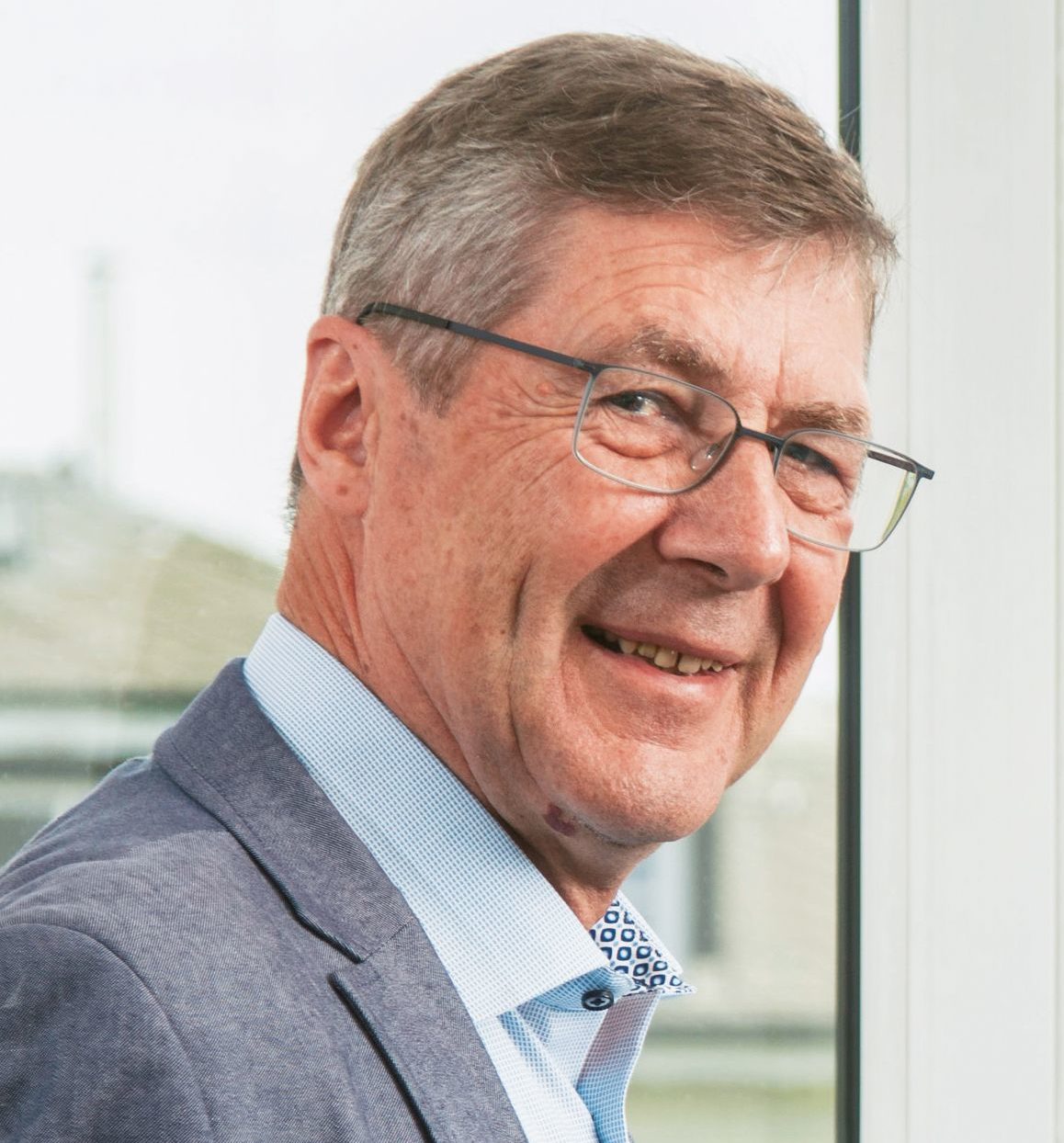
Dr Jürgen Bruder: The biggest challenge is, of course, the global problem of Lack of waste management infrastructure in many countries with the problem of marine litter as the worst consequence. And as long as this problem remains unresolved, we will have to continue to engage in this critical discussion.

pj: In other words, if there were waste systems modelled on ours elsewhere, we would be a whole step ahead?
Dr Jürgen Bruder: That would take us a significant step further. Of course, that doesn't mean that everything is perfect here. We still have homework to do and improvements to make in various areas. Design for recycling, Use of recyclate, These are just two keywords that are also relevant for the packaging industry. But the global problem of marine pollution is mainly responsible for the poor image among consumers.
pj: And now everyone involved with plastic packaging is struggling with it. How can we succeed in regaining the trust of consumers? Is that even still possible?öpossible?
Dr Jürgen Bruder: Yes, we are working on it. Both in terms of communication and content. Together with PlasticsEurope, we have organised the Communication offensive on plastic packaging: with a newsroom and many other things, and we also spent extra money on it. We will certainly continue with this. It is a very important point to educate people with facts and to emphasise the functionality of plastic packaging time and again.
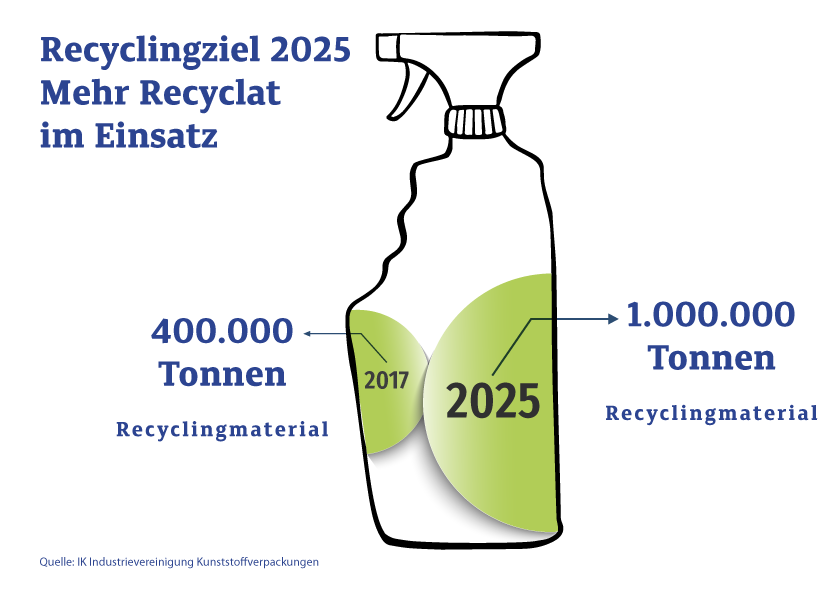
At the same time, the industry is continuing to develop, for example to make plastic packaging recyclable, which is not the case for everyone. As an association, we have also set ourselves sustainability targets. According to these One million tonnes of plastic recyclate by 2025e are used in the packaging market.
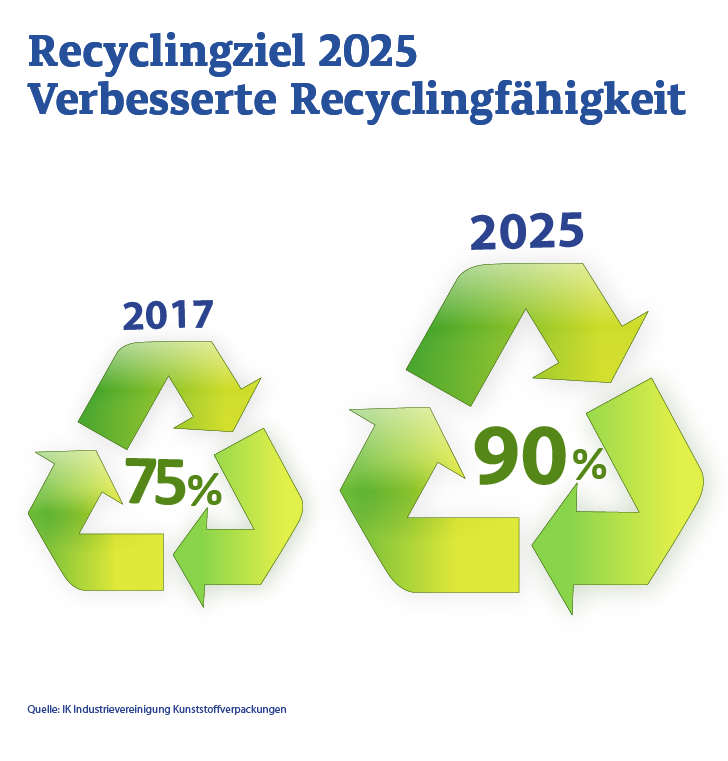
Furthermore, by this date, all consumer packaging made of plastic should be at least 90 per cent recyclable or reusable be. 90 per cent because the monitoring can only relate to the market and, of course, we also have many imports for which we cannot provide a guarantee.
pj: So it won't be boring for you. As someone who works in this industry, you can of course put your feet up and wait and see. But you can also actively shape change...
Dr Jürgen Bruder: Yes, we do. This year, we have published the „Eco design of plastic packaging“ which is a joint effort of the Round Table. It is an excellent compendium that summarises all the tools available to date on eco design for plastic packaging. B
Based on four core strategies, a Management guide developed. At the same time, the guide also contains information for packaging engineers who are to implement these strategies. All of this has been developed in collaboration with major brand manufacturers, recyclers and the consumer advice centre.
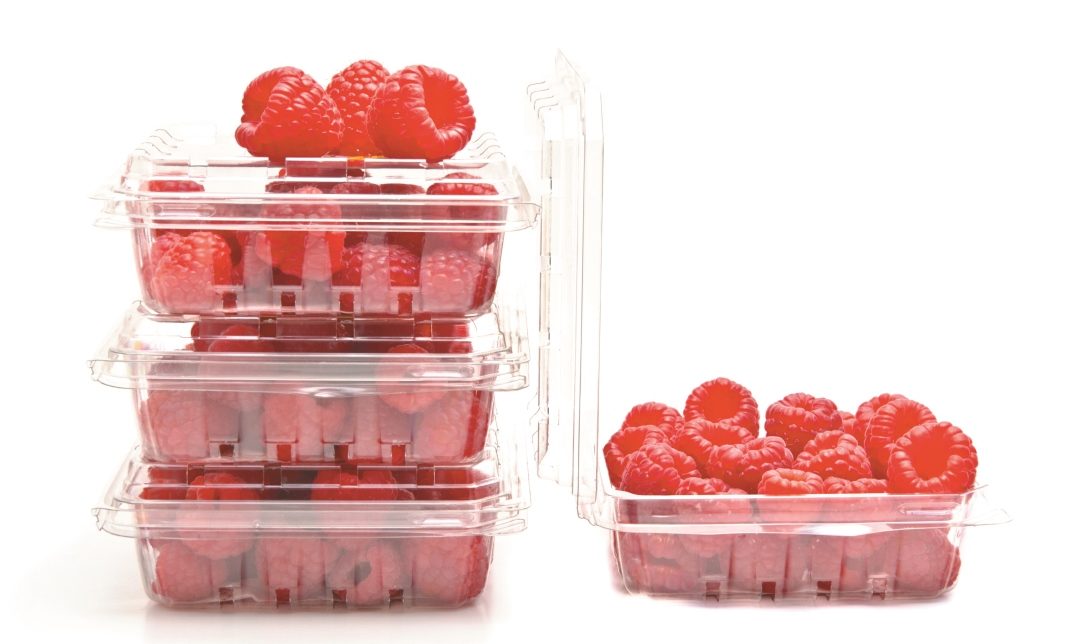
We work very closely with the recyclers to ensure that we can Product groups to make progress. We have a PET tray working group and are now conducting the second large-scale trial to make PET trays recyclable or to sort them out and turn the sorted trays into marketable products in order to find a stable business solution.
We also work with recyclers to analyse certain commercial packaging and consider how we can increase the use of recyclates. This is particularly happening with packaging outside of the food sector, as there are restrictions there.
pj: Where do the opportunities lie in this change in the field of plastic packaging?
Dr Jürgen Bruder: They are very large, and we see that companies are coming up with innovations that then also have a Competitive advantage bring. On a very positive note, I would like to emphasise the innovations that have been made in the area of Laminated films run.
Five years ago, perhaps nobody would have guessed that it would be possible to generate composite films that ultimately consist of one material from composite films made of several plastics. In other words, from different types of polyethylene or PP, where the barrier layers, which previously consisted of different materials, are recreated with orientated material and thus created, Recyclable composite films to generate.
The process is underway, there are the first positive results and I am confident that there will be a lot more to come in the next one to two years as far as the individual areas of application are concerned. This will take time, but the industry is on a very good path and is showing its potential. Innovative ability.
pj: Let's also talk about economic developments. When we look at your Economic trend we see an increase in sales, but also a decline in the economic situation and exports.
Dr Jürgen Bruder: The slump in the packaging sector has not been caused by consumer packaging at the moment, but by the commercial packaging. This, in turn, is due to the weakness of the automotive and chemical industries, where the majority of commercial packaging is naturally supplied.
pj: And how do you counter collapsing export markets? Great Britain is of course the issue. The planned Brexit seminar is just one week after the end of the K trade fair. What advice would you give your members?
Dr Jürgen Bruder: We have discussed this and we have a number of companies with subsidiaries on the island. They have stocked up to get through the next few weeks, when nobody knows what the chaos will look like. You can't prepare for everything, but at least as far as supplies are concerned, in order to be able to continue production, a Bridging guaranteed.
Of course the Export loss, which may materialise, is already an issue. Around ten per cent of exports go to the UK, while imports from the UK are negligible and would not pose a problem if they were to cease.
[infotext icon]Listen to the packaging journal interview with Dr Jürgen Bruder, conducted by Jan Malte Andresen: [/infotext]pj: The end of the year is for you personallyönally, I'll be stepping down as Managing Director. When you vacate the chair for your successor, what will you pass on to him or her?
Dr Jürgen Bruder: Good question, I haven't even thought about that in detail yet. Of course, the work of the association that we have built up over the last few years should be continued. It is geared towards not only preserving something, but also looking to the future and responding to the changed circumstances. Active framework conditions and not reactively, i.e. to be active and help shape the future.
pj: Let's end with a look into the future: do you think plastic packaging will continue to exist in the future?
Dr Jürgen Bruder: That's for sure! There is absolutely no doubt that plastic packaging is often the best option for packaging products, especially food, and protecting them from spoilage. This is due to their Functionality, but also their ecological footprint. Many life cycle assessments show this, even if the media or politicians sometimes don't like to look at them. It is always important to look at the entire life cycle.
But, and this is the big difference compared to previous years, The packaging must be recyclable and designed accordinglyThis is difficult in certain applications, but that is the challenge we are facing and where we are on the right track - see composite films or PET trays.
http://www.kunststoffverpackungen.de
IK Industrievereinigung Kunststoffverpackungen at the K 2019: Hall 8A, Stand F11-1