Regulatory changes and steel - a look into the future

What will the regulatory changes - such as the Packaging and Packaging Waste Regulation (PPWR) - mean for steel as a packaging material in 2024?

An exciting and sometimes nerve-wracking year lies behind the packaging industry. Looking ahead to 2024, the changes are unlikely to diminish. What will the regulatory changes - particularly those brought about by the EU's Packaging and Packaging Waste Regulation (PPWR) - mean for steel as a packaging material? The industry association Apeal provides an assessment.

2023 was a year full of upheaval for the packaging industry. Driven by the ambitious goals of the Packaging and Packaging Waste Regulation have stakeholders across the EU Measures to contain waste and improve recyclability The EU has taken a number of measures to tackle this issue - from the phasing out of some single-use plastic products in France to a new tax on non-reusable plastic packaging in Spain. However, closing the loop on packaging waste will require sustained effort and innovation from all players in the supply chain, with durable materials such as steel playing a key role.

New regulations for the packaging industry

Once ratified, the new PPWR will change the packaging landscape in Europe. It will change the standards for the Harmonise packaging design and, above all, require all packaging on the European market to be produced in an economically viable way by 2030. Reusable or recyclable have to be.

However, the proposed regulation does not go far enough to promote the circular economy and achieve the objectives of the EU Green Deal. Apeal, the Association of European Packaging Steel Manufacturers, believes that the PPWR is the Value of durable materials like steel should be emphasised more strongly.

Display

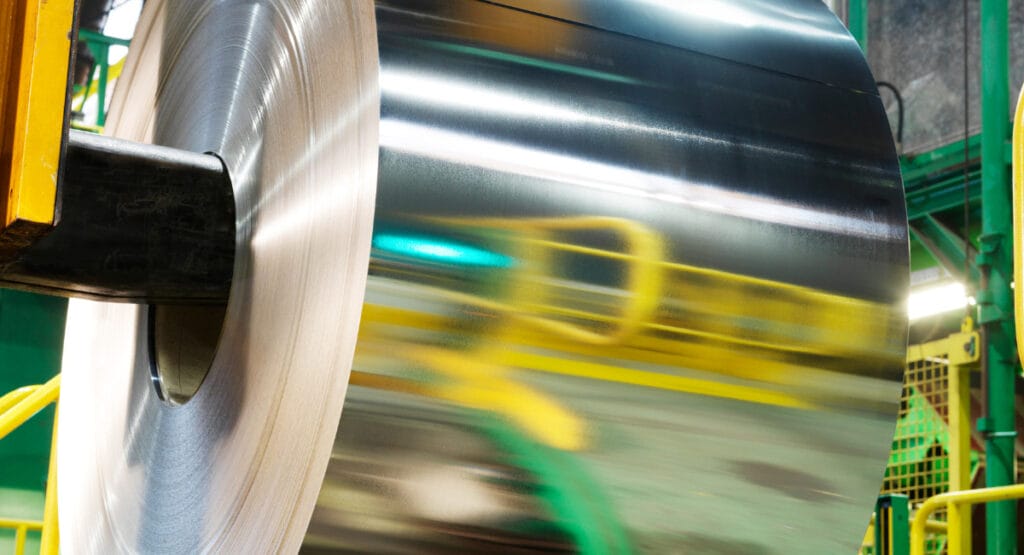
For APEAL, the good recyclability of packaging steel is a particular advantage of the material.
For APEAL, the good recyclability of packaging steel is a particular advantage of the material. (Image: Apeal)

Steel for packaging: leading the transition to a circular economy

As a durable material, steel packaging already fulfils and exceeds the recyclability criteria set out in Article 6 of the PPWR. Steel can not only be recycled in such a way that the resulting secondary raw materials are of sufficient quality to replace the primary raw materials. It can also be can be recycled several times, without losing its inherent properties. Recycled steel is used 100 per cent as a raw material in a closed material cycle and is therefore an example of a genuine circular economy.

The establishment of a circular economy in 2024 and beyond will be a Higher level of genuine recycling than is currently achieved with most packaging materials. Currently, many packaging materials cannot be recycled, even if they are collected separately, because they are contaminated or too moist, or because it is difficult to separate the composite materials in the case of multi-layer laminated cardboard. However, in order to achieve the EU targets, Member States must be able to, Efficiently recycle packaging materials on a large scale - a goal that is unattainable without the necessary infrastructure for the separate collection and sorting of packaging waste into defined waste streams.

(Image: Apeal)

In contrast to other materials that do not have such an infrastructure Steel packaging already recycled on a large scale. With a recycling rate of 85.5 per cent in 2020, steel is recycled to a greater extent than any other primary packaging material on the EU market.

The association also expects steel to score highly in the new series of „recycling performance levels“ based on recyclable design criteria. Apeal also welcomes the European Commission's endeavour to link the eco-modulation of Extended Producer Responsibility (EPR) fees to recycling performance.

Outlook for 2024: continued push for sustainability

Although the new PPWR is a promising framework for promoting sustainability and circularity in the packaging industry, much remains to be done. In order to ensure that packaging materials are not simply „downcycled“, it is important to Stricter qualitative criteria for the definition of „recyclable“ packaging be used. Brands, retailers and manufacturers must quickly find ways to implement a revision of packaging applications in 2024.

http://www.apeal.org

More news from the magazine

One hundred years blue tin

Since 1925, the Nivea cream can has borne its deep blue colour, white lettering and round shape - a design that has remained stable over generations, markets and crises and is now celebrating its 100th birthday.
Read more "