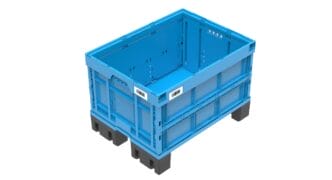
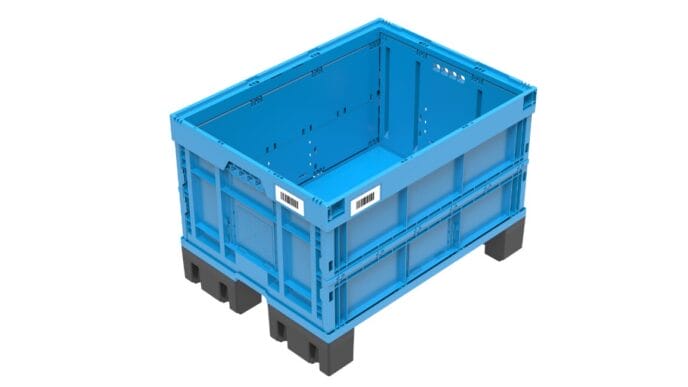
Ready for use in the cellar industry: the Wine Store Age IBC from Schütz is certified in accordance with the FSSC 22000 food industry standard and has a highly effective EVOH permeation barrier.
5 June 2019
(Image: Schütz)
The demand for quantity and, of course, the associated quality of wine is constantly increasing. One of the new challenges facing producers today is the use of the latest tools in cellar management. Since 2018, one of these tools has been a particularly successful candidate: the Wine Store Age IBC from Schütz.
What would a balmy summer evening in the garden, on the terrace or balcony be without a glass of wine? Only half as nice! At least that's what surveys from 2018 show: around two thirds of Germans regularly drink wine. In order to meet the growing demand, winegrowers, wineries, cooperatives and cellars have to constantly face new challenges when it comes to this cultural drink, both in the vineyard and in the wine cellar.
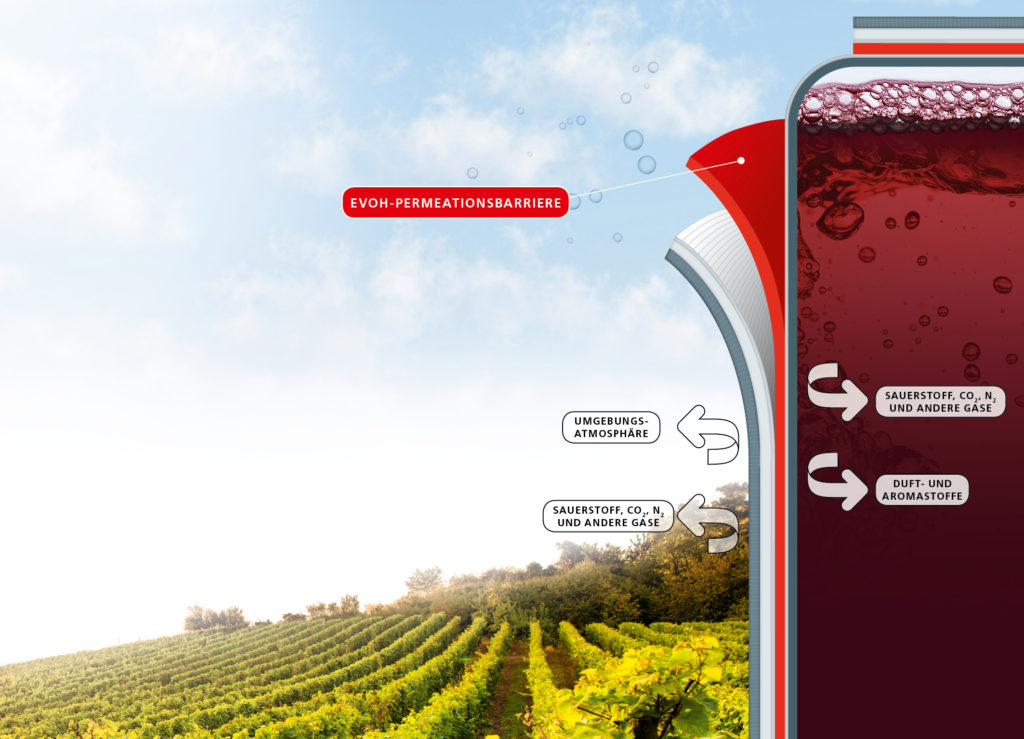
In order to get closer to the winemakers' practice and to obtain their judgement, Schütz posed the decisive question in a mailing to German and Austrian wineries last year: „Ready for a new solution?“ This involved the use of an IBC from the Foodcert line, which is certified in accordance with the FSSC 22000 food industry standard. It has a highly effective EVOH permeation barrier that prevents oxygen, nitrogen and other gases from leaking in and out.
Versatile in use
Thanks to the option of automatically controlling the oxygen supply, the Wine-Store-Age IBC from Schütz optimal for wine production Whether for must or mash fermentation, further ageing, subsequent maturation or storage. Of course, the transport of grape must, young wine or finished wine - for example to an external bottler - is also part of the application area.
Display
The Wine Store Age IBC scores highly with its permeation barrier. (Image: Schütz)
Successfully tested with Australian red wines
Four years ago, experts from the Australian Wine Research Institute confirmed the versatile suitability of this Schütz container for professional winemaking as part of a series of tests. At that time, tests were carried out with the red wine variety Shiraz, which is favoured down under.
In Germany, too, the investigations in the Department of Oenology by the world-renowned and recognised University of Geisenheim in 2017/18. Here, the Wine Store Age IBC was used in the ageing of representative selected Rheingau Rieslings.
Even back then, both tests confirmed another major advantage of this special container when used in the wine industry: compared to conventional tanks, wineries save Storage area, They also simplify their logistics and reduce costs within their supply chain.
IBC put to the test by German winegrowers
The global packaging company SCHÜTZ GmbH & Co. KGaA, Selters, called for participation in a IBC test during the ageing of the 2018 vintage up. Numerous innovation-orientated and experimental winegrowers from various growing regions expressed their interest and applied. After an exceptionally early harvest in the autumn of 2018, the final selected wineries began vinifying individual batches of this „vintage of the century“, which had ripened in the vineyards thanks to the hot summer.
Five growing regions - nine wineries - over 20 wines: The first results of this comprehensive practical test with the Wine Store Age IBC by Numerous experienced winemakers from traditional wineries in Germany have now been submitted to the responsible team at Schütz's headquarters. It is pleasing to note that the résumés submitted so far by the wine professionals have been consistently positive and promising. Many of the wines have already been bottled and successfully sold.
Test operation with tradition: Klöckner winery
One of the dedicated testers in the Wine Store Age IBC team was Stephan Klöckner, a qualified viticultural engineer from the Aloys Klöckner winery in Guldental in the Nahe wine-growing region. Gentle greenery, romantic valleys and dramatic rock formations characterise this ancient wine-growing region along the river of the same name in south-west Germany. A mild climate ensures that the grape juice can ripen early and develop a pleasant acidity. Added to this is the Speciality of the terroir: With around 180 varieties, the Nahe has the greatest diversity of soils in a very small area in Germany.
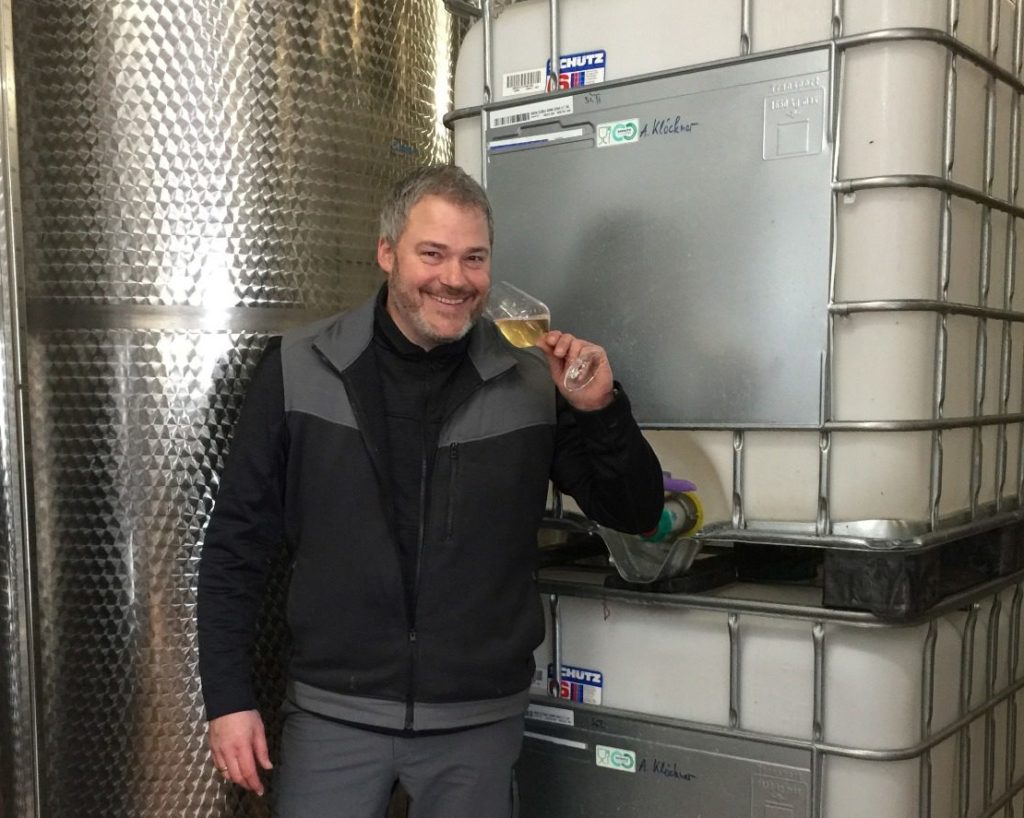
Viticultural engineer Stephan Klöckner from the Aloys Klöckner winery
„The wines from the Schütz tank are fresher, more sparkling, cleaner, fruit-orientated and without any oxidative notes. They are absolutely on a par with wines fermented in stainless steel tanks,“ explains viticultural engineer Stephan Klöckner from the Aloys Klöckner winery.
Klöckner appreciates this speciality of his homeland and can look back on a long tradition in this region himself: his family has been planting vines, pressing grapes and selling wines for around 400 years. He and his wife Simone have been running the business since 1999. Tradition and innovation form an ideal symbiosis here.
Thumbs up for the result
The Nahe winemaker's test wine is a 2018 Kreuznacher Kronenberg, Müller-Thurgau, harvested at 82 degrees Oechsle and 6.5 grams per litre acidity. It was harvested on 14 September 2018 and put into the Schütz IBC for fermentation the very next day with the addition of yeast. This was followed by an error-free, slow and safe fermentation in a dark, cooled room with a dry final fermentation.
„Throughout the entire process, we have always critically scrutinised the development, but we have also always sensitive sensory view there were no complaints whatsoever,“ emphasises winemaking engineer Klöckner. He particularly appreciates the very efficient effect of the container's permeation barrier: „In the end result and after sensory testing, the wine IBC is preferable to conventional IBC tanks, as the permeation barrier is not a problem. Reduced oxidation of the wines is done.“ This was also confirmed by several experts in the test comparison.