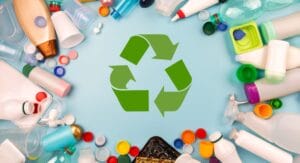

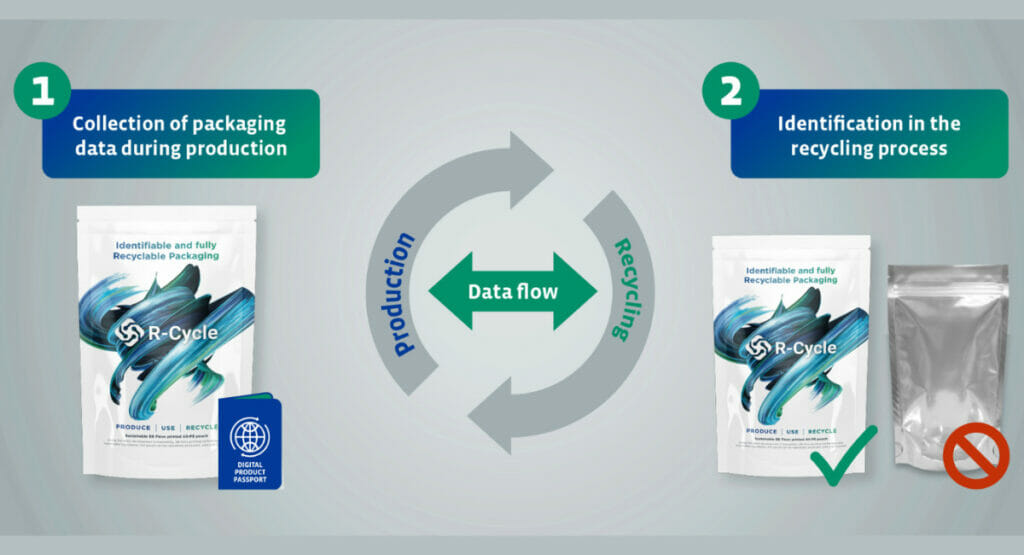

As a member of the R-Cycle community, Sidel wants to promote the circular economy and traceability of plastic packaging. R-Cycle is an open traceability standard for sustainable plastic packaging. A digital product passport is created along the value chain, which enables better separation of packaging in sorting plants.
Sidel is now a member of the R-Cycle community, which is designing digital „product passports“ in order to accelerate the recycling of plastic packaging around the world. On the basis of an open traceability standard, R-Cycle Collect information on the recycling-relevant properties of plastic packaging. This data, which is stored in a database, can then be retrieved and recorded by every production machine along the value chain, from packaging manufacturers and processors to the recycling industry. This enables waste sorting systems can identify fully recyclable packaging, and helped to obtain high-purity, recycling-friendly materials for processing into a wide range of high-quality plastic products.
„Sidel recently became a member of the R-Cycle initiative because we want to continue our strong commitment to realising the circular economy. A global standard that links partners from around the world and from all stages of the plastic packaging lifecycle to record and retrieve all relevant packaging properties will have a very positive impact on product sustainability. The standard will improve manufacturing processes and the quality of recyclates and enable the realisation of a true circular economy.“
Francesca Bellucci, Head of the Sustainability Portfolio Product Innovation and Marketing at Sidel
Display

Currently, recyclable plastic packaging cannot be separated from waste streams precisely enough to enable high-quality recycling, which is why current recycling rates are very low - only 9 per cent of plastic waste is actually recycled.
There are two main obstacles to successful plastics recycling. On the one hand more fully recyclable packaging produced become. In this area, the company is helping customers by promoting the use of PET, currently the most recycled plastic material available. The other obstacle is the Increasing complexity of the recycling process; R-Cycle concentrates on this factor.
„It's great to see how our community is continuously growing and how forward-looking partners from the packaging industry are combining their high innovation capacities to serve R-Cycle. Sidel is contributing a great deal of driving force and a strong commitment to a functioning circular economy that will help us move forward together.“
Dr Benedikt Brenken, Director of R-Cycle
R-Cycle will support manufacturers worldwide by improving process efficiency and product quality. Having access to precise information about the raw material will help to speed up production and the recording of product properties will provide added value for customers. The digital product passport will be helpful to achieve compliance, to provide information, which are designed to meet the current and future requirements of customers and legislators, e.g. the calculation of CO2-footprint, and in favour of extended producer responsibility (EPR), a policy approach that assigns responsibility for the processing and disposal of post-consumer products to manufacturers.
R-Cycle also provides a working solution for the European Union's Circular Economy Action Plan, which aims to ensure the traceability of plastic packaging to improve its recyclability, using the tracking and management of information on resources and the digitalisation of product data.

The globally applicable and open traceability standard of R-Cycle allows a Seamless documentation stored on a shared data platform, which can be accessed by any production system, from film or injection moulding machines to processing, printing and filling machines as well as waste sorting and recycling systems. This standard allows the collection of recycling-relevant data and its retrievability via suitable labelling, e.g. a digital watermark or a QR code, on the packaging. The tracking technology behind R-Cycle is based on GS1standards - the leading global network for cross-industry process development, which is used daily by numerous industries worldwide, e.g. for the traceability of fresh meat products.
„By linking all partners along the value chain, R-Cycle creates the conditions for obtaining high-quality recyclates for the development of a circular economy.“
Francesca Bellucci
Source: Sidel
More news on recycling


High recycling rate for beverage cans in Europe

Starbucks strengthens cup recycling

AVU criticises lack of recycling incentives

VerpackDG: What will change with the new Packaging Act