Folding cartons can be recycled as part of the household waste paper collection. This is confirmed by a recent and broad-based study commissioned by the Folding Carton Industry Association (FFI) from the Papiertechnische Stiftung (PTS).
All of the folding carton samples tested showed that the fibre components of the various folding carton packaging can be fully recycled. As expected, the fibre yield is only reduced by the proportion of non-paper product components such as plastics from barrier coatings or windows. Even shortening the defibration time to ten minutes - compared to 20 minutes according to the test standard - has no influence on the fibre yield, as with a few exceptions the maximum fibre content was already dissolved within the shorter interval.
No restrictions on the quality of the fibres
In addition, the quality of the fibre pulp obtained (recyclate) did not show any restrictions in terms of stickiness or optical inhomogeneities with regard to material recycling via the waste paper household collection material flow.
Although visually disturbing inhomogeneities or increased stickiness occurred in individual samples in the print/varnish and adhesive application categories, these can either be separated or are classified as uncritical in the household waste paper collection.

The same applies to metallisations that were applied to the folding cartons via PET lamination or cold foil transfer in the samples tested. In these applications, the metallisation leads to poorer separability of these particles during sorting, which causes visually disturbing impurities. However, these can be recycled in a mixture such as the household collection goods.
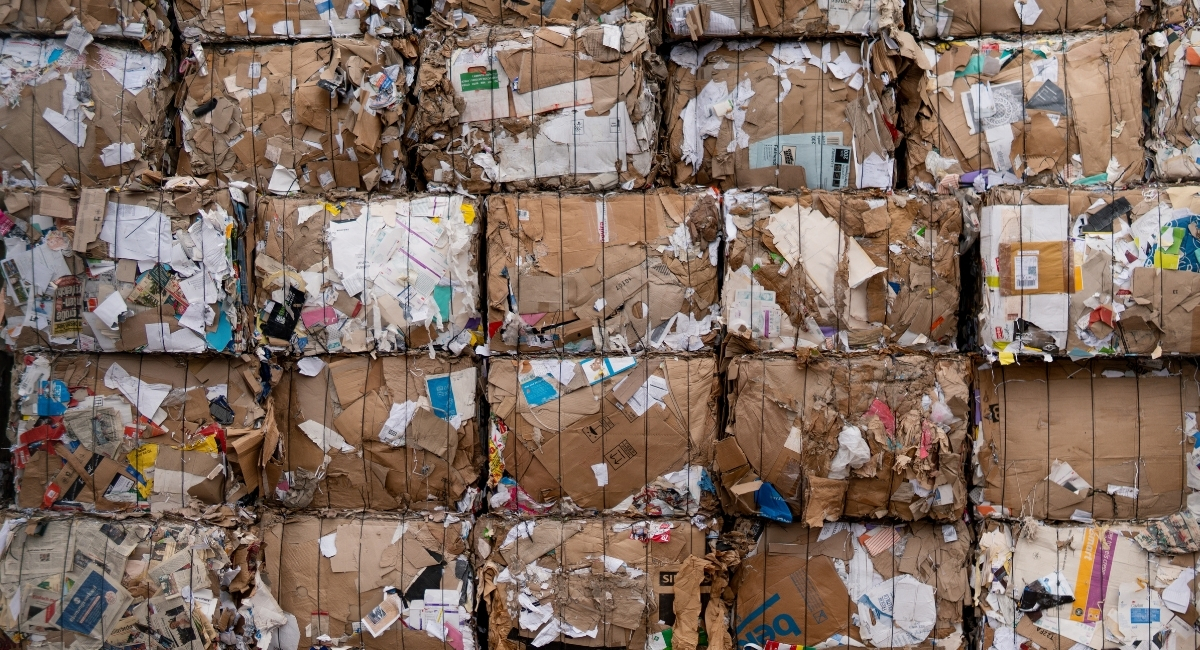 Coated folding cartons can also be recycled in waste paper
Plastic components from inner coatings and outer laminations fragment, i.e. disintegrate slightly, but were easy to separate during sorting. This proves in particular that folding cartons coated on one side are recyclable in household waste paper collections. The same was also confirmed for cup materials, four samples of which were also analysed in the study. If such cup materials do not have a wet-strength finish, they would also be recyclable in the household waste paper collection.
„The study confirms the practice that has been practised for decades, according to which consumers do everything right when they put folding cartons into waste paper for recycling after removing the product. The recycling of recovered paper fibres - including those from folding cartons - is sustainability in practice.„
Andreas Helbig, Spokesman of the Executive Board Folding Carton Industry Association (FFI)
Manufacturers demand proof of recyclability
The FFI sees its current study as a significant contribution by the folding carton industry to the current social and environmental policy debate on the recycling and recyclability of used packaging. On the one hand, the branded goods industry and retailers are increasingly formulating principles and standards for packaging according to which it should be recyclable or contain certain proportions of recyclate. On the other hand, the dual systems have the legal mandate to inform private end consumers about the correct separation of used packaging waste.
The report on the signing is available on the FFI Homepage retrievable.
Fiscal year characterised by corona
As the FFI has now announced, the production volume of its members increased by 2.3 per cent in the 2019 financial year. Irrespective of this, however, there is still high price pressure in Europe, with the calculated production value of folding cartons produced falling by five per cent to EUR 2,037 per tonne. The current financial year is primarily characterised by coronavirus. In the first half of 2020 the production volume of the German folding carton industry increased by 3.3 per cent compared to the same period of the previous year. Data for the third quarter of 2020 is currently only available from FFI members. According to this data, production activity fell by 1.3 per cent compared to the corresponding summer quarter of 2019, while the corresponding production value fell by 5.3 per cent.
The data for 2020 confirm the special corona special effects and resemble the wave-like development of the infection figures in Germany. The second quarter of 2020 in particular initially led to increased order behaviour and production activity in numerous folding carton segments for everyday consumer goods, such as in the various product areas of the food and hygiene sector or pharmaceuticals. The renewed temporary closures in the catering sector could now once again lead to increased sales of folding cartons for food.
Source: Fachverband Faltschachtel-Industrie (FFI)