Multivac is tackling the issue of sustainability with the TopClose and TopWrap processes. The aim was to offer the fruit and vegetable industry a sustainable packaging solution.
16 September 2024
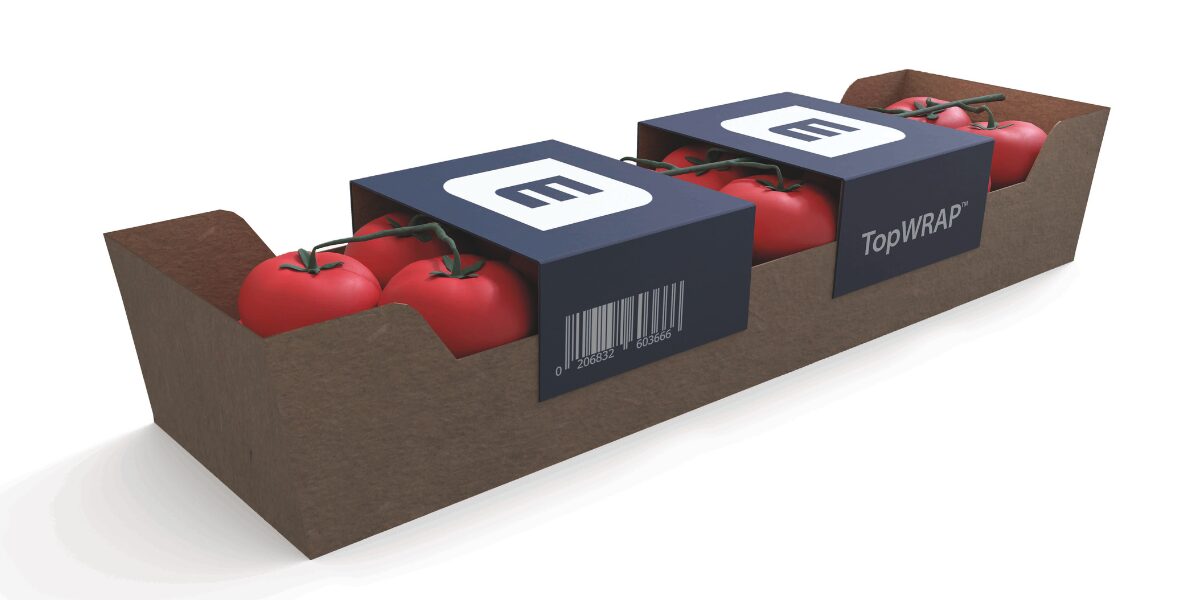
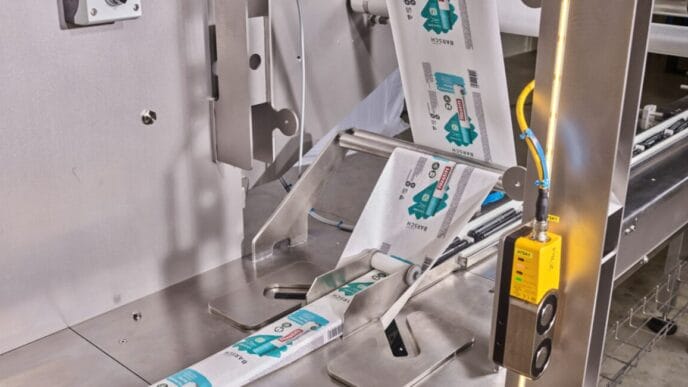
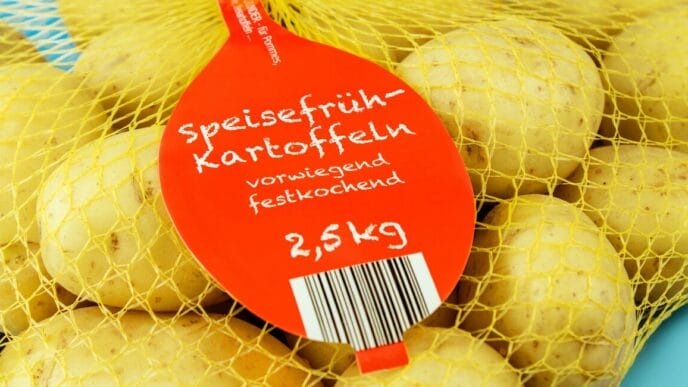
The labels are applied to three sides of the TopWrap packaging. (Image: Multivac)
With the TopClose and TopWrap process, Multivac is taking a targeted approach to sustainability. The aim of the development was to offer the fruit and vegetable industry in particular a packaging solution that contains less than ten per cent plastic or is even completely plastic-free, so that it can already fulfil the requirements of the EU Packaging and Packaging Waste Regulation (PPWR).
Against the backdrop of the new EU Packaging Regulation, which aims to reduce the environmental impact of packaging, renewable materials, resource conservation and sustainability are on the agenda for packagers and packaging companies. By 2030, according to the EU Packaging and Packaging Waste Regulations (PPWR), all packaging must be made from renewable materials. Packaging recyclable in the EU be. Companies must therefore adapt their design and material utilisation in order to increase the recycling and reuse of packaging. The Reducing the weight of packaging and promoting the circular economy in focus.
„In general, we are in favour of implementing a standardised EU-wide regulation, but there are still some obstacles that need to be overcome. The current regulations need to be adapted, for example with regard to material bans, the proportion of recycled materials used, the penalisation of certain packaging materials and the lack of material-neutral regulations or infrastructure for collection, sorting and recycling streams. It is imperative that the current regulations are clarified or corrected.“
Marina Dodel, Project Manager Corporate Innovation Centre at Multivac
Display
Food packaging of the future
In the packaging process, special packaging technologies and machine equipment can help to conserve valuable resources, minimise the proportion of plastic and increase the recyclability of the packaging. Sustainable approaches include the use of Monomaterial solutions that are recyclable, fibre-based materials made from renewable raw materials or solutions to reduce packaging thickness, e.g. in the form of flexible film solutions or skin films.
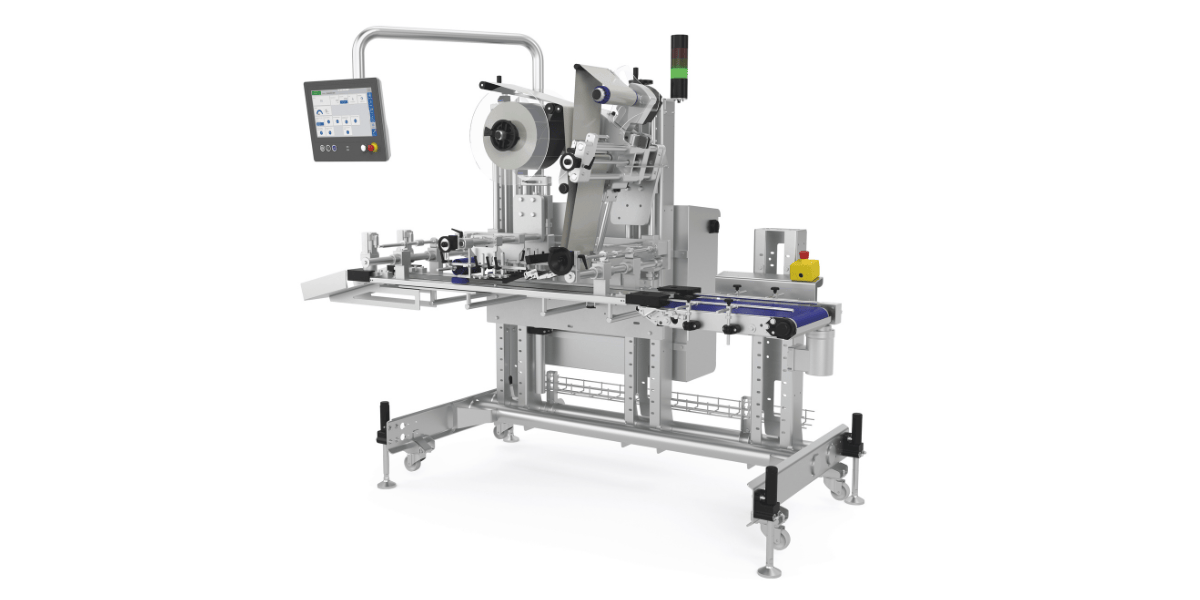
The L 330 conveyor belt labeller is used to produce TopClose packaging. (Image: Multivac)
In addition, the utilised Machine technologyFlexible packaging instead of rigid packaging can reduce the amount of material used in some applications. One example is flowpack or thermoformed packaging instead of rigid trays. The use of digital services, such as Smart Services from Multivac to the Monitoring of machine components and the production process, can minimise packaging waste. And companies can initiate sustainability analyses and optimise their packaging solutions in packaging workshops and with individual advice, for example.
Less is more ...
When it comes to sustainable packaging solutions, the principle of „Renew, Reduce, Recycle“ should always be at the centre of activities. At Multivac, this means Any packaging material should be able to be processed on the individual systems.
„All stakeholders in the value chain must work together to develop sensible and sustainable packaging solutions in order to minimise packaging waste in the future and make our economy recyclable.“ Marina Dodel, Project Manager Corporate Innovation Centre at Multivac (Image: Multivac)
„Currently, many customers are still focussing on plastic materials, as these offer the best product protection compared to the weight of the material used. But change is also noticeable here. Plastic packaging that requires only a fraction of the resources that used to be the case is now a realistic option.“
Marina Dodel
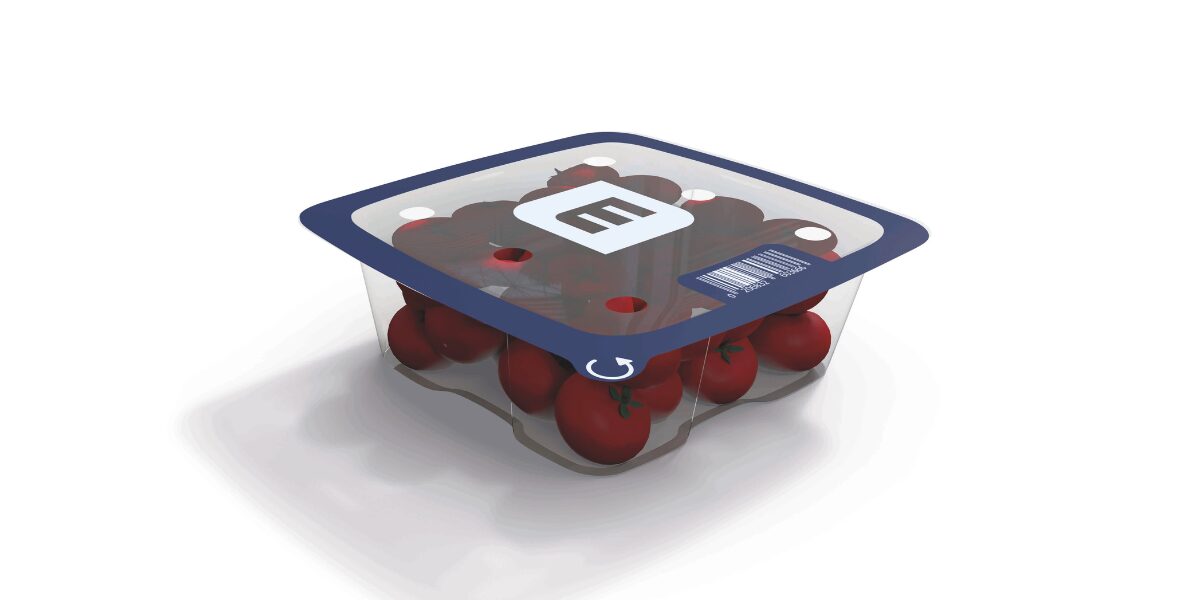
The company's TopClose process is a good example of this: If trays made from renewable raw materials are used, the plastic content of the packaging is only less than ten per cent. Material combinations that completely dispense with plastic are also possible, for example by using Labels made from cellulose can be used. The transparent label seals the top of the tray and replaces a tubular bag, for example. Nevertheless, the contents remain protected from being removed or falling out.
New materials and processes
The TopClose process is particularly suitable for producers of small fruit and vegetables, such as berries, for packaging sizes of 200 to 400 grams. The TopWrap process, on the other hand, is suitable for Fruit and vegetables, such as tomatoes, apples, potatoes, mushrooms, strawberries, lemons or snack vegetables, in packaging sizes from 400 to 1,000 grams.
A specially adapted labeller takes over the function of the packaging machine. The labels are produced in a special process from the thinnest possible, yet robust material. This ensures that the Use of materials reduced as far as possible. For example, cardboard trays can be closed with self-adhesive labels on the edge of the tray (TopClose) or on three sides (TopWrap). The adhesive is only applied in a food-safe manner where there is no contact with the product. If paper labels are used, the packaging can be completely disposed of as paper and recycled.
Even sensitive foods can be processed quickly with the conveyor belt labellers. (Image: Multivac)
In both processes, not only the packaging, but also the Packaging process extremely energy-efficientThe labeller requires neither compressed air nor water and provides space for labelling directly on the closure label so that no additional label is required. In addition, the conveyor belt labellers are so efficient that even Sensitive food processed quickly so that as few goods as possible spoil in the packaging process.
„Comparative tests with mushrooms have also shown that the shelf life of the packaged mushrooms is extended by at least five days compared to traditional packaging with stretch film. The TopWrap packaging for potato triplets is already available in selected supermarkets.“
Ronald Helmel, Business Development Manager Marking & Inspection at Multivac
The revision of the EU Packaging Directive was long overdue and initial concepts are already creating the basis for future-proof packaging solutions. There are various approaches to making packaging more sustainable - but stakeholders must be prepared to take this step now in order to protect the environment and promote awareness of sustainable packaging in society.