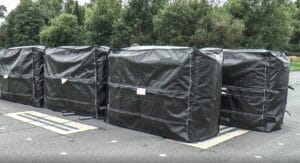
Ringmetall unit IPL takes over Indutainer
The Industrial Packaging Liner (IPL) division of Ringmetall SE has taken over the business assets of Indutainer GmbH.
Read more " 




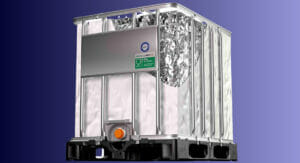
Greif is helping the German paint manufacturer Schulz Farben und Lackfabrik GmbH to reduce its carbon footprint. By using the sustainable GCUBE IBC (Intermediate Bulk Container) with Post Consumer Resin (PCR), the company has succeeded in significantly reducing its carbon footprint. The PCR plastic comes from from a completely closed recycling loop.
The GCUBE IBC from Greif is made of 60 per cent PE and 40 per cent PCR. To ensure product integrity, the inner layer of the IBC container is made of 100 per cent new HDPE, while the outer layer is made of PCR. the outer layer is mainly made of PCR. Most of the external components such as corner protectors, plastic feet and pallets are also made of recycled polyethylene.

The used PCR is obtained from old IBCs, which are reprocessed in Greif's reconditioning and recycling plant in Mendig.
The closed recycling loop from collection to delivery of the IBCs ensures complete reconditioning and reuse, so that no waste products are produced.