There are still a lot of prejudices and misconceptions among the population about the German recycling system. The dual systems therefore want to educate people with their „Waste separation works“ campaign.
28. July 2020
There are still a lot of prejudices and misconceptions about the German recycling system among the population. As a result, waste separation suffers and important raw materials are lost from the recycling cycles. The dual systems are taking this as an opportunity to clarify and dispel the most important misconceptions with their „Waste separation works“ campaign.
Contrary to many preconceptions, correct waste separation has a very clear and direct positive impact on the environment. With correct waste disposal, private households can even around 3.1 million tonnes of CO2-equivalents. Furthermore, separated waste is not, as is often wrongly assumed, dumped together again later. And finally, the Yellow Bag and Yellow Bin contain far more than just plastic packaging.
(Image: Dual Systems/Christian Kruppa)
"Waste separation works - and much more sustainably than many people think. A look at the yellow sacks and bins in Germany shows that misconceptions about waste separation are still widespread. Of the waste disposed of in Germany every year around 2.6 million tonnes via the yellow bags and bins of the materials collected are around 70 per cent packaging and On average, 30 per cent of residual waste not disposed of correctly. In some areas, this rate is as high as 60 per cent. This is often due to myths that many believe in, but which have no basis in fact.“ Axel Subklew, spokesperson for the „Waste separation works“ campaign“
Misconception 1: It doesn't matter whether waste is separated - waste separation has no positive impact on the environment
That is correct: By separating waste correctly, everyone can make an important contribution to the environment and climate protection with little effort because they returns valuable resources to the material cycle. Every tonne of recycled plastic that is used instead of newly produced plastic, avoids between 1.5 and 3.2 tonnes of climate-relevant greenhouse gases. The production of recycled paper consumes only a third of the energy and around a fifth of the water required for the production of virgin fibre paper. And the use of recycled aluminium consumes only five percent of the energy required to produce primary aluminium.
Display
Misconception 2: Collected packaging waste and residual waste are incinerated together
That is correct: Packaging waste from the Yellow Bag and Yellow Bin is fed into a recycling system and is recycled. largely reused for the manufacture of new products. To do this, the waste disposal companies first take all the waste to waste sorting plants, which are available throughout Germany. There they are sorted by material, residual waste and non-recyclable waste are separated and all recyclable waste is then sent for recycling.
The Packaging Act, which came into force in 2019, obliges the dual systems to ensure that currently at least 80 percent of all glass, tinplate and aluminium packaging, 85 percent of all paper, cardboard and carton packaging and around 60 percent of all plastic packaging can be recycled from the Yellow Bag and the Yellow Bin. The better households separate their waste, the more recyclable materials from packaging waste are retained in the cycle. Packaging waste that is thrown into the residual waste bin is actually incinerated and is irretrievably lost to the raw material cycle. And residual waste that is incorrectly placed in the yellow bin or yellow bag makes the sorting process considerably more difficult and can make recycling impossible.
Misconception 3: Different coloured pieces of glass are tipped together again
That is correct: Dumping separated glass fragments together would lead to contamination, which would make recycling more difficult. In accordance with the Packaging Act the dual systems must currently recycle at least 80 per cent of all (disposable) glass packaging and this is only possible with correctly separated glass. If, for example, there is brown glass between white glass, the entire white glass becomes discoloured when it is melted.
To make a contribution to climate and resource protection, it is therefore important to separate glass packaging correctly. With a further positive effect for the environment: the use of recycled glass saves energy and resources. The use of 10 per cent cullet alone reduces melting energy by 3 per cent and CO2-emissions by 3.6 per cent. Every glass bottle consists of 60 per cent „old“ cullet, with green glass making up as much as 90 per cent. Colours that cannot be assigned, such as packaging made of blue glass, belong in green glass, which as a mixed colour can tolerate the most impurities.
(Image: The dual systems)
Misconception 4: Only plastic belongs in the yellow bag and the yellow bin
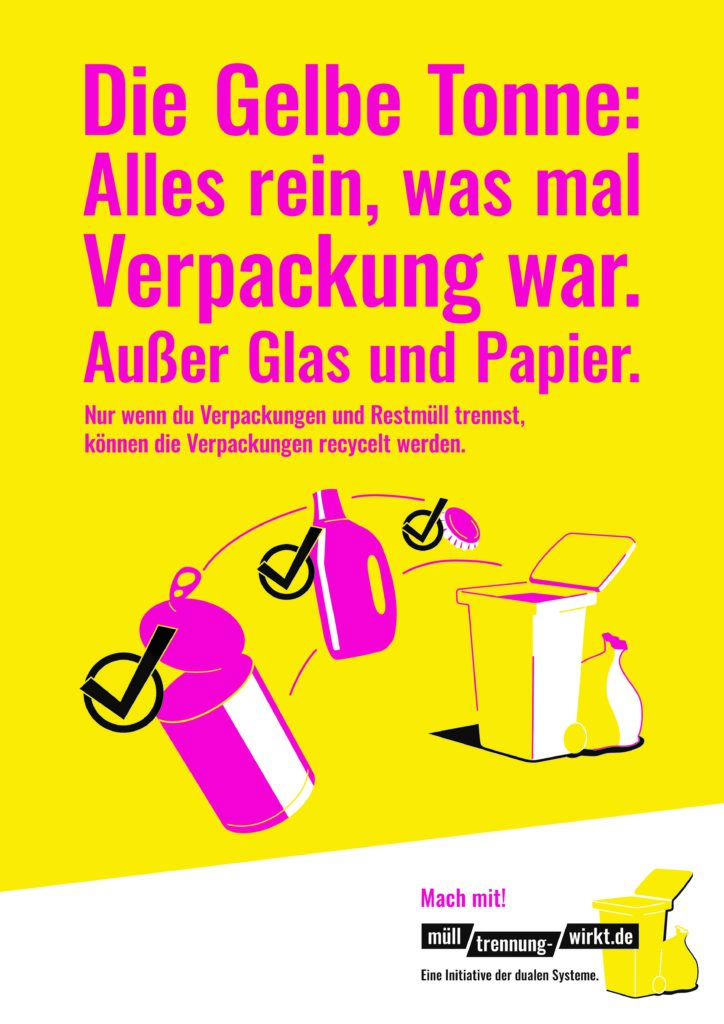
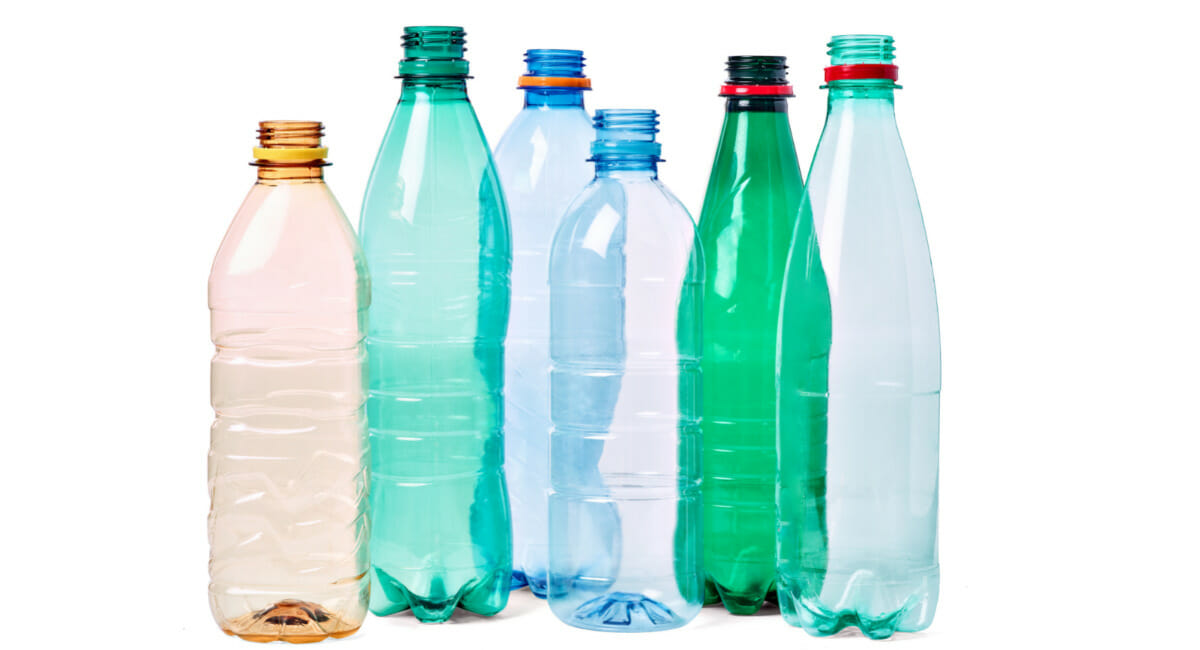
That is correct: In addition to plastic packaging also all packaging made of tinplate, aluminium and composite materials such as beverage cartons into the yellow bag and the yellow bin. They should be completely empty so that the materials can be cleanly separated during the sorting process. A Rinsing the packaging is not necessary, as industrial cleaning takes place in the subsequent recycling process anyway. All items made of plastic or metal that are not packaging, such as children's toys or toothbrushes, should be disposed of in the residual waste bin or can be taken to a recycling centre.
[infotext icon]The dual systems in Germany organise the collection, sorting and recycling of used sales packaging in order to achieve the recycling rates prescribed by law. There are currently ten privately organised systems that fulfil this task together with their service providers from the waste disposal and recycling industry. The basis for the work of the dual systems is the Packaging Act[/infotext].