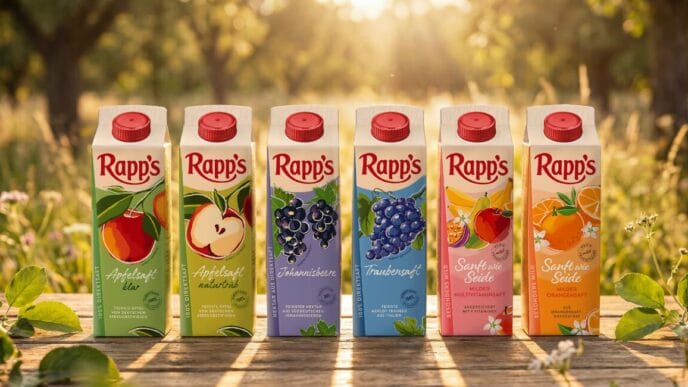
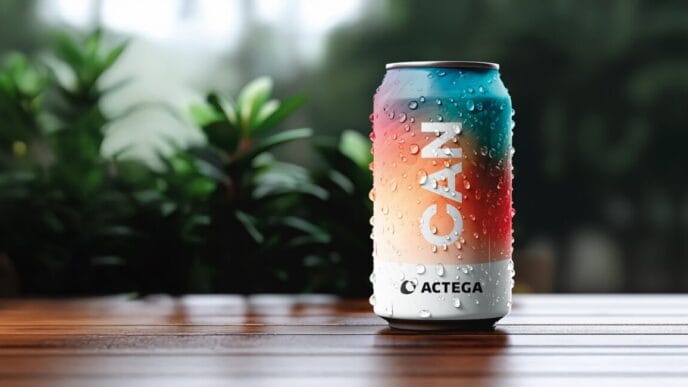
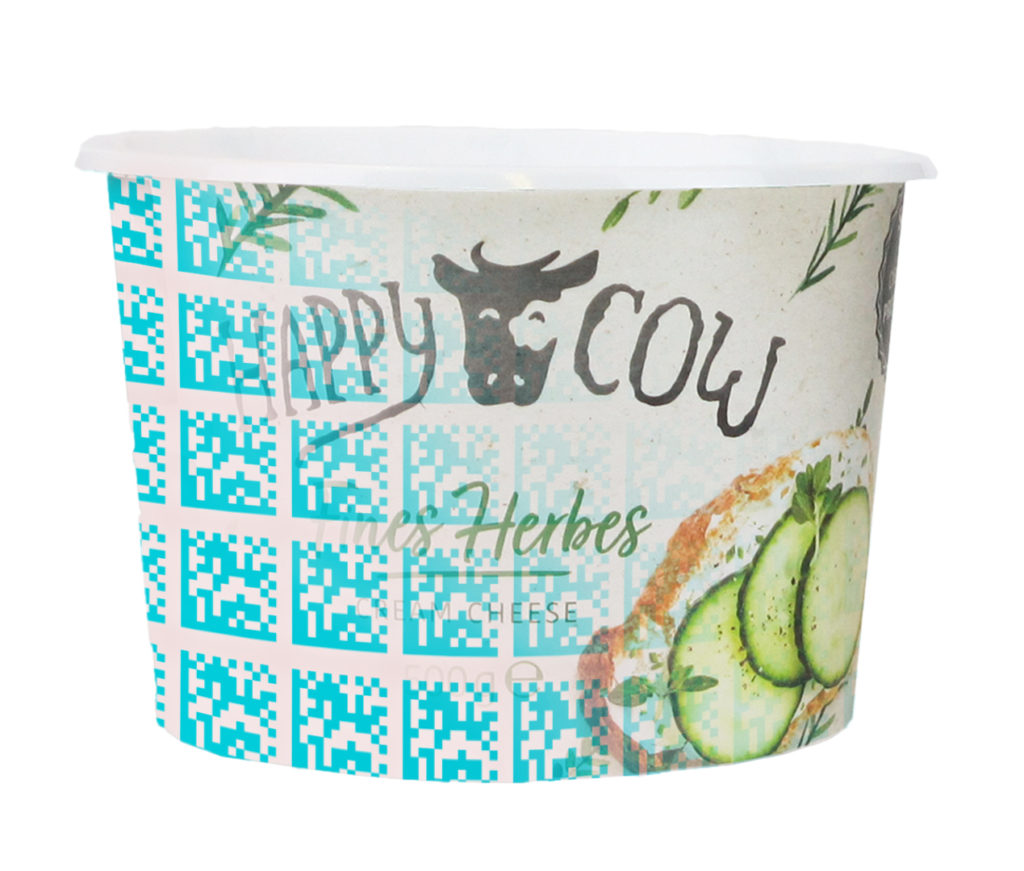
The search for the digital „Holy Grail“ began in 2016: Digimarc Corporation from Oregon (USA) presented a new labelling technology on the market. This DW code - the short form for the watermark „Digital Watermark Code“ - made the classic barcode superfluous. The new code is hidden in the colour printing of the packaging and therefore does not change or disrupt the design of the packaging. It is integrated into the existing print files using easy-to-implement Digimarc software. No special colours or printing processes are required.

Beginnings of the HolyGrail project
At the same time, the Ellen MacArthur Foundation began funding a project to introduce improved labelling methods: The so-called HolyGrail project ran from 2016 to 2019. The reference to the supposedly miracle-working „Holy Grail“ was intended to emphasise the high standards of the project. In the broadest sense, the aim of the project was to reduce plastic waste by increasing the recycling of plastics, primarily from the packaging sector. At the same time, the quality of the recycled pellets obtained was to be improved for increased reuse in the packaging sector.
The inclusion of Digimarc's labelling technology was an obvious choice, especially as the so-called GTIN (Global Trade Item Number) has now been implemented in the DW code, behind which the globally unique article number (known as the EAN code in German-speaking countries) is hidden. As a result, 29 international companies under the leadership of the consumer goods group Procter & Gamble (P&G) from Ohio (USA), to test the new labelling technology. Accordingly, new labelling was introduced on the packaging of some P&G brands in 2019. - like Lenor or Fairy - and other products from L'Oréal, Carrefour, Henkel, Nestlé and PepsiCo.

Watermark as a „digital recycling passport“
In addition to the benefits for packaging design and the handling of processes in logistics, goods inspection and retail sales, the new properties of the labelling system should also be used to achieve an efficient packaging recycling process. Optimum identification of the recycling materials when sorting the waste in the disposal companies can improve the utilisation of plastic waste and the reuse of suitable recyclate for packaging.
The next phase: HolyGrail 2.0
Following on from the success of the first HolyGrail project, last year the European brand association AIM (Association des Industries de Marque). Under its auspices, the next phase - „HolyGrail 2.0“ - will see the projects implemented on a larger scale and scope. Over 85 companies and organisations are actively involved in the new initiative. The following goals are to be achieved by 2030:
- 100 per cent of all plastic packaging used should be reusable, easily recyclable or compostable.
- 55 per cent of all plastic packaging used must be effectively recycled.
- 90 per cent of all plastic bottles are to be collected.
- All plastic bottles must have an average recycled content of 30 per cent.
Among other things, an industrial test facility will be put into operation to test the functionality of the watermark technologies for better sorting of packaging waste and to carry out the economic assessment on an industrial scale.
Once again on board is Henkel AG & Co. KGaA. The Düsseldorf-based company is leading the way. They are using the invisible digital code to improve packaging recycling. For example, the company is aiming for a recyclate content of up to 50 per cent in the bottles used for liquid detergents. The coding should lead to better recognition of the bottle material and more efficient sorting into the correct material group. This can also prevent the unnecessary disposal of plastic in landfill sites or waste incineration plants.
The digital code and its advantages for retail and logistics
In addition to industry, where the new labelling technology is expected to improve business processes and marketing measures, HolyGrail2.0 will also include retail and logistics. Numerous positive effects are also expected there thanks to the possibility of invisible labelling of goods. As the packaging printed with the DW code is machine-readable, it can be recognised by checkout systems with image scanners and other fixed camera systems, which, however, have to be adjusted to DW codes in the course of reconstruction in retail. There are also plans to use the technology for checkout using red light scanners at checkout counters. This could save staff and reduce waiting times. However, the difference will also be noticeable at normal checkouts: The invisible barcodes are found more quickly and are superior to conventional barcodes, as the products can be scanned from any direction. There are also advantages for the consumer, as the DW code can be read using a smartphone. Additional digital information can thus be easily retrieved.
Netto introduces machine-readable packaging system
The Edeka discounter Netto is the first retailer in Europe to use the new machine-readable DW code system, which in future will cover the entire process chain from product packaging to packaging recycling.
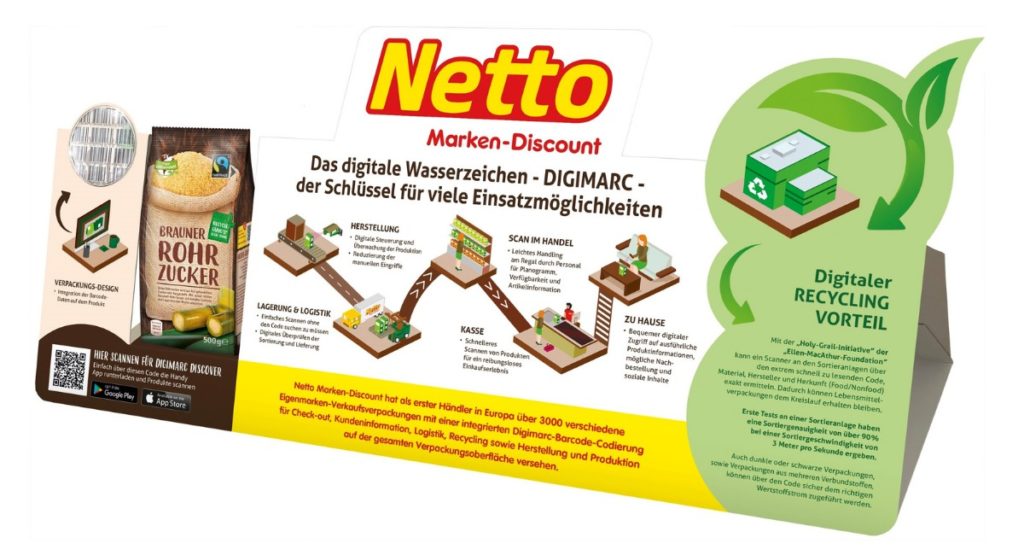
„The invisible code can already facilitate the packaging process at the product manufacturer by controlling the machine or the logistics in the warehouse,“ reports Hanover-based packaging consultant Adolf Ahrens. „In retail, as already described, the process is made easier and the additional information for the customer using a smartphone will also be gratefully received. Ultimately, the waste management industry will benefit from this code, as it contains precise information about the packaging material used.“
The advantage: sorting the packaging from the yellow bins is simplified and high-quality recycling is made possible. So far, Netto has equipped around 2,000 items with the DW code. All own-brand items are to be converted by the end of March 2021. This also makes the technology interesting for other companies. The Walmart chain is also testing the invisible code.