




The use of recycled materials is also playing an increasingly important role in food packaging. But what is available on the market, where are there still problems and where is it under development? Greiner Packaging from Austria provides an up-to-date overview.
Like many other companies, the Greiner Packaging has been using recycled materials for some time now. For the Production of plastic packaging come r-PET and r-PP are used. However, this is not about a favoured material per se, but about a sustainable material solution tailored to the customer.
Food authorisation is often missing
Whilst PP and PS are by far the most widely used materials in the German dairy packaging landscape, are missing from the recyclates of the two materials is still partially the food authorisations or are currently only available to a limited extent.


r-PET for dairy packaging
PET has good availability due to existing bottle streams. However, its material properties make it largely unsuitable for dairy packaging in particular. Here there are Special requirements in relation to high-temperature sterilisation (HTS), with temperatures of up to 120°C, which the PET has to withstand.
Greiner has therefore conducted initial tests for the use of r-PET HTS packaging for dairy products. r-PET is currently the only food-approved recycling material, while r-PS and r-PP are still in the testing and approval phase. It is therefore important to provide dairies with an r-material that can withstand the production processes there. CPET is not a solution for the dairy market for Greiner Packaging. This material can withstand hot sterilisation of up to 240°C. However, the disadvantage is that the nucleating agents it contains make recycling difficult. This makes it difficult to establish closed loops.
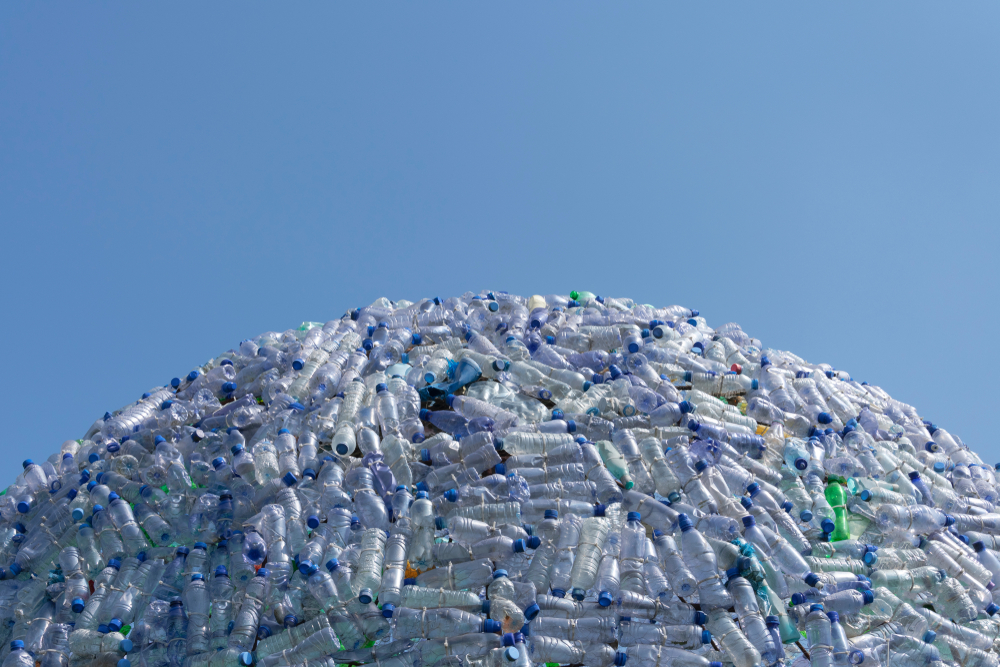
Mechanically vs. chemically recycled material
Mechanical r-material has a better CO2-footprint, while the chemical alternative also makes contaminated recyclable materials or composite materials recyclable. The chemical process is somewhat more complex, but the quality of the material is comparable to virgin material and food authorisation is therefore unproblematic. Experts believe that chemically recycled material will soon be officially recognised as recycled material will be categorised.
First high-temperature stable solutions for r-PET packaging for dairy products in sight
Mechanically recycled PET is available in relatively large quantities from the material cycle. Therefore New plastic products easily manufactured from up to 100 % mechanically recycled PET and can be used in the food sector. Tests are currently underway for the dairy industry to see how PET can withstand temperatures of up to 120°C during high-temperature sterilisation (HTS).
The main focus here is on how the existing sterilisation process with H2O2 tolerates. The aim is that the Dairies no changes in the filling process when using recycled material such as r-PET. Greiner Packaging is working intensively with dairy customers on a solution here and the test results will be interesting to see.
r-PP currently only authorised in the non-food sector
Mechanically recycled PP on the other hand, may currently only for non-food packaging be used. However, a food authorisation is currently being prepared. Chemically recycled PP is suitable for food contact, but is not yet readily available as there are no large-scale recycling streams for PP. Greiner Packaging is currently involved in a project that aims to achieve food authorisation for r-PP from mechanical recycling.
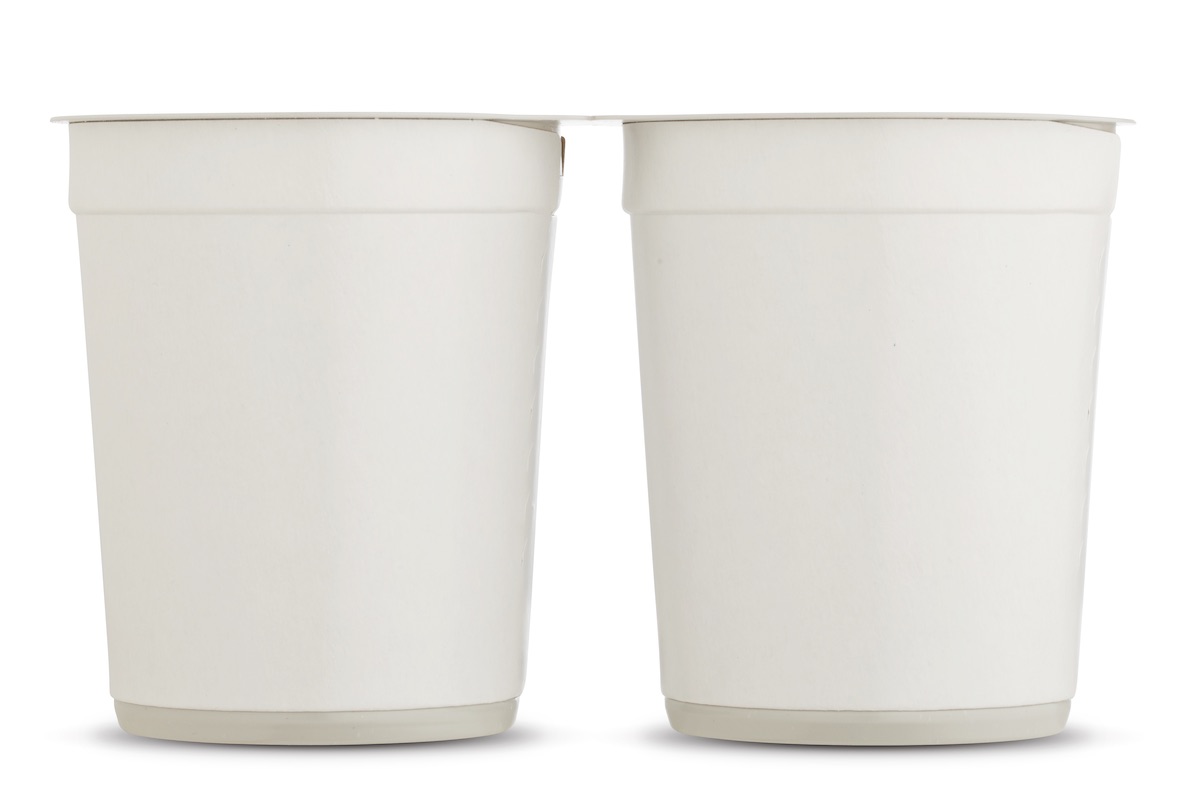
First test series with r-PS yoghurt pots in Switzerland
Also r-PS (polystyrene) is still very poorly available as a chemically and mechanically recycled material. Here, too, the recycling streams must first be established. But PS, with its high purity values has already proven its excellent suitability for mechanical recycling in previous tests. Initial tests in Switzerland have now shown that Greiner Packaging is already able to do this, Yoghurt pot made from 100 % r-PS material produce.
In a project with M-Industry, 100 % mechanically recycled PS was combined with 100 % recycled cardboard for the first time. The whole process was tested for the typical Swiss K3 dual yoghurt packs. The results were very promising: None of the test subjects noticed any sensory deviation due to the new r-PS material used for the first time. The certification of r-PS for yoghurt pots is already in progress in Switzerland.
Source: Greiner Packaging
https://packaging-journal.de/karton-kunststoff-verpackungen-sind-recyclebar/