The search for sustainable packaging materials is in full swing, especially to replace conventional plastics. But once a new material has been found, developers are faced with further challenges: Can the material run on the machines, and what about disposal and recycling? We discussed this live with experts.
In the current episode of the format produced by packaging journal for interpack Tightly Packed TV live was all about the Challenges, opportunities and potential of new packaging materials. It's not just about the raw materials, but also about what the next step is in terms of runability on the packaging machines.
It continues with consumers: How important is the communication on the packaging for new materials and what should you look out for? What does disposal and recycling look like in the end? What is already possible here, and what is still to come? packaging journal editor-in-chief Jan Malte Andresen discussed all of this with Tilisco packaging analyst Sonja Bähr, traceless founder Anne Lamp, Julian Thielen from interseroh+ and Heiko Kühne from Optima Packaging.
What if packaging could be made from renewable raw materials instead of fossil fuels? And what new materials could these be?
„New materials first have to be defined. For some manufacturers, a mono-material film is also a new material if they previously used a composite film, but there is of course a trend towards sustainable materials. This includes bioplastics, but also paper-based materials, which are also made from renewable raw materials. A lot is happening in this area at the moment and new solutions are constantly being developed that can be mechanically processed into packaging. But: Packaging, regardless of the material, is not an end in itself. The product that needs to be packaged always sets the requirements. This ultimately determines the choice of material.“
Sonja Bähr, packaging analyst at Tilisco
From a sustainability perspective, depending on the application, a thin conventional mono-material film perform better in the life cycle assessment than a bioplastic for which there is not yet a recycling stream.
Biomaterials are not necessarily recyclable
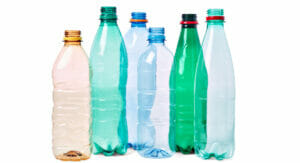
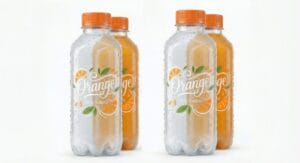
Technically, it is possible today to Replace almost any conventional fossil-based plastic with an alternative bio-based plastic. There are already a large number of biodegradable solutions on the market based on soya, wheat, sugar cane and maize, among others, especially in the film sector. A second major area is bio-based plastics, which are not biodegradable but can be recycled. These include bio-PET (polyethylene terephthalate), bio-PE (polyethylene) and bio-PP (polypropylene). They have the advantage that they can be recycled together with their petroleum-based counterparts.
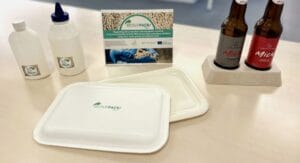
The start-up Traceless has gone one step further and has developed a new type of biomaterial from agricultural industry waste. The thermoplastic granulate produced in this way can be processed in injection moulding and film extrusion. Paper coatings are also possible.
„We not only differentiate between biobased and biodegradable, but we also use another category. Our material is not synthetically polymerised, but actually made from natural polymers. It degrades without residue in the environment when it enters it. Hence the name Traceless.“
Anne Lamp, CEO and founder Traceless
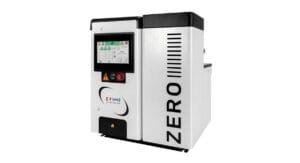
In order to be successful on the market, biomaterials such as Traceless or other can be processed primarily on existing packaging machines can. For machine manufacturers Optima bioplastics are playing an increasingly important role today.
„However, we are still at a low level here. When we deal with materials, it is always in connection with a machine that we are either building from scratch or converting for a customer application. While the processing of monomaterials is almost standard nowadays, demand for biomaterials is only just beginning to emerge. Overall, however, we see a colourful bouquet of material options today.“
Heiko Kühne, Managing Director for packaging machines for the food, beverage, cosmetics and chemical industries at Optima Packaging
In addition to the technical challenge of making the new materials machine-compatible, the cost issue is a major topic. „Many of our customers operate in a highly competitive environment, which is why efficient production is also a priority for them with the new materials.“
This is also an important aspect for the young company Traceless. „No matter how much you bend, In the end, you can't pay ten times the price for a material. That's why our production process is very efficient, including energy-efficient. That is our core innovation. We worked on the process itself for a very long time and managed to make the material really competitively priced.“
Legal framework sets the course
For machine manufacturers like Optima, it is no longer enough just to look at their systems. „Networking is an important keyword. This has been so important to us for at least two years that we have a dedicated team working on materials and communicating a lot with material manufacturers, product developers and product designers in the market.“
This will make it easier to overcome technical challenges, which can vary depending on the new packaging materials, says Heiko Kühne. „We will solve these challenges in the short or medium term at the latest, I'm pretty sure of that. The question is, what does that mean in terms of costs?“ This is not so easy to answer, because The market is also changing as a result of new framework conditions imposed by legislators. „The new regulations may make it less attractive or even impossible to use certain packaging materials. This creates pressure, but this is good for the topic.“
Founder Anne Lamp: „We should bear in mind the main goal that the EU Commission wants to achieve through regulation. All packaging should be recyclable by 2030. We therefore need to improve the impact of packaging, because packaging is a major cause of global plastic pollution and also of the destruction of non-renewable resources. This means, In the end, we have to make packaging recyclable. This includes technical recycling, but also biological recycling.
This is where we come in, because there must also be materials for all those applications where the technical cycle fails. In Germany, the recycling rate for plastics that are recycled is only ten per cent. It is therefore for some applications it is necessary to use the biological cycle instead. This means that we utilise biological resources in the production of materials that are based on waste materials and not on food. We do that in our process. On the other hand, we also have to be very good in terms of our life cycle assessment throughout the entire production process and use little energy, for example. We do that too. In the end, our material can either go for thermal utilisation or composting.
In Germany, the regulations are still somewhat cumbersome, but the EU is currently paving the way for this, that natural polymers are also suitable for the biological cycle according to the law, This means that they are utilised in a biocomposting plant and are then considered recycled.“
European legislation brings a number of changes for distributors of packaging, but also opportunities. „It's primarily a question of definition: bio-based and biodegradable plastics, like conventional plastics, are precisely named in the regulations - and traceless material is not included,“ says Sonja Bähr. „A distributor who wants to comply with the regulations and achieve a good CO2-footprint, can use such natural materials and therefore uses neither conventional plastic nor bio-based plastic. This is also an opportunity for companies, which they should utilise.“
No circular economy without functioning recycling
However, whether new sustainable packaging materials can establish themselves on the market depends not only on their machinability and costs. Without a functioning recycling system, the cycle cannot be closed. However, the utilisation of biomaterials places high demands on sorting and recycling systems. It is therefore not surprising that recyclers such as Julian Thielen from interseroh+ are not enthusiastic.
„Biodegradable materials in particular are not materials that we can currently make good use of for recycling, sorting and recovery. They are somewhere in the per mille to lower per cent range in the mass flow and are completely lost here. At the moment, recycling companies are not seriously addressing this issue. However, if demand increases, this could change. The EU regulations mentioned above require that in future a recycling infrastructure must also be demonstrated for new materials within five years. This is already quite a Clear message to the developers of the materials to think directly about the cycle. We are excited to see what developments are still to come.“
Julian Thielen, Head of „Made for Recycling“ at interseroh+
Sonja Bähr favours small-scale sorting. „I am a great advocate of this, that we re-sort material flows because this is the only way to recover valuable materials, that can be recycled. It may take a little longer to get relevant quantities, but it's worth it in the end.“
There are already technologies that could make re-sorting easier, adds Julian Thielen. „For example an invisible watermark that puts all the information on the packaging, that we cannot recognise using today's sensor technology. However, this also requires space in the sorting centre. I would like to invite everyone to visit our sorting facilities and see how cramped and cramped the space is. We are limited here and cannot sort every last fabric.
In a next step, however, a pre-sorting of polypropylene films could possibly be used to differentiate between food, non-food or other applications before recycling, in order to then to actually obtain different qualities in the actual recycling process."
Sustainability claim for new materials
However, as the trend is increasingly moving towards bio-based materials and paper fibre-based packaging, the experts believe it is important not to lose sight of the circular economy. „Biodegradable plastics can be used, for example, where we have particularly small packaging, that run the risk of remaining in the environment. They would probably be lost to recycling anyway. Distributors and packaging manufacturers should therefore take a closer look at these issues,“ says Julian Thielen.
In the industry Greenwashing is also a recurring theme. But what should a sustainability claim for new materials look like? Sonja Bähr: „Please don't give specific figures, for example ‚100 per cent recyclable‘, ‚compostable‘, ‚plastic-free‘. Instead, communicate in a really differentiated, defensive way, preferably a little less on the packaging and then tell the whole story on the website. Packaging is so complex and requires so much explanation. It's not something you can print on a small icon somewhere on packaging.“
The packaging analyst believes that more communication is needed anyway. „All players should stay in contact with each other, that's the most important thing. The common goal is to establish a functioning circular economy, but also to save resources and materials. However, this also means that consumers need to treat what they buy differently, because They also have a responsibility to ensure that packaging is disposed of correctly. The same applies to manufacturers, who place a material on the market and should be responsible for it right through to disposal and reprocessing and should take care of what happens to their material. In my view, that is A practised, active, pragmatic circular economy."
Sustainability - More news


Bio-based disposable cup with self-degrading function

Paperisation trend in the food industry on the rise

High recycling performance of glass packaging in Europe

Sustainable glass packaging for organic products