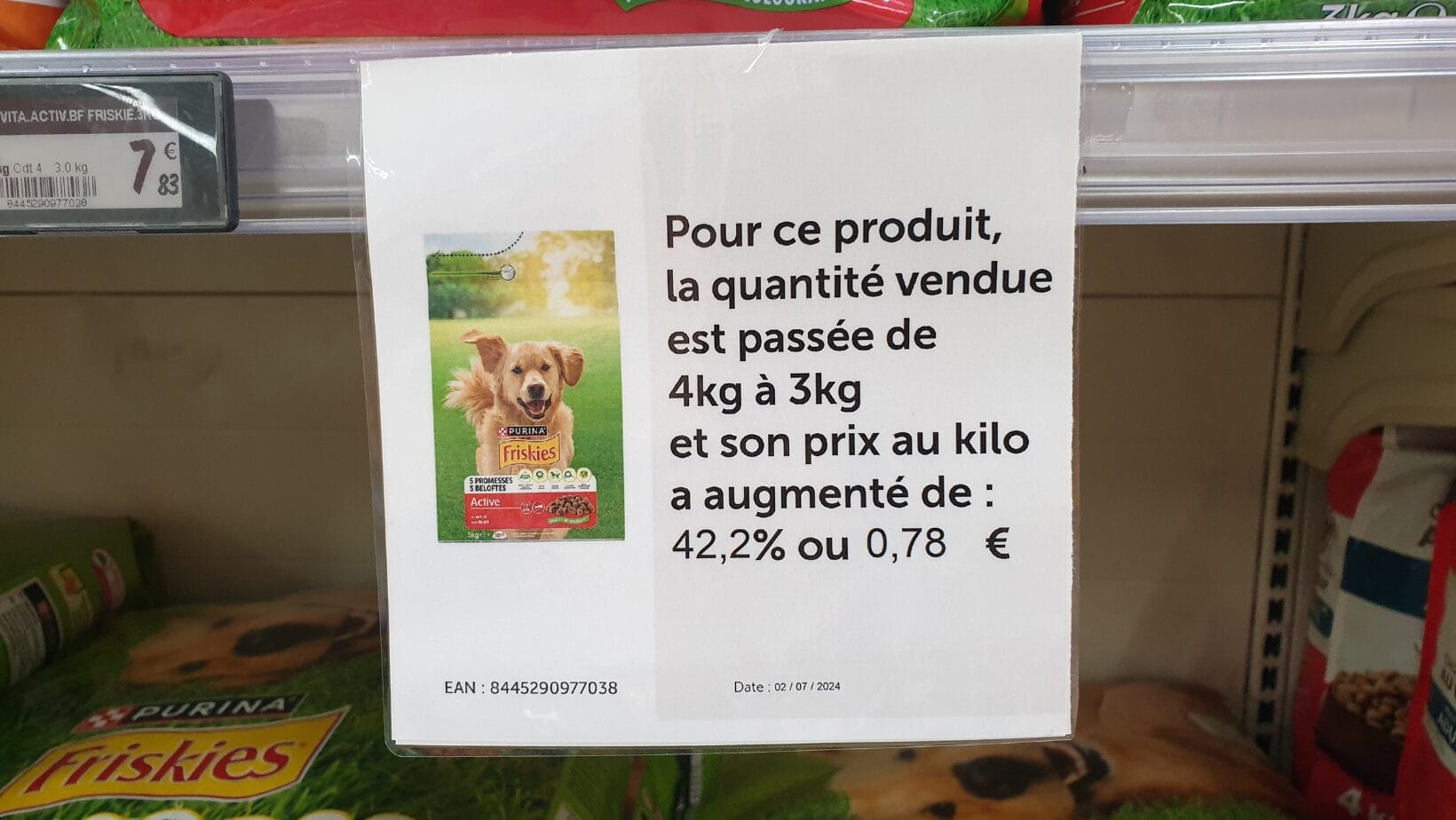

Manufacturers are increasingly making their products more expensive by selling less content in the usual packaging. This practice is known as shrinkflation and is hardly noticeable when shopping on a daily basis. France and Hungary are now taking action against this and are obliging retailers by law to point out these hidden price increases on the shelf. A small on-the-spot investigation by packaging journal in French supermarkets has revealed the following: The notices on the respective products are clear and cannot be overlooked.
Everyone has probably experienced it when shopping, but some have not realised it: The contents of a package have shrunk, but the price has not. According to consumer advice centres, manufacturers are increasingly making their products more expensive in this way. France and Hungary have been taking action against this since this summer and haverequire supermarkets to label shrinkflation. The term combines the English words „to shrink“ and „inflation“.
Stiftung Warentest has published a little brain teaser on its website: a bag of crisps costs 1.79 euros. The supplier increases the price of the crisps by 17 per cent, but without changing the price. How did he do that? Answer: He put 25 grams less crisps in the bag. The shrinkage cure is hardly noticeable during daily shopping. Only those who look very closely and compare may notice the new quantity on the pack.

In 2023, the Hamburg consumer advice centre in Germany recorded a new record number of complaints about shrinkflation. For example, Suchard Express cocoa powder shrank from 500 to 400 grams - and has since become 25 per cent more expensive. Milka and Oreo ice lollies not only had one less piece in the carton, but the weight of each had also shrunk. This means a price increase of 48 per cent and 63 per cent respectively. The shower gel Duschdas Sport had less content and was more expensive - up 22 per cent. And Zentis increased the price of its Belmandel nut nougat cream from 2.19 to 2.89 euros. Instead of 400 grams, however, there are now only 300 grams in the tub. A double price increase of 76 per cent in total.
According to the consumer advice centre in Hamburg, the trend began in 2022: Confirmed cases had almost doubled from the first to the second half of the year. And while the hidden price increase used to be predominantly noticeable with classic brands now also discount and organic brands affected. Although the manufacturers' practice is generally not illegal, it is extremely non-transparent.
France makes shrinkflation visible
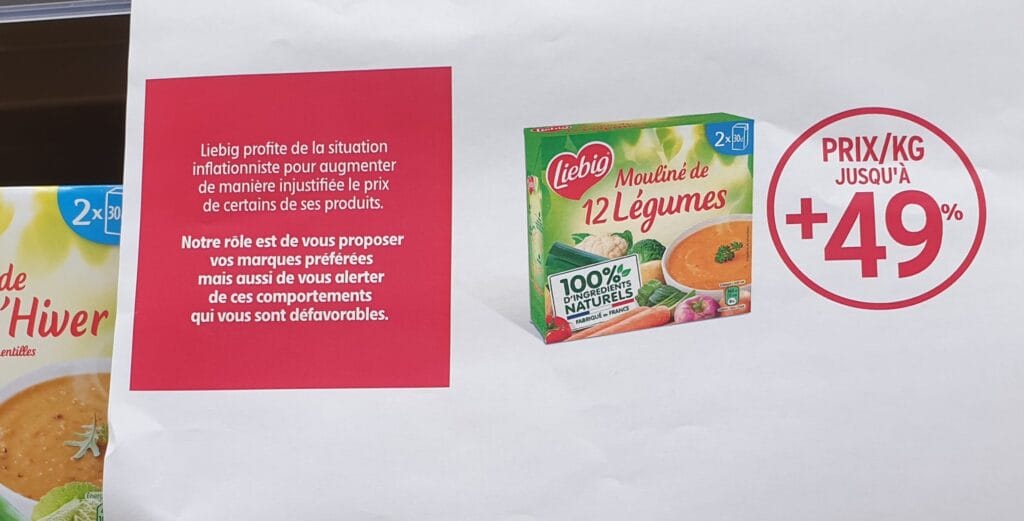
France is now taking action against hidden price increases and, since the beginning of July, supermarkets have been obliged by law to Notices on the respective products directly on the sales shelf about changes in filling quantities to inform consumers. The aim is to make shrinkflation visible - for two months, regardless of whether the products in question are national or international brands or private labels. The new regulation initially only applies to shops with a sales area of more than 400 square metres.
„Some manufacturers are reducing the content of their products without changing the packaging and sometimes even increasing the prices. This is scandalous. The practice of shrinkflation is a scam! We are putting an end to it with this law and thus restoring consumer confidence.“
Bruno Le Maire, French Minister of the Economy
Carrefour, the second largest retailer in Europe after the Schwarz Group, had anticipated the law and installed notices on packs with shrink-wrapped contents last autumn. At the same time, the company announced, to renegotiate the price of the products concerned. Products from PepsiCo, Nestlé, Unilever and Lindt & Sprüngli, for example, were affected.
The regulation for labelling shrinkflation, also known in France as réduflation (from „réduction“ and „inflation“), was introduced by the French government during the high inflation last year, when many people complained about high food prices and at the same time felt deceived by reduced packaging. Food prices in particular are has become an important political issue in France and the law is a reaction to this.
Hungary also introduces shrinkflation notices
In Hungary, too, retailers with a certain turnover (more than one billion forints = approx. 2.5 million euros) must already Products have been labelled with a similar warning since the beginning of March 2024, if their weight or volume has shrunk but the price has not. As in France, changes must be indicated on shelf notices. The reference value is the weight or volume of the same product between 1 January 2020 and 1 July 2023. Retailers must provide the information for two months from the date on which they started selling the product in the reduced size.
The law also obliges manufacturers to inform retailers of any changes in product size. This information is also available to consumers in a public database of the Hungarian Food Safety Authority (Nébih). Several hundred products have already been uploaded there. According to the Hungarian Ministry of Economy, 80 per cent of these are foodstuffs, the rest are mainly cosmetics and household items.