

Why the beauty industry needs to introduce environmentally friendly packaging

On today's Plastic Free Beauty Day (17 June), we received this appeal from someone who was long the head of the cosmetics brand Estee Lauder. As Vice President at Delta Global, he is now responsible for sustainable packaging for luxury brands and says that the fact that more single-use plastic has been used again during the pandemic does not absolve the industry of its obligation to sustainability. We are publishing his guest article.  

On today's Plastic Free Beauty Day (17 June), we received this appeal from someone who was long the head of the cosmetics brand Estee Lauder. As Vice President at Delta Global, he is now responsible for sustainable packaging for luxury brands and says that the fact that more single-use plastic has been used again during the pandemic does not absolve the industry of its obligation to sustainability. We are publishing his guest article.  

from Joe Cook

The beauty industry has made some important and impressive changes to the use of plastic packaging. And, to put it bluntly, it had to.

In 2018, beauty brands were responsible for around 120 billion packaging units. A generous estimate based on UN data concludes that a maximum of 9 % of this packaging was recycled. 12% would have been incinerated and the remaining 79% would have ended up in landfill.

Display

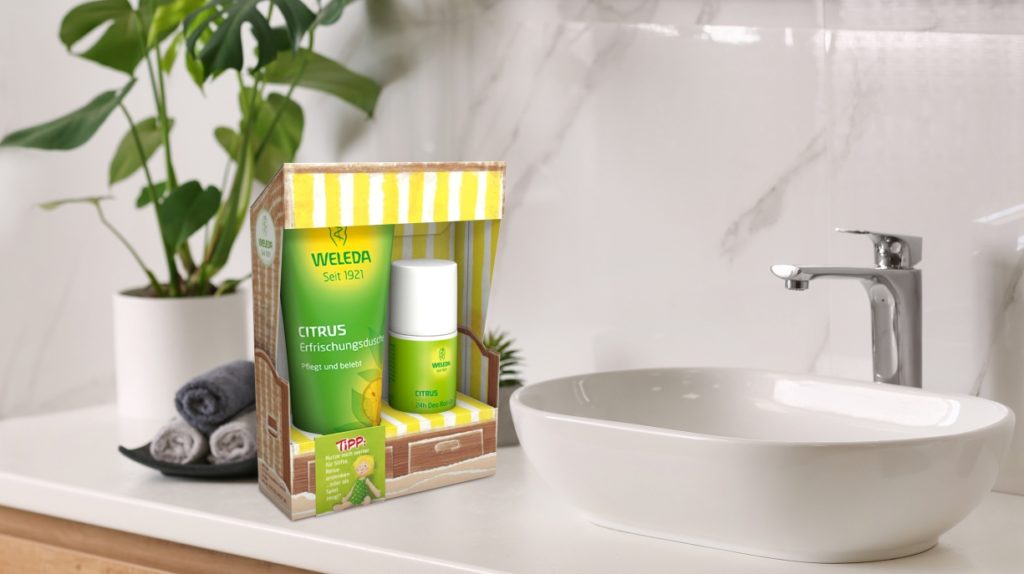
Packaging in beach chair design next to a washbasin

Weleda, which has completely eliminated microplastics and liquid plastics from its packaging, is leading the industry by example. Since the brand introduced plastic-free packaging in 2015, it has become the leading natural cosmetics brand on the planet, with significant year-on-year growth.

Consumers have different expectations

Several consumer reports have found that Millennials and Generation Z are demanding sustainable retail practices - and are willing to pay more for them. This is in stark contrast to the consumer preferences of baby boomers.

According to a Forbes white paper, 62 % of Gen Z favour buying sustainable brands. It's significant that this generation has recently entered the workforce en masse. And for beauty brands, whose biggest market is the 18-34 age group, it makes no ethical or economic sense to forgo a coherent sustainability strategy.

This is why a brand like Weleda has been able to thrive by adapting its packaging to market and consumer expectations. It seems incomprehensible that household brands do not fully go where the consumer and the market are going.

However, my fear is that with the return to what was labelled as unnecessary single-use plastic during the pandemic, brands will cite increased cost, safety and a new impossibility of recycling as reasons to shelve their sustainability commitments. 

In fact, this is already the case as the pandemic has significantly increased the price of recyclable plastics. If the beauty industry wants to offer what the new generation of customers expects, it needs to renew its eco-friendly commitments to packaging.

Refill packs

In the short term, refill packs offer a practical way to switch to sustainability. Cosmetics brands are already utilising refills in significant numbers, with Neal's Yard Remedies and The Body Shop among the notable pioneers.  

Refill packs have the obvious advantage of reducing the total amount of packaging that needs to be produced by companies and purchased by customers. Most effective is the use of refill packs that can be refilled in-store so that no additional packaging needs to be purchased.

This simple packaging change can lead to significant savings. L'Occitane reports that they have reduced 121 tonnes of plastic pollution and experienced a packaging reduction of 98%.

If cosmetics brands now have serious concerns about the safety of their packaging, refill pouches have superior protection against bacteria, moisture, oxygen and sunlight. Not only are they pandemic-friendly, but they also extend shelf life.

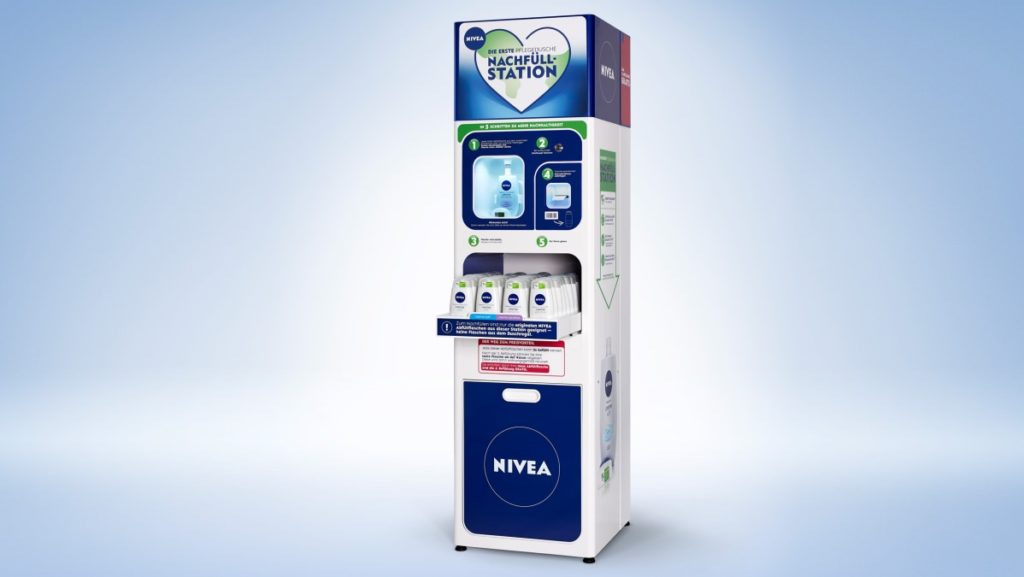
Nivea care shower refill stations
The exclusively developed refill stations are being tested in selected stores. (Image: Beiersdorf AG)

Buybacks

Incentives for recycling have been a successful and popular programme, particularly in relation to plastic bottles. A concerted effort by cosmetics brands and retailers to introduce similar programmes should be encouraged. Typically, this involves the exchange of recyclable, empty packaging for coupons or vouchers. 

John Lewis launched its BeautyCycle initiative in 2019 and is one of the most successful buyback schemes introduced by a retailer. Five empty packs are exchanged for a cash discount on future beauty purchases. 

Since its launch, BeautyCycle has saved over 231,000 products from going to landfill. That's over 50,000 customer donations. If every beauty retailer were to introduce such a system tomorrow, the increase in single-use plastic could be quickly atoned for.

Sustainable packaging

When we think about the future of environmentally friendly packaging and how the cosmetics industry can future-proof its packaging, we are encouraged by the advances in bioplastics and plant-based packaging.

This year, Delta Global collaborated with athleisurewear brand Sweaty Betty to develop fully reusable RPET bags that prevent over 2.7 million plastic bottles from entering our oceans, landfill or incineration.

Although bioplastics are still in the early stages of development, there are already some interesting options on the market. The best of them surpass recyclability by being both compostable and biodegradable. The source of bioplastics is remarkable - vegetable oils, corn starch and food waste can all be turned into safe and robust packaging.

However, cost efficiency and durability are not yet quite where they need to be. A vigorous development programme is required if bioplastics are to become the industry standard. The US beauty industry alone was estimated to be worth $507.8 billion in 2020. Funding for bioplastics research should be an industry priority.

Complete sustainability is the way forward for consumers and the market - and the cosmetics industry must lead the way.

Text: Joe Cook / Delta Global

Green Packaging - More news

Photo: Yangi

Dry forming goes industrial: Yangi starts fibre tray production

With its Cellera technology, Swedish company Yangi is launching production-ready, dry-formed fibre trays for meat, fish and ready meals onto the market for the first time. The dry-forming process enables precise high-volume production with short cycle times of 4-6 seconds and is designed to overcome the limitations of wet-formed fibre packaging.
Read more "