Climate-neutral, environmentally friendly, recyclable - in future, these terms may only be used on packaging with scientifically substantiated evidence. New EU regulations such as the Empowering Consumers Directive and the Green Claims Directive are fundamentally changing packaging communication. Information is to be accessed digitally - for example via a QR code. A new service helps with implementation.
What has long functioned as a marketing promise on packaging is now becoming a legal challenge: the term „climate neutral“ is an example of a large number of claims that consumers often find difficult to categorise. In 2023, the Federal Court of Justice ruled that companies may only use such claims if they are specifically explained and scientifically proven. A judgement with a signal effect - because a clear regulatory framework is now on the horizon with two EU directives.
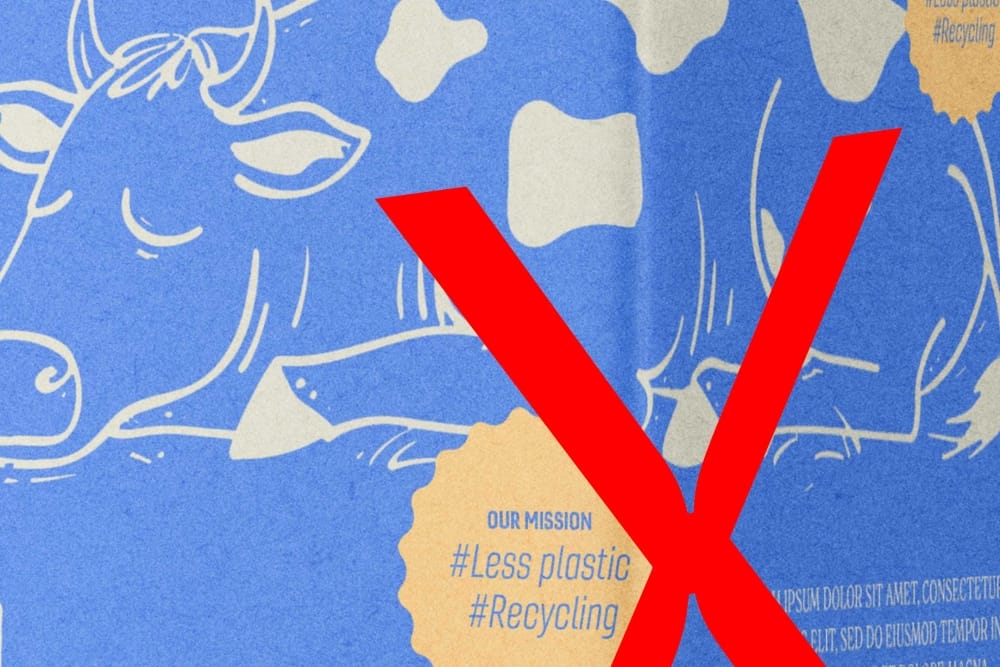
Empowering Consumers Directive: an end to vague advertising promises
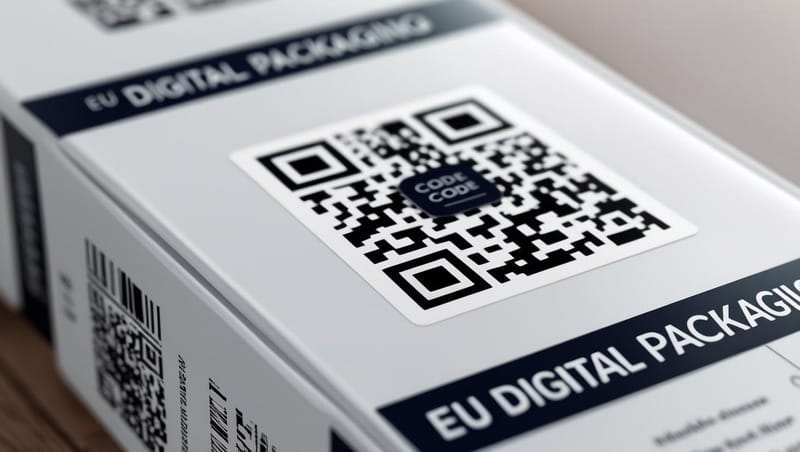
From 27 September 2026, environmental claims such as „climate neutral“, „environmentally friendly“ or „biodegradable“ may only appear on packaging if they are supported by publicly available evidence. This is stipulated by the EU directive „Empowering Consumers for the Green Transition“. A QR code on the packaging is to become the central access point for this information - the analogue space (such as the label) will be digitally expanded.

Green Claims Directive: Scientific and transparent
The Green Claims Directive, the final implementation of which is currently being negotiated at EU level, is even stricter. It obliges companies to scientifically substantiate every environmental claim and have them verified by external bodies. The results of these reviews must be accessible online. This also applies to packaging that says something like „compostable“ or „100 % recyclable“.
Digital product passport becomes mandatory
The introduction of the digital product passport (DPP) will also affect the packaging sector in the foreseeable future. The aim is to use standardised digital interfaces to provide information on ingredients, origin, disposability, carbon footprint and other environmental aspects - machine-readable and accessible via the packaging.
Growing pressure on brands
The directives have far-reaching consequences for the packaging industry: anyone using green claims on packaging in future will have to prove these via easy-to-understand digital interfaces such as QR codes. The challenge lies not only in the procurement of data, but also in the technical and design implementation: the packaging must remain legally watertight, creatively coherent and logistically practicable.
„Many companies are unsure because there is still no clear overview of how the new requirements are to be implemented in concrete terms - and what risks can arise from non-compliance,“ explains Andreas Helios from the brand agency MILK.
New service: EU Green Claims Packaging Check
To address this issue, MILK. and the platform info.link developed a service, which is designed to help packaging developers, marketers and CSR managers. The „EU Green Claims Packaging Check“ examines packaging designs for legal risks, develops legally compliant environmental claims and offers a digital infrastructure to provide consumers with transparent information via QR code.
Not only can mandatory data be displayed - voluntary information such as manufacturing philosophy, CO₂ compensation, certificates or campaigns can also be added and updated on an ongoing basis. Brands thus retain sovereignty over their story without violating regulatory limits.
First step towards digital packaging
The development shows that packaging will no longer just be a physical protective cover in future - but also a digital information carrier. For many companies, this means a paradigm shift: instead of one-off printed packaging texts, variable, digitally updatable content will become the standard.
„We no longer see packaging as a static object, but as an interface between brand, product and consumer. The digital layer is becoming an essential part of this communication,“ summarise the developers.
Source: MILK