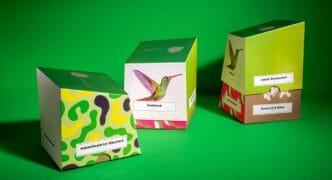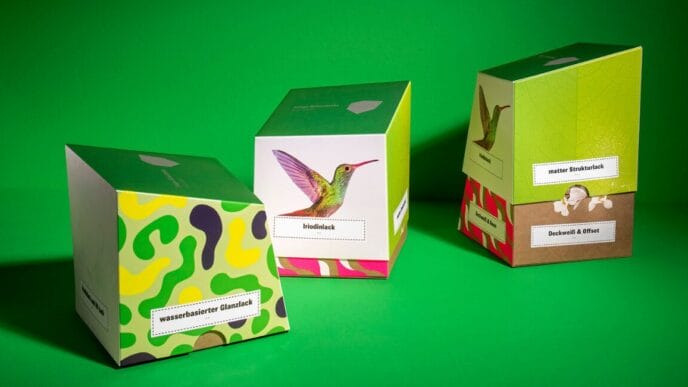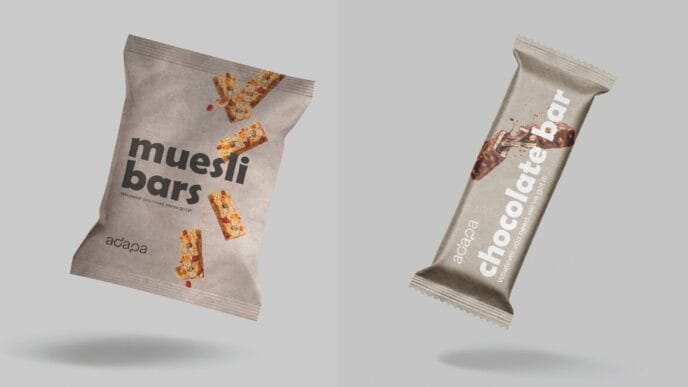
Paper-based packaging is also a trend in the food sector, but the variety of paper types and coating options is large and choosing the right material is often complicated. This is where the Hamburg-based start-up One.Five comes in with a new business model and uses artificial intelligence to find the optimum packaging more quickly.
Plastic-based solutions, which have been the standard for decades, are increasingly coming under regulatory and social pressure to justify themselves. One.five is therefore focussing on highly functional, recyclable paper packaging that is future-proof from a regulatory perspective and can also be economically integrated into existing value chains.
„We take a different approach,“ says founder Martin Weber. „Research and development in the packaging market often take a very long time, swallow up large budgets - and a lot of things end up coming to nothing. Our aim is to avoid exactly that and to get the requirements that are critical to success right from the start.“ These success-critical requirements are diverse and range from product protection and machinability to barrier properties, recyclability and regulatory compliance through to cost efficiency and consumer acceptance.

Translator between market and material
At its core is an AI-based analysis platform that One.five continuously feeds with material, process and application data. The company operates its own laboratory, produces test batches, accompanies pilot runs at paper manufacturers and converters - and transfers all these findings into a data-driven model.
The company was founded almost four years ago by Martin Weber and Claire Hae-Min Gusko. Today, around 20 employees work at One.five, half of whom are materials scientists, biologists and bioinformaticians, while the other half are software developers and data scientists. This combination was chosen deliberately.
„AI is our analysis tool for the paper industry. There are countless types of paper that need to be functionalised. Our platform translates the complex requirements of brand owners into technical parameters - and can tell paper manufacturers exactly which material is needed for which application.“
Martin Weber, co-founder One.five
Together with partners such as kraft paper manufacturer Starkraft or glassine paper manufacturer Grünperga, materials are specifically functionalised - for example with particularly thin, bio-based barrier coatings that are CEPI-compliant and heat-sealable.
The new EU packaging regulation (PPWR) acts as a catalyst here. Among other things, it calls for greater recyclability, material reduction and transparency throughout the life cycle. „The bullseye has never been so small,“ says Martin Weber. „So many requirements are placed on packaging at the same time. We therefore want to understand at an early stage what regulatory requirements our customers will face - and integrate this directly into material development.“
From the algorithm to the shelf
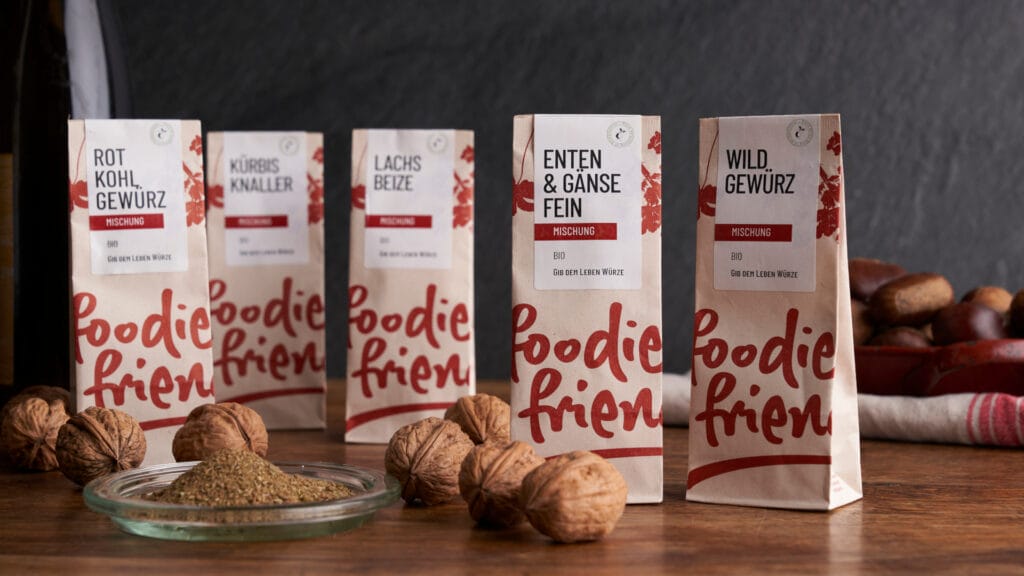
One.five's approach works, as demonstrated by applications that are already on the market. For example, the start-up has developed Hazelsun, a paper-based barrier packaging made from agricultural waste, for the organic spice manufacturer Foodie & Friends. The material is recyclable via the waste paper stream and provides a reliable oxygen and moisture barrier. „The project shows that even sophisticated food packaging can be successfully converted from plastic to paper.“
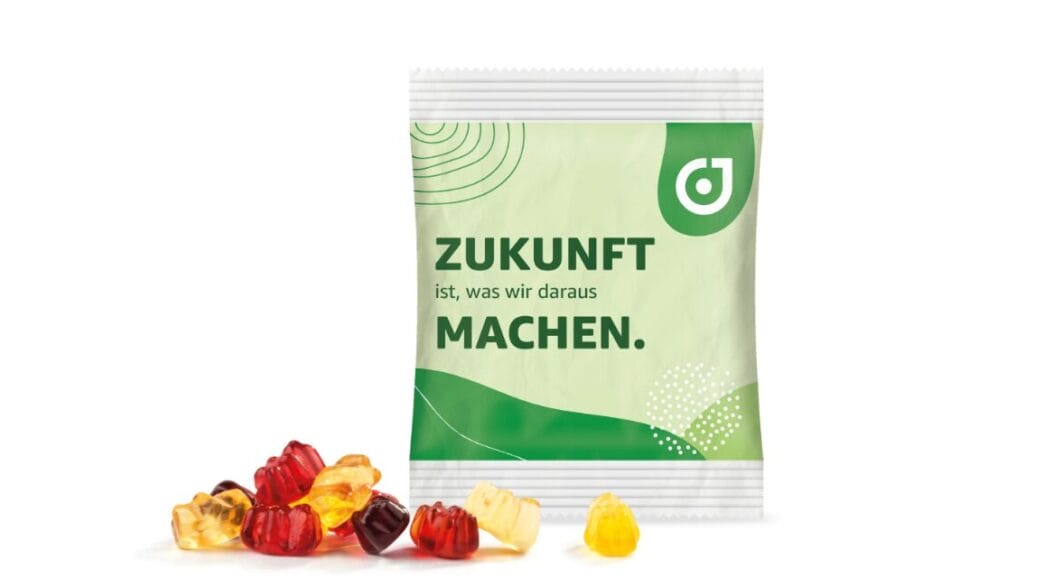
Promotional confectionery manufacturer Jung was faced with a classic problem: the paper-plastic composites it had previously used were not recyclable. The AI-supported Bluemorph solution made it possible to switch to FSC-certified, paper-based and recyclable packaging.
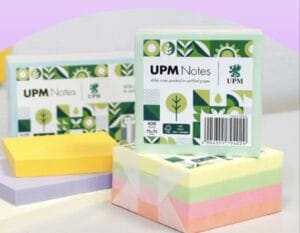
Transparent packaging for sticky notes is a challenging application. Together with UPM Notes, One.five developed Glassleaf, a paper-based, translucent solution that allows the product to be seen, is recyclable and produces 15 to 20 per cent fewer emissions than plastic packaging.
One.five sees itself as an innovation partner. Customers acquire recipes, gain access to the platform and are supported during implementation right through to the production facilities. Data scientists are just as much at the machine as material experts - a combination that is still unusual in the industry. „We don't work theoretically, but in practice,“ says Weber. „The data from real projects makes our system better and better - and enables us to work on many customer solutions in parallel.“
This course is supported by a recently completed Series A financing round in which the start-up raised 14 million euros, including from Dr Hans Riegel Holding. The capital is being channelled in particular into the expansion of the company's own AI platform.
Paper as the key to the circular economy
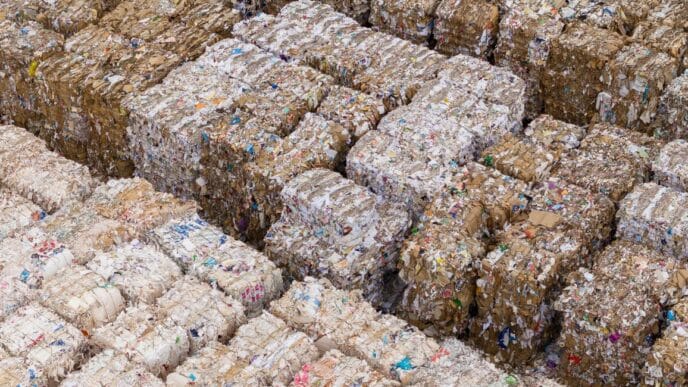
Even though One.five occasionally experiments with rPET or moulded fibre, the clear focus is on paper-based solutions for the waste paper cycle. Bioplastics are only used - if at all - as coating materials. „We are 95 per cent paper-focused, because paper offers the greatest potential today for combining functional packaging with a clear end-of-life scenario.“
Incidentally, the company was named after the 1.5-degree climate target set at the 2015 World Climate Conference.