Fibre-based trays can replace plastic products in many applications. Faller Packaging and Harvest Packaging are demonstrating this with their moulded fibre trays for the pharmaceutical and MedTech industries.
The joint approach is deliberately application-oriented. The partners contribute their respective strengths and continuously develop the product. Harvest contributes technological expertise in the manufacture of moulded fibre, while Faller Packaging has the know-how for pharmaceutical packaging.
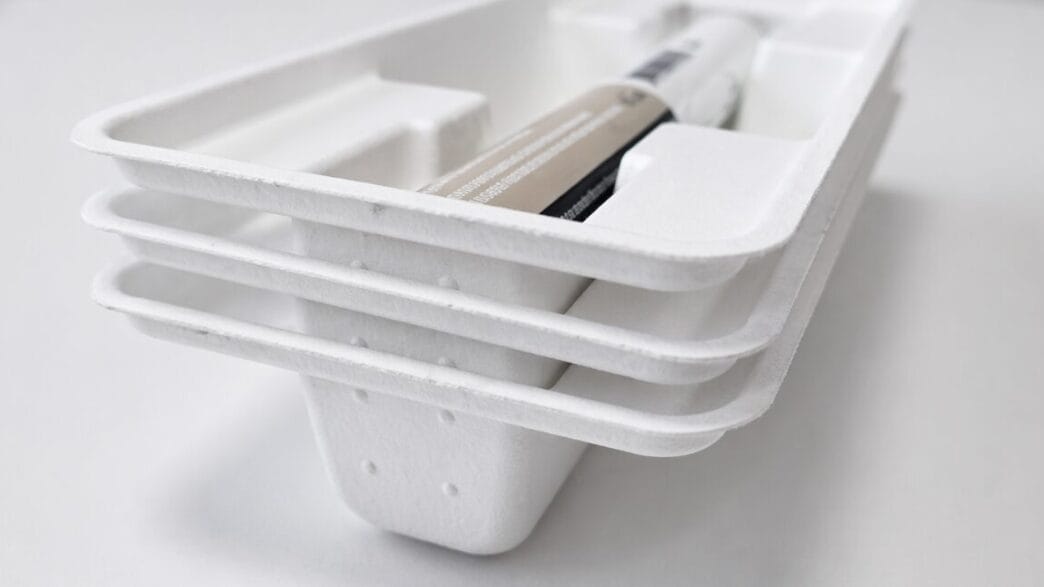
The trays are made from responsibly managed sources, are PFAS-free, and fully recyclable. The use of mono-materials further improves sortability in the recycling process. Production is carried out using the wet-moulded fibre process. Fibres are processed in shaped moulds and compacted under pressure and temperature. In-mould curing ensures dimensional stability and a smooth surface. This gives the trays a performance comparable to plastic solutions. They are suitable for healthcare applications, such as auto-injectors, pens, or diagnostic solutions.

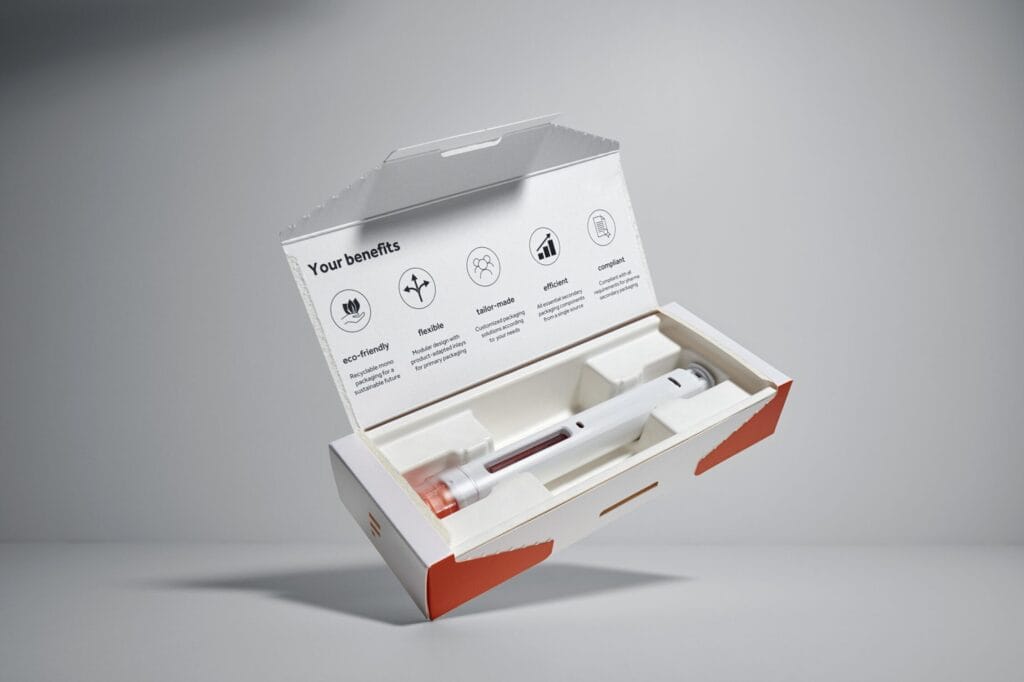
„Our aim was to overcome the typical limitations of classic moulded fibre,“ explains Neil Reilly, founder of Harvest Packaging. „The trays offer the precision, stability and surface quality required for pharmaceutical applications – even with complex geometries.“
In addition to their eco-friendliness, Faller Packaging's moulded fibre trays also offer practical advantages. They are robust and reliably protect the contents. Furthermore, they are versatile and can be produced in various sizes and shapes to meet individual customer requirements. This versatility makes them an attractive option for companies looking for sustainable packaging solutions.
Integration into processes
A key challenge with new materials lies in regulatory requirements and integration into existing packaging processes. This is precisely where the joint approach comes in. The trays are designed to be integrated into existing packaging lines with minimal adaptation effort. Features such as reliable de-nesting, low stacking heights, and stable geometries support processing on automated systems. Pilot projects show that integration into existing systems is possible. The partners see particularly great potential in new developments that align product, packaging, and machinery from the outset.
For companies with ambitious sustainability goals, switching to fibre-based trays can help reduce Scope 3 emissions, as well as cut plastic-related levies and EPR fees.
Source: Faller Packaging