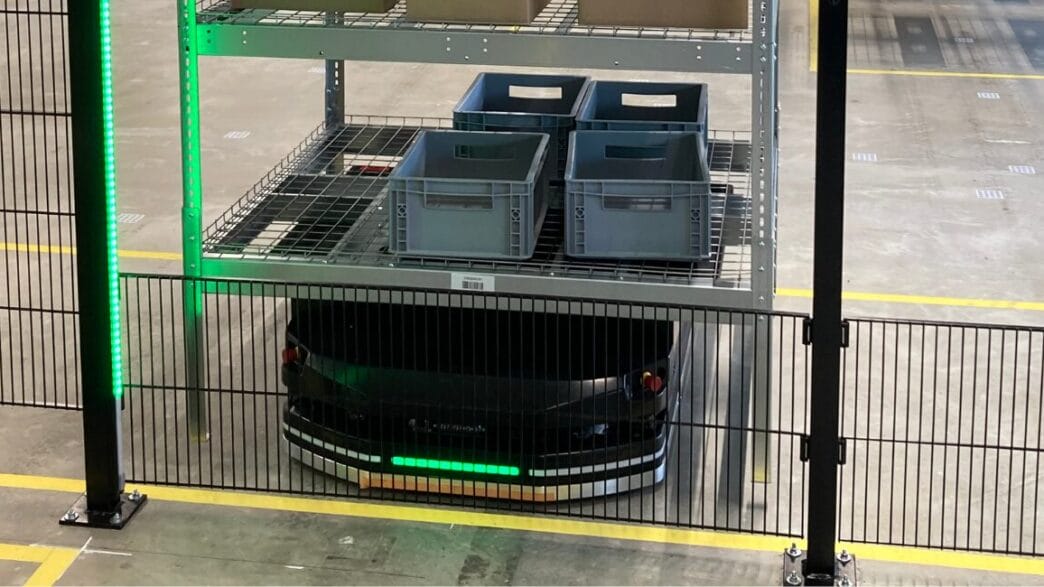
At LogiMAT 2026, Safelog is placing the topic of goods-to-person at the centre of its trade fair presence. The company wants to show how mobile robotics can reduce bottlenecks between pickport, consolidation and packaging and make fulfilment processes more scalable.
The increasing density in fulfilment centres and rising demands in e-commerce are increasingly shifting bottlenecks to the transition zones between picking and packing. While automated small parts warehouses, ASRS and shuttle systems are established in many places, according to Safelog, the biggest challenges today arise in the pick-pack transition area.
„We are seeing that the majority of our customers“ automation projects are currently goods-to-person projects. The requirements are clear: faster throughput, fewer errors, more ergonomics and remaining flexible and scalable at the same time."
Mathias Behounek, Managing Director Safelog
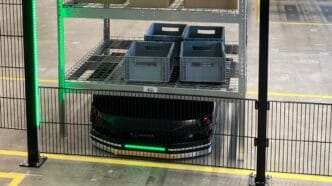
The mobile robot GT1 spin will take centre stage at the trade fair. The system moves under shelves of different designs, lifts them and transports them through existing layouts. According to the company, the compact design offers particular advantages in grown structures where there is no standardised geometry. An integrated rotation function enables flexible movements even in narrow aisles.

High speed in the pick-pack area
Safelog will be presenting the XS1 model for transport routes between pickport and packing station. With travelling speeds of up to 4 m/s, the robot is designed to support high cycle rates and allocate containers without errors. The aim is to avoid bottlenecks in the transition between picking and packing.
Both robot models work with agent-based control software. According to the company, the system does not require a central control centre. The vehicles communicate with each other, distribute tasks independently and remain functional even if individual robots fail. They also support the VDA 5050 standard and can be integrated into mixed fleets.
Another focus is on integration into existing systems. According to Safelog, the robots can be integrated without extensive structural modifications. In multi-storey fulfilment centres, the so-called „floor jump“ can be implemented via interfaces to lifts or console lifters.
Source: Safelog
Safelog at the LogiMAT 2026: Hall 5, Stand 5C29