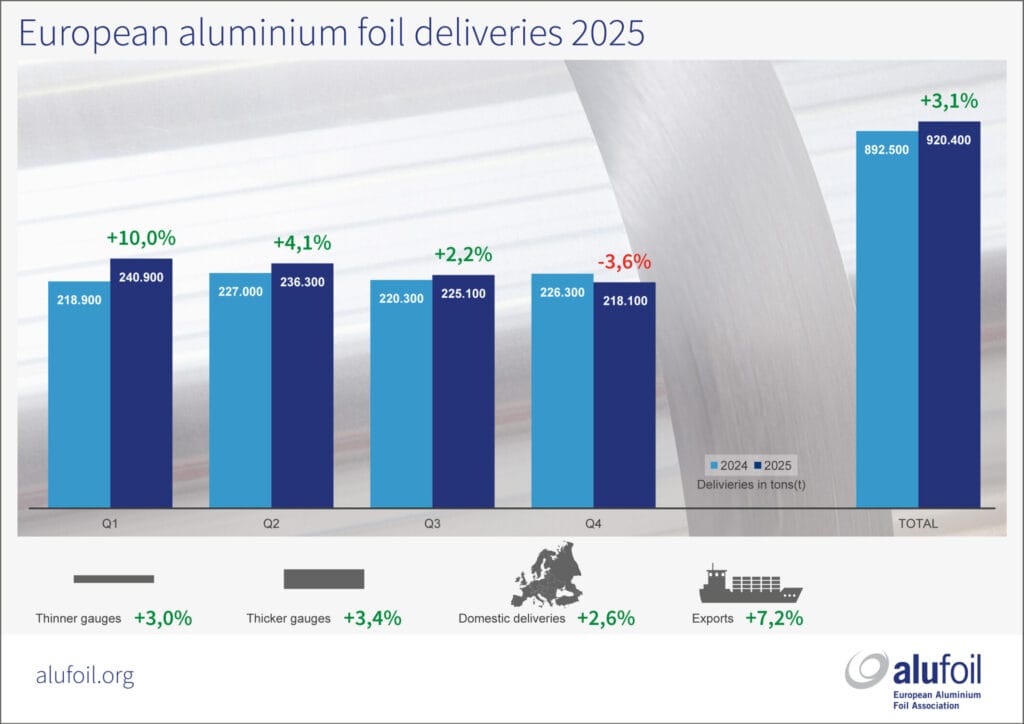
The global market for aluminium foil is more stable in 2025 than in the previous year, despite a weaker fourth quarter. The European aluminium foil industry recorded moderate growth of 3.1% compared to 2024, with a total production of 920,400 tonnes. These figures come from the European Aluminium Foil Association (EAFA).
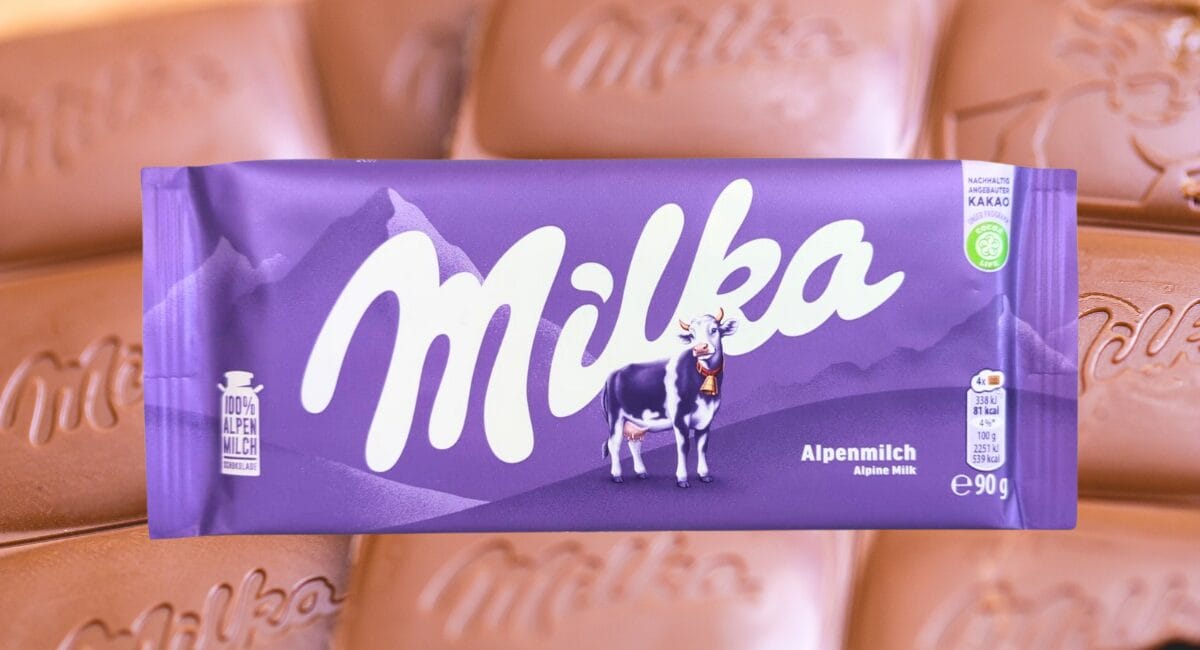
Both the European domestic market and exports contributed to this growth. Deliveries within Europe rose by 2.6 per cent, while exports outside the region increased by 7.2 per cent. Despite a strong start to the year, demand within Europe lost momentum in the second half of the year. Packaging applications for chocolate and coffee were particularly affected by a significant drop in demand, triggered by a sharp rise in raw material prices.
Differences in film thicknesses
The production of thin aluminium foil below 60 µm, which is mainly used for flexible packaging and household applications, increased by three per cent compared to 2024. However, there was also a noticeable decline in demand here in the fourth quarter. These thin films came under pressure due to US tariffs, overcapacity and increasing competitive pressure from other markets. In addition, the stockpiling behaviour of customers outside Europe in the first half of the year contributed to weaker demand towards the end of the year.

Thicker aluminium foil (61-200 µm), which is used for semi-rigid containers, industrial applications and technical applications, recorded growth of 3.4% compared to the previous year. Demand in this segment also weakened slightly in the fourth quarter. Overall, both thickness categories recorded a low single-digit decline in the last quarter.
Challenges and prospects
Göksal Güngör, Chairman of the EAFA Roller Group, commented on the results: „The developments in 2025 show that the market has stabilised overall, even if individual segments remain volatile. In the packaging sector in particular, we are observing a clear sensitivity to global trading conditions.“
The industry is cautiously optimistic about the future. At the same time, there are uncertainties regarding the further development of demand, cost trends and the stability of global supply chains. New geopolitical tensions and areas of conflict, such as in the Middle East, are having a major impact on logistics, energy prices and international trade flows.
The European aluminium foil industry continues to operate in a challenging market environment, but is once again demonstrating remarkable resilience. This resilience will be crucial to overcoming future challenges and capitalising on opportunities in a changing global market.
Source: European Aluminium Foil Association