The requirements for beverage packaging are changing. Material reduction, recyclability and regulatory requirements are driving development - and leading to new solutions along the entire value chain.
The beverage industry is under pressure: the European Packaging Regulation, ambitious sustainability targets set by manufacturers and changing consumer behaviour require new approaches to materials, processes and design. Traditional forms of packaging such as PET and glass bottles, beverage cans and cardboard packaging are increasingly being developed further. Less material is required, improved barrier properties, digital process control and a high level of recyclability.
Less material with the same performance
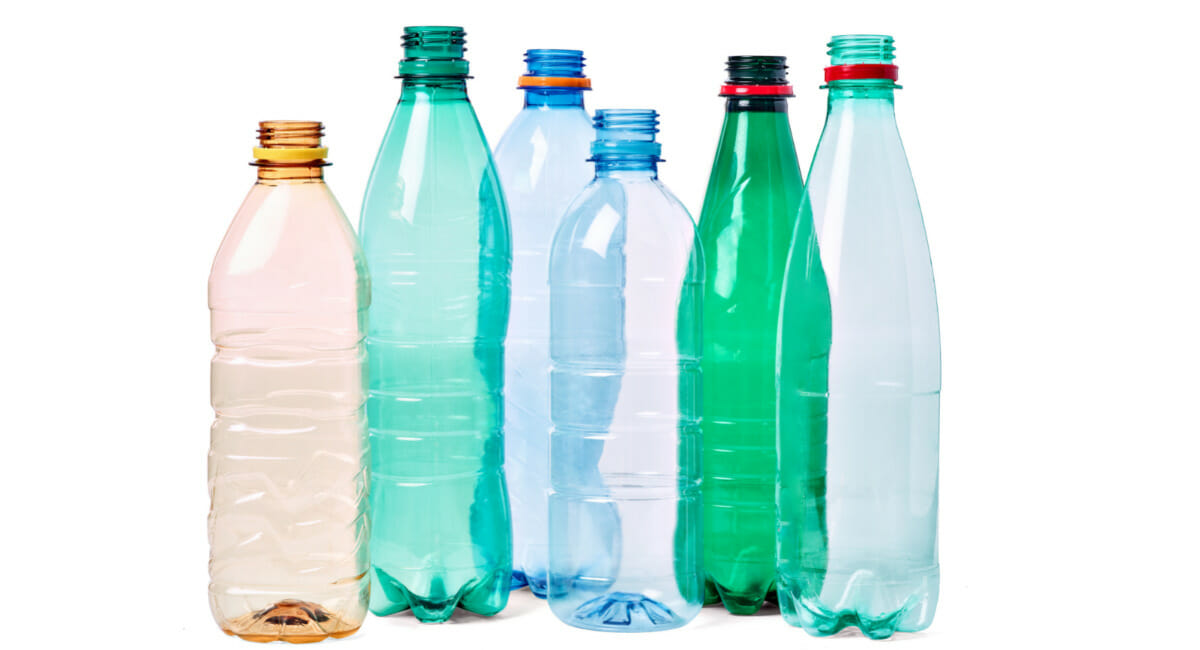
Weight reduction is a key issue. According to the machine and systems manufacturer KHS, it is pursuing a „premium light weight“ approach. With the Premium Lite bottle, the company is presenting a solution for still water made from 100% recycled PET, which weighs just 6.2 grams for a volume of 0.25 litres.

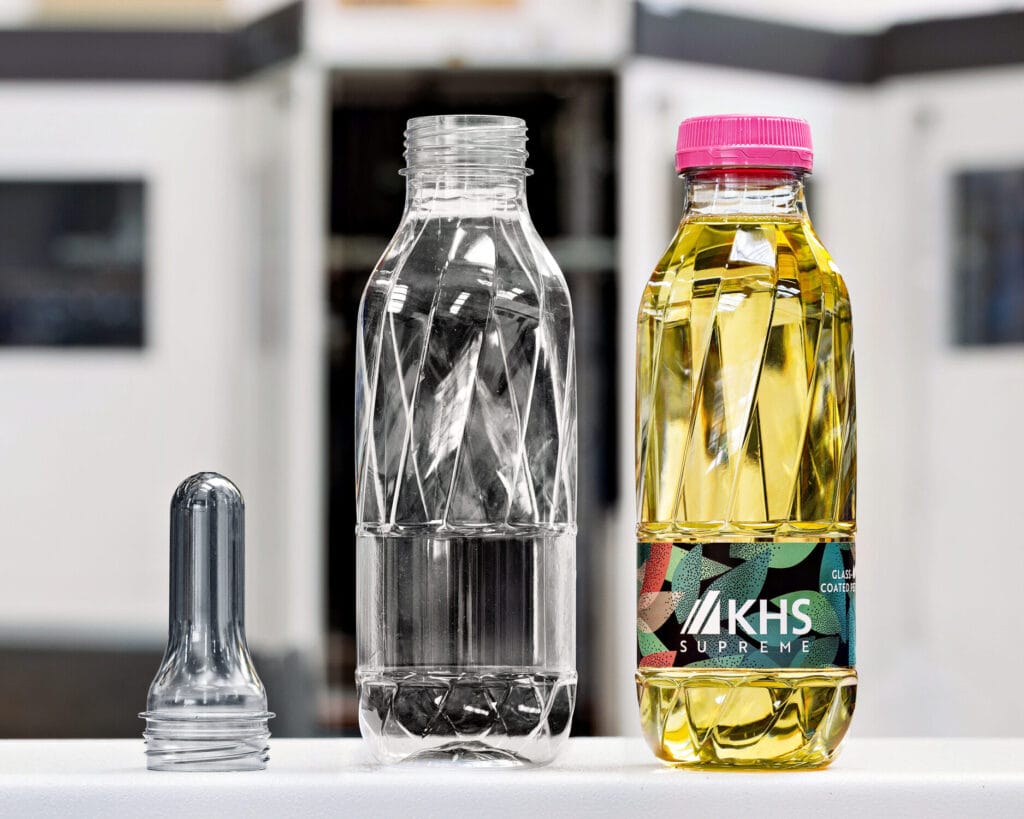
The bottle is intended to combine minimal material usage with a high-quality appearance and, according to KHS, is designed for use on modern high-speed lines. It is produced on the InnoPET Blomax Series V stretch blow-moulding machine, which is designed to enable stable production at high volumes.
The company goes even further with the „Supreme“ PET bottle. Plasmax technology is used here: a layer of silicon oxide less than 100 nanometres thick is applied to the inner wall of the bottle. This acts like glass and protects oxygen-sensitive drinks from oxidation. At the same time, according to the manufacturer, the bottle remains fully recyclable, as the coating comes off again during the recycling process.
Recyclability as a system task
In parallel to material reduction, the recyclability of individual components is becoming more of a focus. CCL Label is showcasing solutions in the sleeve and labelling technology sector. With EcoFloat, a shrink sleeve solution has been developed whose material floats in the PET recycling process while the PET sinks. This physical separation is crucial for high-quality bottle-to-bottle recycling.
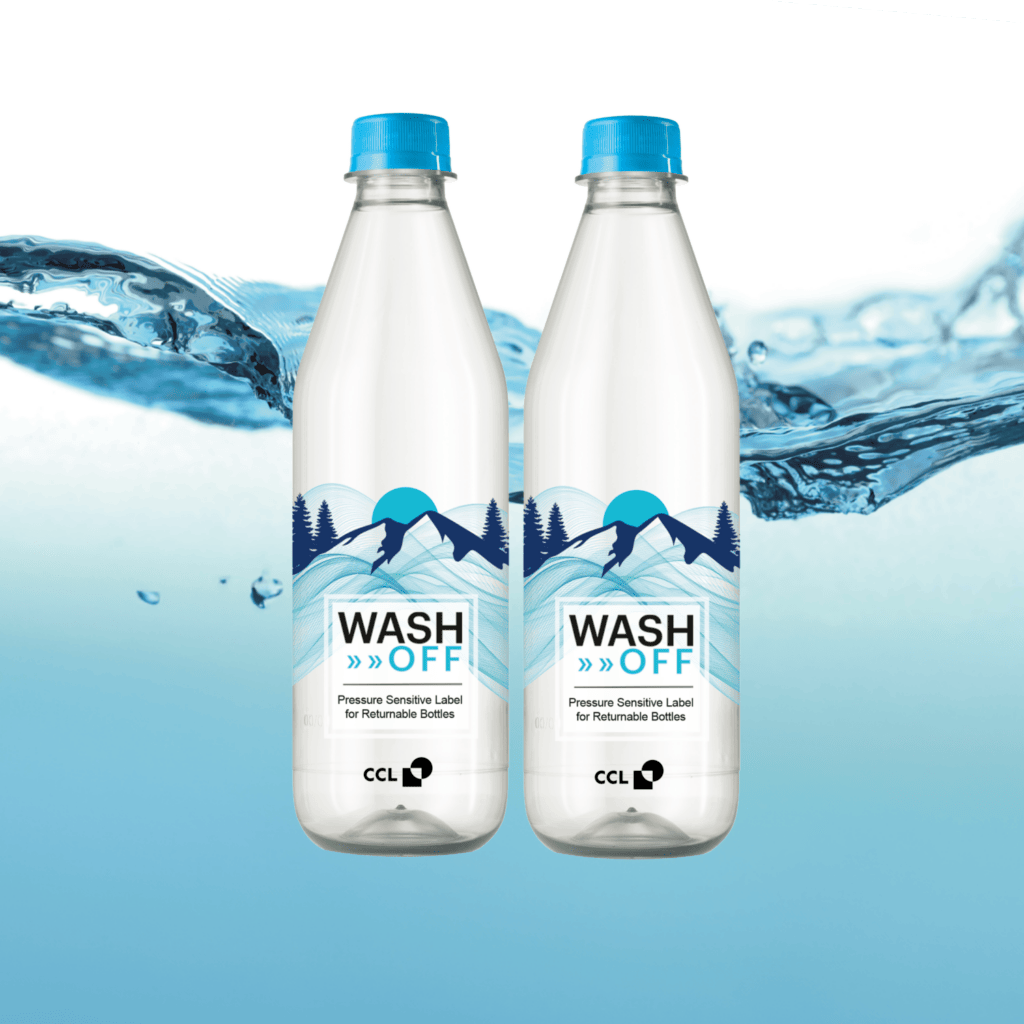
According to the company, it also offers WashOff labels that can be removed from reusable bottles in industrial washing processes without leaving any residue. Solutions have also been developed for non-returnable glass bottles in which labels can be almost completely removed.
Adhesives and auxiliary materials at a glance
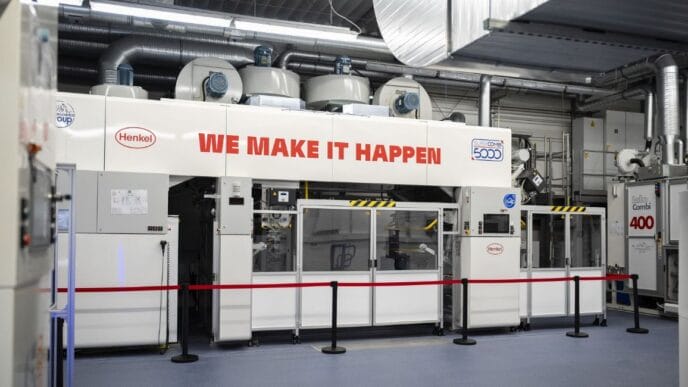
In addition to packaging and labelling, adhesives are also becoming increasingly important. Henkel Adhesive Technologies has developed a mineral oil-free hot melt adhesive which, according to the company, can be up to 98 per cent removed in the recycling process. The residues are removed from the material flow together with the labels.
The solution is suitable for paper and plastic labels and, according to the manufacturer, can be processed at speeds of up to 40,000 bottles per hour. At the same time, the processing temperature is comparatively low, which saves energy and reduces the load on the system.
Direct labelling instead of labels
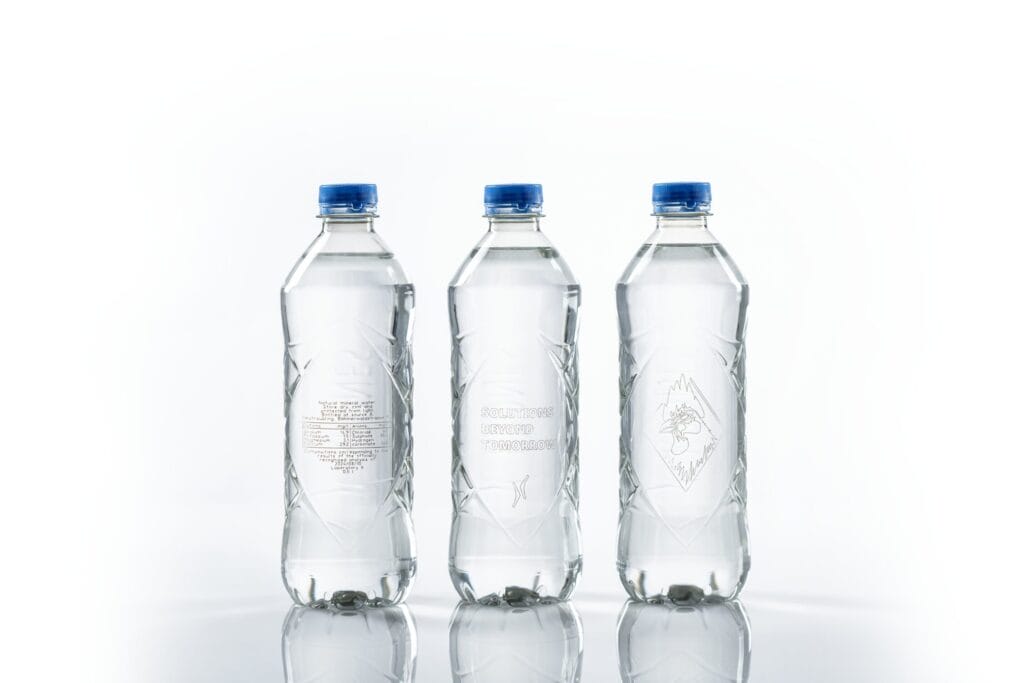
Another approach to saving material is the direct labelling of packaging. With „DecoBeam“, Krones has developed a solution in which information such as ingredients or best-before dates are applied directly to PET or rPET bottles by laser. This reduces the amount of material used and simplifies the recycling process.
For glass containers, the company offers an alternative with „INKpression“, in which a design is transferred from a carrier material to the container. According to the manufacturer, this can replace traditional printing processes.
Beverage cans remain in demand
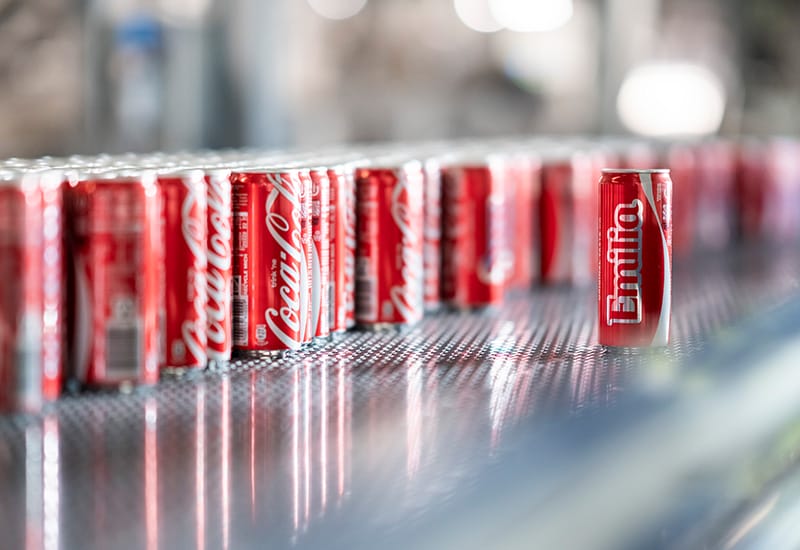
Parallel to these developments, the beverage can continues to gain in importance. Demand has risen in recent years, particularly for soft drinks and energy drinks. According to Metal Packaging Europe and European Aluminium, the recycling rate in Europe was over 76% in 2023. Countries with deposit systems even achieve rates of up to 90 per cent.
Manufacturers are also reacting to this development. Coca-Cola Europacific Partners Germany is investing in a new can filling line at its Halle site to complement its existing portfolio. According to the company, the reason for this is the increasing demand - canned beverages have recently seen double-digit growth in the German market.
Beverage carton between image and reality
The beverage carton is often regarded as controversial packaging, but it combines various advantages. It is lightweight, protects the product from light and enables a long shelf life. Around three quarters consist of cardboard fibres, supplemented by barrier and plastic layers.
According to the trade association for carton packaging for liquid foodstuffs, a functioning recycling cycle already exists. Around 36,000 tonnes of plastic and aluminium could be processed annually in existing plants. Nevertheless, the legally required recycling rates are not yet being achieved according to the Central Packaging Register Centre.
Consumers take a critical view of new closures
In addition to technical developments, consumer acceptance also plays a role. Since mid-2024, tethered caps have been mandatory for single-use beverage containers. They are designed to prevent caps from being lost and facilitate recycling.
However, a study by the Nuremberg Institute for Market Decisions shows that many consumers take a critical view of this solution. Around two thirds of those surveyed find it impractical to use, especially when drinking or pouring.
Note:
This article was written on the basis of a technical article produced by packaging journal for free use by interested media on behalf of interpack 2026. You can find the original article here. You can find out more about packaging solutions for the beverage industry live at interpack 2026 from 7 to 13 May in Düsseldorf.