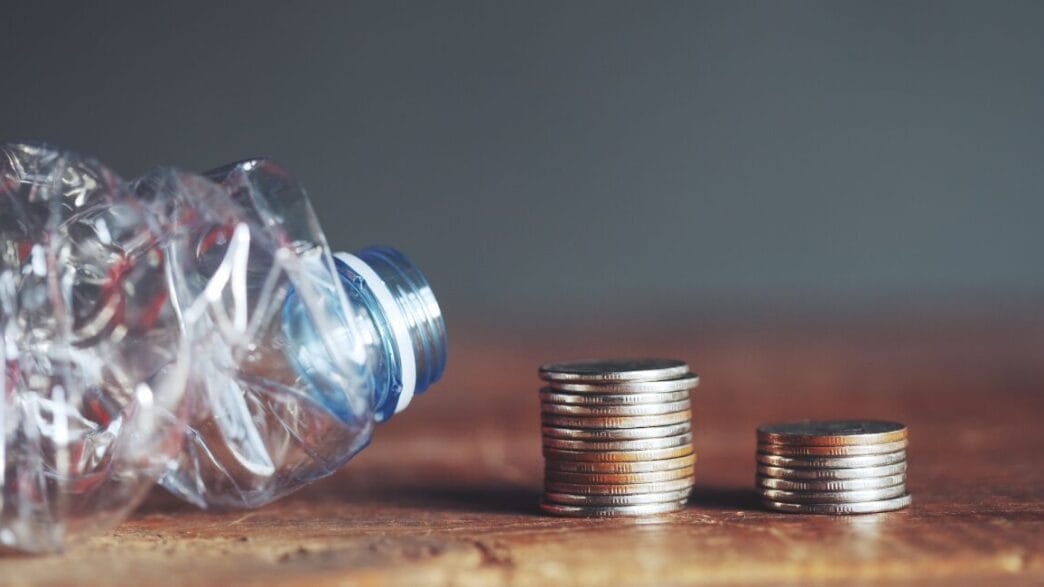
The German Association of Plastics Processors (GKV), the Paper and Film Packaging Industry Association (IPV), and Plastics Europe Germany clearly reject the plastic levy proposed by the Federal Ministry of Finance. The planned levy, which was presented as part of the key figures for the 2027 federal budget and the financial plan up to 2030, is intended to help close budget gaps. However, critics warn that it could unnecessarily burden both the economy and the environment.
The plastics industry is already under considerable pressure from high energy prices and increasing bureaucracy. An additional plastic levy could further weaken the competitiveness of German companies. Dr. Oliver Möllenstädt, Chief Executive of the GKV, emphasises that such a levy would take away the necessary room for manoeuvre for investments from companies. While global plastic production is growing, production in Germany has declined by 26 percent in the last four years. A national special levy could exacerbate this development and endanger jobs.
No positive steering effect
A plastic levy would have no positive environmental steering effect and would instead entail considerable risks for the transformation towards a sustainable circular economy with plastic packaging and for climate protection. It would discriminate against plastics compared to other materials and create perverse incentives to switch to ecologically disadvantageous or poorly recyclable materials, such as composites.

The Industrial Association for Paper and Film Packaging (IPV) also criticises the levy on plastics („plastic levy“) proposed by the Federal Ministry of Finance as a measure that represents a further burden for its member companies and is likely to prove economically counterproductive.
„The introduction of another levy ultimately affects people most in their daily lives – for example, when buying groceries and consumer goods.“
Karsten Hunger, IPV Managing Director
Transformation rather than tokenism
Instead of a plastic levy, the associations are calling for targeted incentives to promote the circular economy. These include measures such as the eco-modulation of licensing fees for systems in German packaging law (future Packaging Act), which reward circular packaging design and the use of non-fossil raw materials. These approaches could actually drive the transformation towards a sustainable circular economy, rather than just engaging in symbolic politics.
Plastics Europe Deutschland stated that it is neither technically nor from an industrial policy perspective understandable that such a move is being made again. The association finds the timing of the initiative particularly surprising. Austria, for instance, recently decided not to pursue a national levy, a step that could also be considered in Germany so as not to jeopardise the transition to a circular economy.
Sources: German Association of the Plastics Processing Industry (GKV); Plastics Europe Germany; German Association of Paper and Film Packaging (IPV)