INSIGHTS INTO THE PACKAGING
If science does not create knowledge
The PPWR is on the horizon and the pressure to act is mounting enormously. Companies along the entire packaging value chain are working hard to implement regulatory requirements and adapt processes. While much is in motion operationally, a critical look at the basis for some decisions is worthwhile. Because not everything that is currently considered „scientifically sound“ lives up to this description.
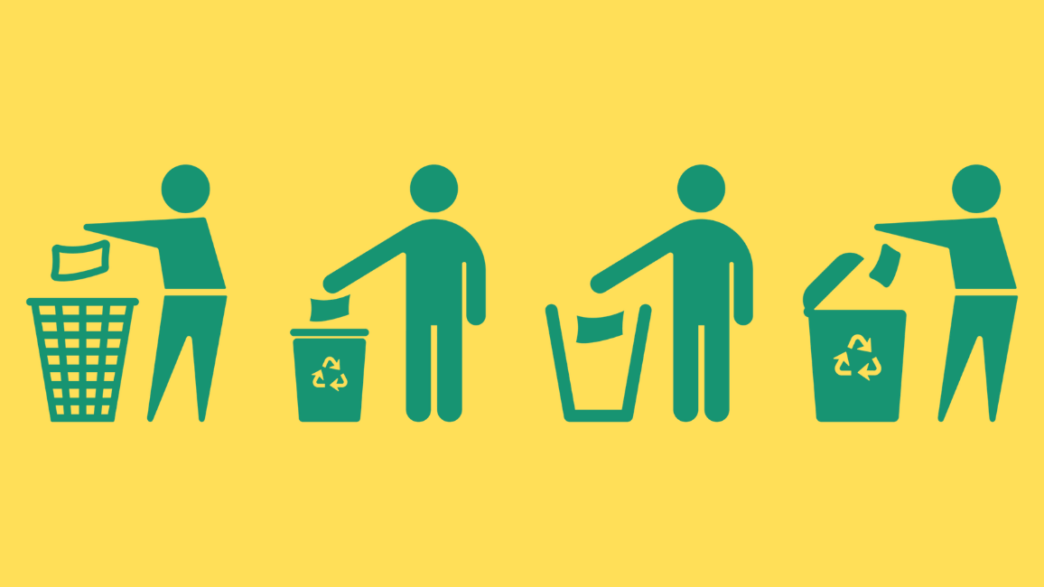
This is particularly clear in the previous implementation of Article 12. The labelling for waste separation is intended to provide guidance and improve sorting performance. The extensive report from the Joint Research Centre (JRC), which provides recommendations on design to the European Commission, serves as the basis. A key conclusion from this report: coloured labels work particularly well.

The problem is: this conclusion is not supported.
Yes, the study shows that labels are generally helpful. No, it does not prove that coloured pictograms are superior to black-and-white pictograms. Nor does it show that additional text is required. Most importantly, however, it lacks a direct comparison of all variants. This is not a trivial detail, but a core methodological problem – especially when a clear recommendation is derived from this data, with enormous consequences.
Because we are not in an academic discussion but in a real economic market. If concrete design specifications are derived from non-evidence-based study results, this has direct consequences – both economically and ecologically.
For example, ink consumption: while monochrome labels cover about 25 to 30 percent of their surface area with ink, this figure is 85 to 90 percent for coloured labels. This isn't a minimal difference, but a massive leap in resource requirements. Even with conservative calculations, this results in more than a doubling of consumption. Scaled up, this means – depending on the size of the pictogram – additional ink quantities amounting to two- or three-figure millions of litres, year after year.
The scale becomes even clearer when looking at the quantities: Even conservatively estimated – three discarded packaging items per day per person – this results in around 493 billion packaging units annually for the EU. An average of one and a half labels per packaging corresponds to approximately 740 billion printed pictograms per year. Every design decision is therefore reproduced billions of times.
Against this backdrop, a central question arises: how robust must a scientific foundation be when it has such far-reaching consequences? The answer is obvious: very robust. But that is lacking here. Instead of clear evidence, we see assumptions; instead of valid comparisons, interpretations. And thus, recommendations are made that incur significant costs and potentially create additional environmental burdens – precisely in the name of sustainability.
In this, a fundamental insight is overlooked: it is not colour that seems to be the decisive factor, but comprehensibility. People sort better when they understand the system, when they have certainty and do not have to puzzle. This is achieved through clear logic, consistency and recognisability – not necessarily through more colour. On the contrary, overloading with design elements can create new uncertainty.
The PPWR once again creates almost insurmountable hurdles. Considerable resources must be mobilised to implement new labelling systems, material and energy consumption will increase significantly, as will costs. This is not an argument against regulation, nor against labelling. However, it is a clear plea for evidence over activism. Because if „science“ is used to legitimatise measures, it should actually create knowledge and not just provide plausible assumptions. And if we start re-labelling hundreds of billions of packages, it should at least be ensured that the intended goal is actually achieved. Anything else would simply be inefficient.

Sonja Bähr is one of the most prominent voices in the packaging industry.
The packaging technology graduate and long-standing strategy consultant brings together technical expertise and a clear attitude - she thinks about packaging holistically, from the perspective of the market, brand, material and people.
In her column "Presented - insights into packaging" she looks behind the headlines and standardised texts for packaging journal - and at what packaging is supposed to do in practice: protect, sell, simplify and inspire. Sometimes opinionated, sometimes tongue-in-cheek - but always technically sound.
🎯 Regularly a new impulse for the discussion about sustainability, regulation, innovation and reality in the world of packaging.