
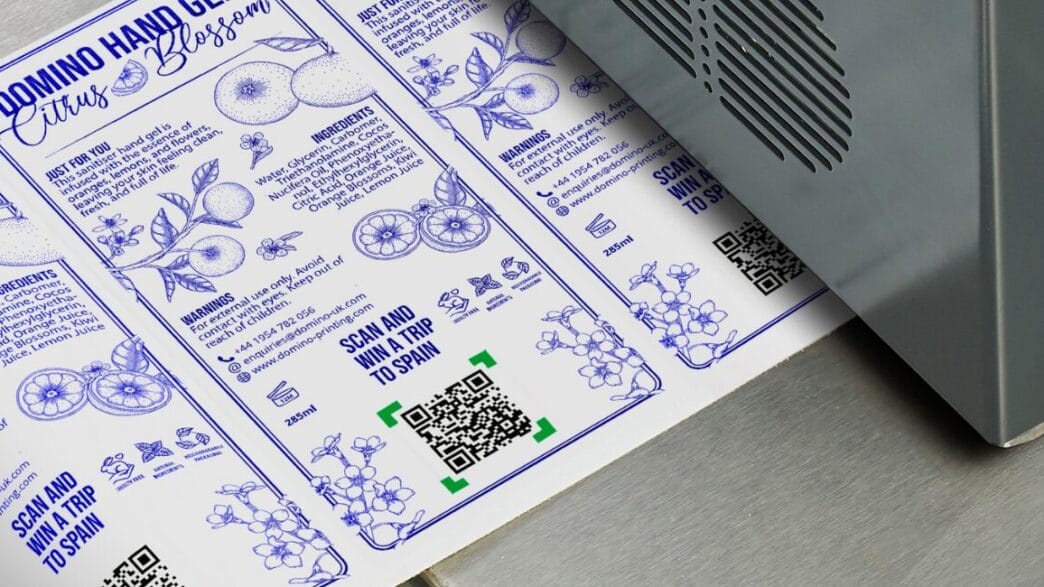
The introduction of GS1-based 2D codes on retail packaging and labels is gaining momentum. These codes are multifunctional data carriers that provide information on manufacturers, prices, and consumers. The correct implementation of these codes is crucial, as faulty or unreadable codes can undermine the trust of retailers and consumers. Toby Hayhurst, Product Manager at Domino Printing Sciences, explains how converters can prepare for the growing demand for these codes.
A key aspect of implementing GS1-compliant 2D codes is selecting the right printing technology. Brands need to decide between static and variable QR codes, as well as the required production volume. Static codes, which essentially replace a GS1 EAN-13 barcode, contain the Global Trade Item Number (GTIN) of the product and optionally a URL. These codes are supplied as part of the layout and can be printed in high volumes, both analogously and digitally, provided quality standards are met.
Variable and serialised 2D codes offer added value but are more complex to produce. Large-scale production requires a variable data digital printing workflow. Processors may need to license third-party APIs to link codes to databases that support digital product passports. This necessitates close collaboration with API providers and print workflow providers.

Ensure high scan quality
Print quality is crucial for the reliable scanning of GS1 QR or DataMatrix codes. Challenges such as dot gain and ink spread in flexo and digital inkjet processes can affect readability. The colour and surface texture of the substrate also play a role. To avoid problems, converters should verify QR codes during the printing process itself.
Verification systems identify faulty codes and ensure they can be reliably read across various scanning technologies. Processors may need to switch to new vision systems or camera technologies to maximise return on investment.
Ensure compliance with quality standards
GS1 QR and Data Matrix codes must achieve a minimum print quality grade of 1.5 according to ISO/IEC 15415:2024. This standard helps to ensure high read rates in retail. Processors can demonstrate compliance with these standards and build trust through quality protocols and verification reports.
Collaboration between processors and brands is crucial for clearly defining responsibilities and avoiding potential problems early on. Open communication helps to align requirements and identify challenges in a timely manner.
As brands increasingly advance their strategies around 2D codes, communication between converters and brands becomes ever more important. Those who act now and collaborate with an expert for advanced variable data printing position themselves as strong partners and consultants for a successful transition to 2D codes.
Source: Domino Printing Sciences