The Euro pallet plays a central role in European packaging and circular economies. However, the requirements for this supposedly stable standard have increased. Markets and networks have become more volatile and legal frameworks are increasing pressure on companies. This leads to noticeable stress in day-to-day operations, particularly within pallet circulation. PAKi Logistics explains how these developments are seen from the perspective of a pooling provider.
The Euro pallet is far more than an operational tool. As a standardised load carrier, it forms the basis for functioning goods flows, supply security, and efficiency along the supply chain. It connects industry, trade, and logistics across company and country borders, making it a central element of the European packaging and circular economy.
At the same time, the environment has fundamentally changed. Markets and networks have become more volatile, legal frameworks, for example regarding reuse, documentation obligations and the circular economy, are tightening, and demands for transparency along the value chain are increasing. This means that two worlds are colliding in many companies: the supposedly stable constant of the Euro pallet and day-to-day business in which operational pressure in the pallet cycle is noticeably increasing.

Where the stress in the pallet cycle arises today
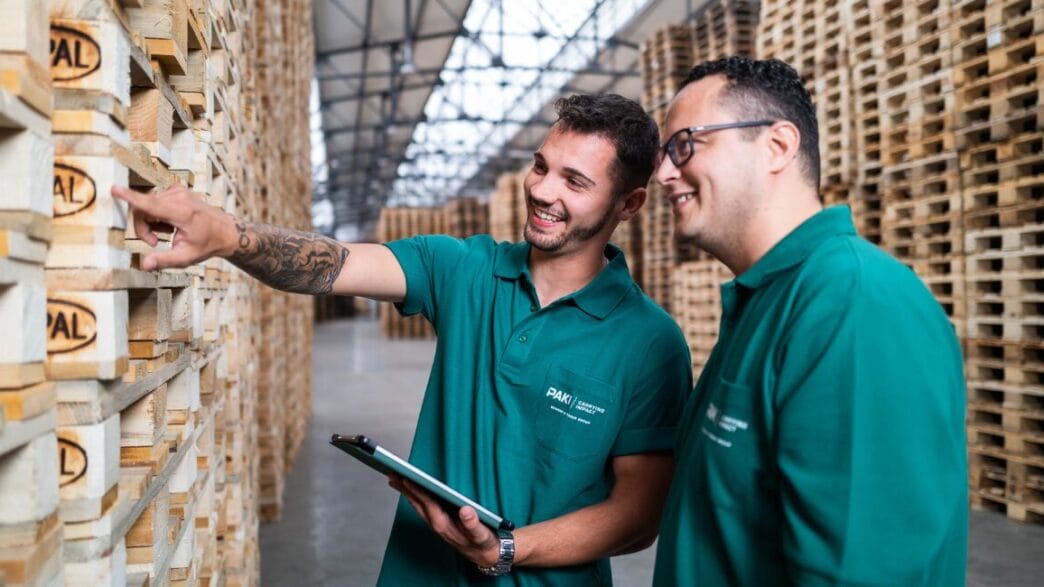
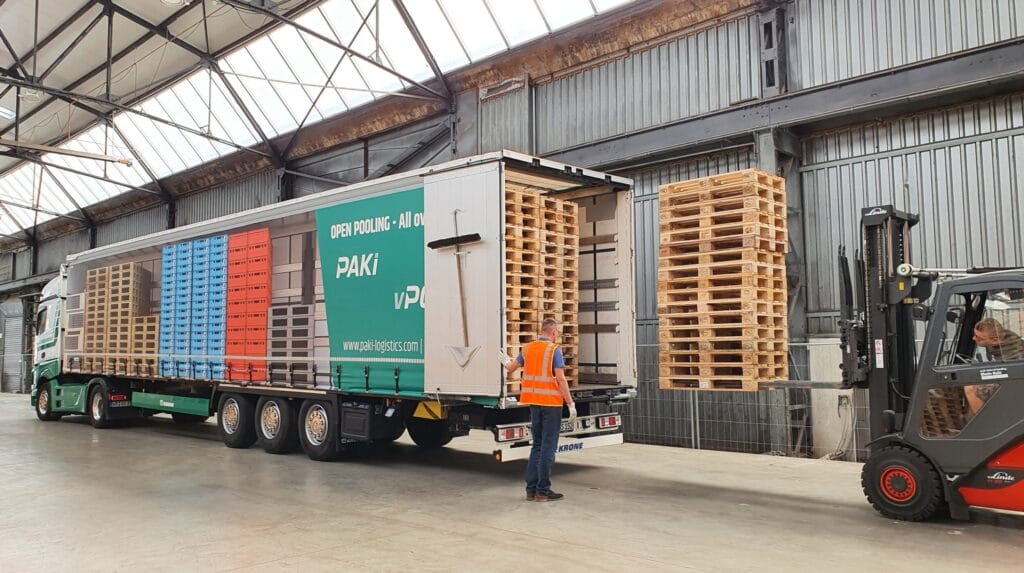
From the practical experience of PAKi Logistics, a Europe-wide open pooling service provider for Euro pallets, recurring patterns are emerging:
- Availability and quality are volatile: regional imbalances, seasonal peaks, and differing usage profiles mean that pallets become scarce in some networks while remaining unused elsewhere. This makes it more challenging to meet reuse targets and defined quality standards across entire networks.
- Voting effort along the chain: Differing expectations regarding quality, interchangeability, and documentation repeatedly lead to renegotiations and clarification cases between industry, trade, and logistics. This ties up resources and makes it difficult to establish pallet cycles as a reliable component of the circular strategy.
- Exchange processes are often still paper-based: in many companies, pallet movements are documented via delivery notes, pallet notes or manual lists. Breaks in media between paper, Excel and various systems prevent a consistent view of stock and movements.
- Transparency remains patchy: it is often only possible to trace with considerable effort who used, exchanged or returned how many pallets, at which location and at what time, with consequences for operational control and auditability.
The stress is therefore rarely attributable to the standard itself, but rather to the processes surrounding the standard, where availability, quality, booking, and return must be ensured through the interplay of different partners.
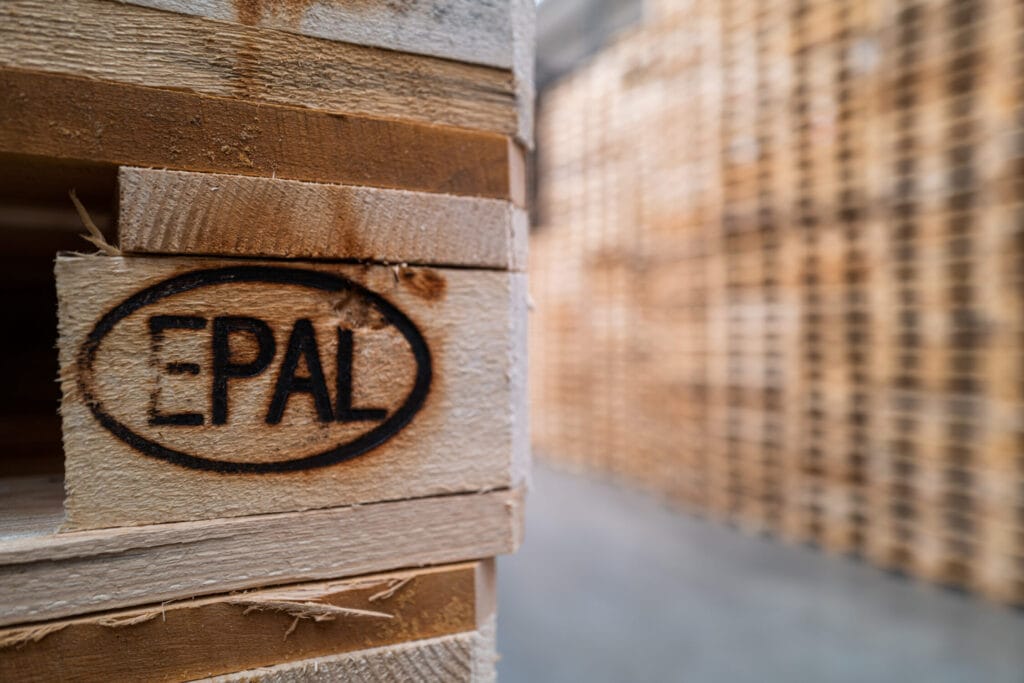
Pallets as tertiary packaging in circular and regulatory logistics
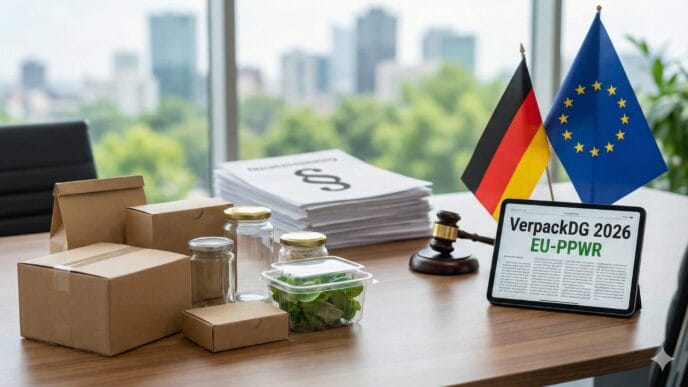
In the political and regulatory debate, pallets are increasingly being understood not just as logistical work equipment, but explicitly as part of the world of packaging. As tertiary packaging, they are embedded in European regulations on waste avoidance, reuse, and reporting obligations. For companies, handling pallets is therefore no longer just a matter of operational expediency, but a building block of their own circular economy and sustainability strategy.
Structured, organised reusable and pooling systems are gaining importance against this backdrop. They help to achieve reuse rates, establish transparency over cycles and inventories, and simultaneously increase economic efficiency in load carrier management. It is crucial that standards, processes, and the database align: Only when quality, exchange rules, and digital representation dovetail can the open pallet cycle be reliably managed.
What this means for industry, trade, and logistics
For manufacturers, traders, and logistics service providers, the question is therefore less about whether the Euro pallet will remain the standard in the future, but rather how the open pallet circulation can be organised sustainably in a more complex environment. This includes, among other things:
- a common understanding of which quality and process standards apply along the chain and who is responsible for quality, booking and return,
- as well as the gradual transition from paper-based to digitally supported processes to make inventories, movements, and responsibilities more transparent.
Practical experience shows that where pallet loops are actively managed, responsibilities are clearly regulated, and data is used consistently, operational stress decreases, and the standard can leverage its strengths for efficiency, security of supply, and a circular economy.

Annegret Kramer-Münch, CEO of PAKi Logistics, explains in the following interview how these developments look from the perspective of a pooling provider and what changes PAKi Logistics is observing in industry, trade, and logistics.
„The standard has been set, the processes decide“
Frau Kramer-Münch, you've been observing growing stress in the pallet cycle for some time. Where is this pressure most evident in practice?
We are noticing in many conversations that uncertainty in the market has significantly increased. New regulatory requirements, operational pressure within the pallet cycle, and the question of which solutions will prove successful in complex European networks are concerns for many companies.
Therefore, we consciously want to intensify the dialogue with customers, partners, and relevant market players. Our aim is not to provide simple answers, but to bring together experiences, perspectives, and practical solution approaches.
Our new information formats are part of this opening up. Firstly, we have launched a free webinar series for this purpose. There, we analyse market changes, openly discuss operational challenges, and show together with customers and partners what works in practice. Especially in an open pallet cycle, quality, process discipline, and digital transparency are crucial for creating stability and trust.
Why, in your view, is it no longer sufficient to consider the Euro pallet solely as a technical standard or a „tool of logistics“?
The role of the Europallet has changed significantly in many companies. It is no longer just an operational tool or a piece of wood with defined dimensions, but rather a part of the circular economy and increasingly the subject of regulatory requirements. This makes it a firm component of sustainability and packaging strategies. Our aim is to bring this perspective more strongly into the market.
Companies today need to be able to demonstrate how load carriers are used, reused, returned, and documented. This is precisely where an important lever for resource efficiency, compliance, and supply chain transparency emerges.
In the first webinar, the discussion focused on quality, exchange processes, and digital transparency as future success factors. What does this mean specifically for the pallet circulation in the open pool?
Stability in an open pallet loop only arises when several factors work together. Quality is the foundation: a standard like the Euro-pallet must be met not only in production but throughout its entire service life.
Process discipline is equally important. Exchange rules, responsibilities and return paths must be clearly defined and lived in practice. If each site operates differently, friction losses are inevitable. Finally, digital transparency makes inventories, movements and responsibilities traceable and helps to identify areas requiring clarification more quickly.
What role do open, Europe-wide harmonised pooling systems play? And how does this change your role in relation to industry, trade, and logistics?
Many customers today are no longer looking for isolated solutions, but for systems that function across national borders and remain reliable in complex networks. This is precisely where the strength of open, harmonised pooling systems lies. Pallets are no longer just managed locally, but are integrated into an organised, open cycle. This creates more stability in terms of availability, quality and return, based on the same principles in Spain, Poland or Germany. For us, this also changes our own role. We are no longer purely pallet suppliers, but partners for control, transparency and process security. The aim is to further develop the open pool so that it continues to meet the requirements of industry, trade and logistics in the future.
Where do you currently see the biggest levers to transform pallet exchange from a source of stress into a stable building block of the supply chain?
From our perspective, it starts with a clear understanding of responsibility along the entire chain. Many problems don't arise because pallet exchange fundamentally doesn't work, but because responsibilities, quality requirements, or return routes are not clearly regulated.
A second important lever is digitalisation. Where exchange and booking processes are still paper-based or run via isolated solutions, additional effort quickly arises. Seamless digital processes create more transparency and help to reduce queries more quickly.
Finally, the pallet circulation should be consciously integrated into packaging, sustainability and network decisions. Then, pallet exchange will no longer be perceived merely as a cost or stress issue, but as a stabilising component of the supply chain.
You designed the first webinar of your new series together with EPAL. What perspective did EPAL contribute and why is this collaboration important?
EPAL introduced the important system perspective. The association stands for the standard, quality assurance and functionality of the open Euro pallet pool. This view complements our operational perspective on control, availability and processes.
The central question isn't whether the Euro pallet has a future, but rather how we can collectively make the open-loop system more efficient, transparent, and effective. In the webinar, we were able to bring these perspectives together, from standards and quality to exchange processes and the hurdles that industry, trade, and logistics still face today. This open dialogue is crucial for building trust and jointly developing the pallet cycle further.