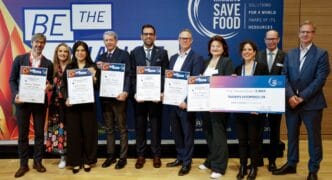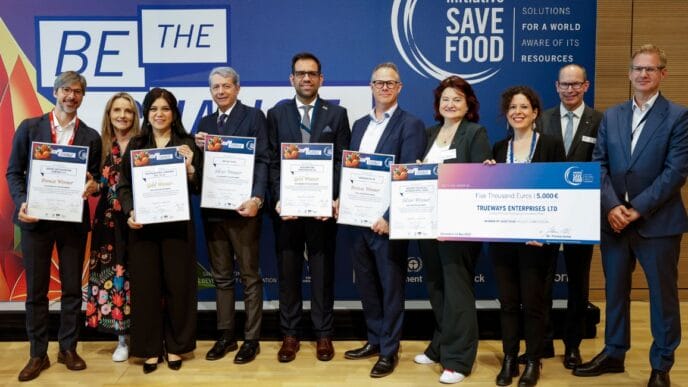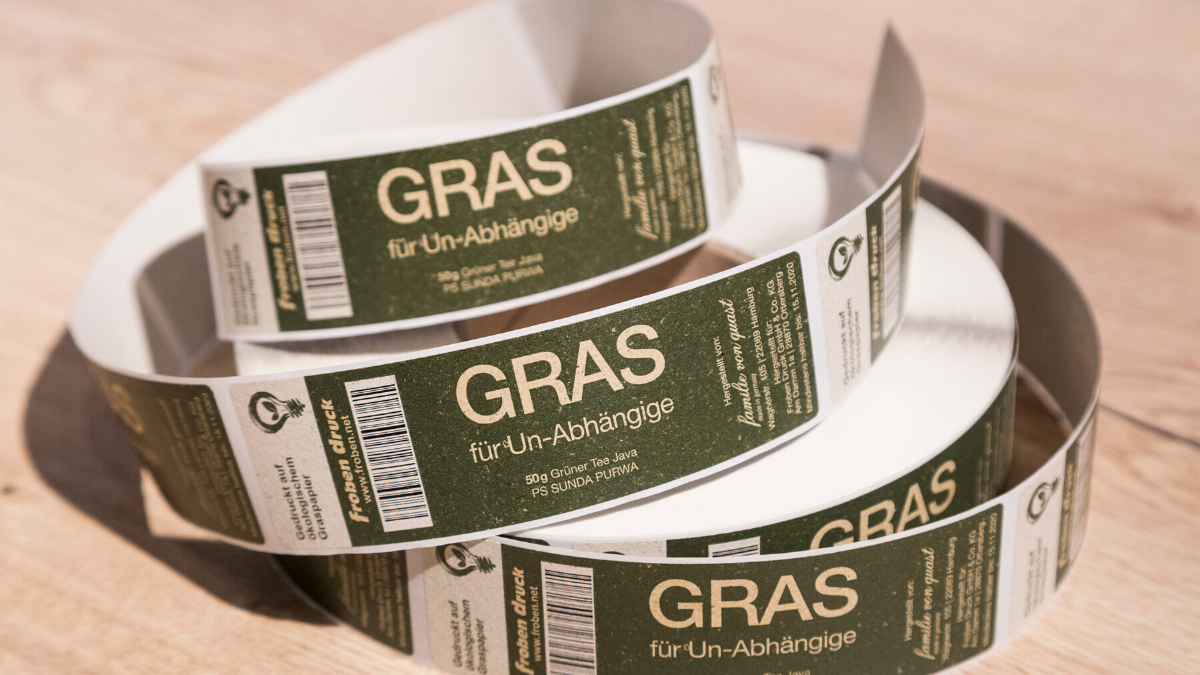
At the ISM confectionery trade fair in Cologne, the label manufacturer Froben Druck from Lower Saxony has now been honoured with the additional prize for the most innovative packaging ISM Packaging Award powered by ProSweets Cologne for its grass paper labels.
The special thing about the winning product is that Labels made from grass paper are more sustainable and environmentally friendly compared to paper made from wood. The production of grass paper requires only one Fraction of energy and water. Grass paper labels can be produced using all standard printing processes such as offset printing, flexographic printing and digital printing. The raw material is also available almost everywhere and often grows on areas that are declared as compensation areas and are not cultivated. The grass fibres are used by the Company Creapaper and processed into pellets. Processing is purely mechanical, without chemicals.
Chewing gum without plastic
Sustainability is certainly an important topic at the International Confectionery Fair in Cologne, but it mostly concerns the ingredients. Even before the start of the trade fair, environmentalists had therefore Less plastic in the packaging of sweets. Sustainable packaging, Recyclable or compostable, But they already exist. Visitors often find what they are looking for among the newcomers and start-ups.

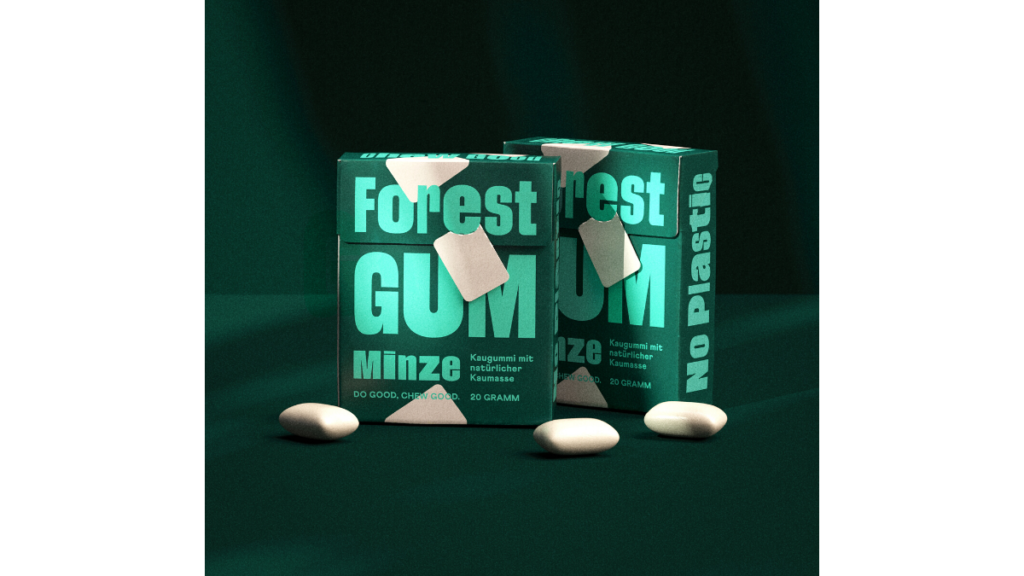
Natural chewing gum without plastic is being offered by several manufacturers at ISM. The Cologne start-up ForestGum relies on a complete Sustainable conceptThe sugar-free chewing mass is made from the sap of the chicle tree, which grows in the tropics of Central America and is sustainably cultivated by partner cooperatives. The young company is also saying goodbye to plastic when it comes to packaging. The Packaging carton was finished inside with a Biobarrier layer and equipped with a specially developed tear-off perforation.
The British chocolatier Seed and Bean specialises in the production of organic and fair trade chocolate. In 2019, all packaging was also converted to sustainable materials. Under the paper wrapping, the chocolate is now wrapped in 100 per cent compostable NatureFlex film, a flexible cellulose film based on eucalyptus wood.
And Zonama Food, a young start-up from Hanover, still packs its Zebra brand fruit bars in conventional film, but has committed to using the Partners Eden Reforestation Projects to plant a tree.
Established trends such as organic, vegan, vegetarian, low-fat and low-sugar, gluten and lactose-free, halal and kosher are continuing this year. New is the increased use of vegetable proteins such as lentils, beans and peas, which serve as the basis for muesli bars, for example. Insect snacks, on the other hand, are attracting attention from various manufacturers. For example, ISM will be showcasing insect protein bars, chocolate-coated grasshopper snacks, roasted insects pure with chilli or sea salt and chocolate enriched with green ants. The latter is produced by the Belgian company Fairy Chocolates manufactured.
„The interest in our new chocolate is huge, we didn't expect that,“ says founder Ann van Acker.

For the dark green shimmering chocolate bars on the top of the Bug2Bar brand the company uses high-quality cocoa from Vietnam and sources the green ants from Australia. The prototypes are available in simple Folding boxes packed, later a Additional film protect the product.