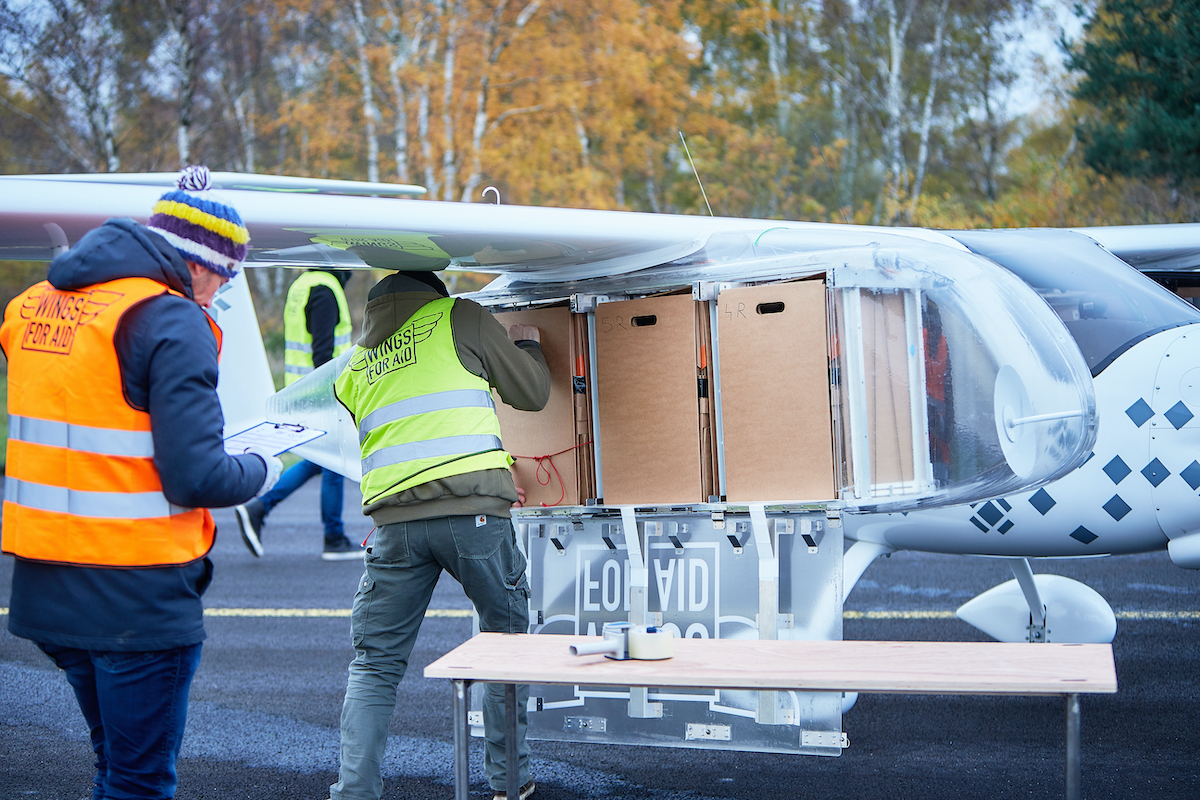
An estimated 100 million people in disaster areas need emergency aid every year. Relief supplies such as medicines, food, drinking water and tents need to reach those affected as quickly as possible. The Wings for Aid Foundation, a Dutch start-up that helps humanitarian organisations to reach people in need in hard-to-reach places, and Smurfit Kappa, a provider of paper-based packaging solutions, have joined forces to develop aid boxes for airdrops.
Tests have shown that the help box can be dropped from an aeroplane without damaging the contents. During the tests, a pack of 30 eggs was dropped from a height of 100 metres without being damaged. During the drop, the sides of the carton open to slow down and stabilise the fall. The packaging therefore requires no additional padding or built-in parachute and leaves no ecological footprint after use (100 % biodegradable).
The alternative packaging solution

The solution is more cost-efficient and sustainable than current airdrop packaging solutions. Thanks to the collaboration with Smurfit Kappa, the aid box fulfils all industry standards. It can also be produced worldwide, providing cost-effective, sustainable and rapidly deliverable packaging on a global scale. The packaging solution was honoured with the TIACA Sustainability Award 2019, which is a great recognition by the air freight industry.
„Our aim is to be anywhere in the world within 48 hours and provide emergency aid where no one else can help. When the aid missions are flown on site, the size and weight of the box is precisely tailored to the situation of the people in need. Even in rough terrain, the boxes can reach the people in need in a targeted manner so that they can simply collect them and use them immediately.“
Barry Koperberg, Director of Wings for Aid
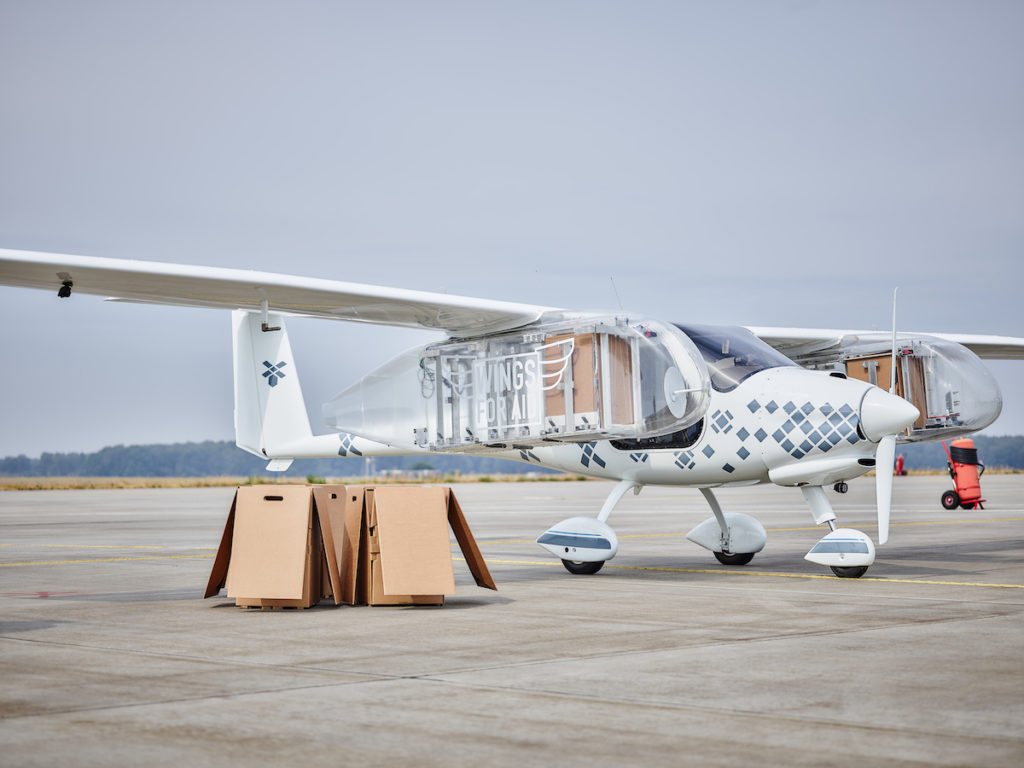
Precise drops possible thanks to algorithm
The new packaging is currently in a late test phase, but will soon be ready for use. The use of various „kits“ is planned for this year. These can consist of food and kitchen utensils, hygiene articles or medical products, for example - depending on the situation of the people in the crisis regions and which products are most urgently needed at the time.
„We are currently able to drop crates with a capacity of 20 kg undamaged from a height of 100 metres at a speed of 90 km/h to a predetermined location. A capacity of two tonnes per day is planned for next year, using several remote-controlled aircraft.“
Barry Koperberg, Director of Wings for Aid
The optimisation of the box is also an ongoing process. The next step is to further improve the folding in order to design a second version for high-speed airdrops at more than 90 km/h. As the size of the boxes has been standardised, the main differentiator is the speed of the aircraft. Wings for Aid has developed a proprietary algorithm to predict the exact drop position of the box. This is to be integrated into the autopilot in order to always guarantee a precise delivery into the demarcated and secured drop zone, which is roughly the size of a tennis court.
Source: SmurfitKappa