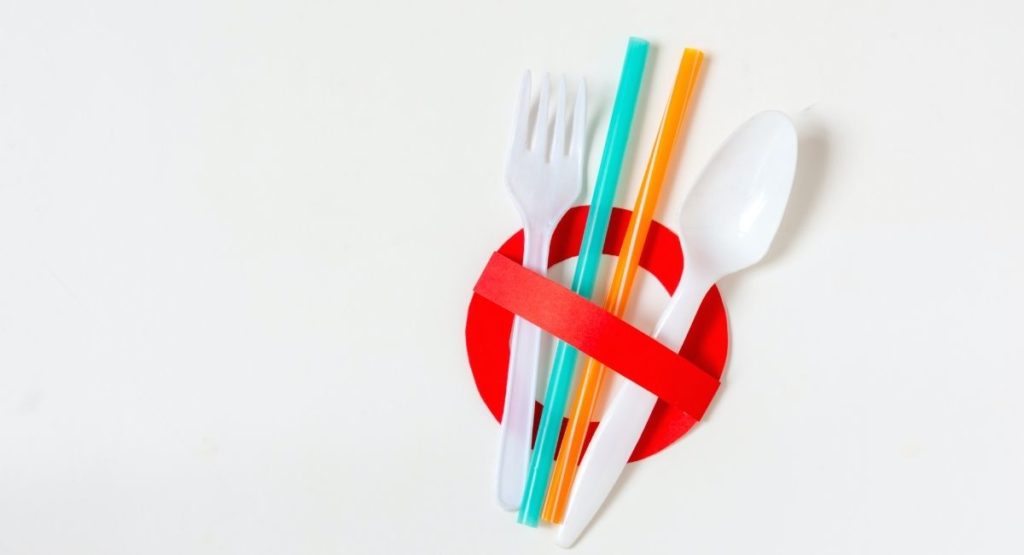
The countdown is on: From July 2021, many single-use plastic items will be banned in Germany. The manufacture of certain items made from single-use plastic will also no longer be permitted throughout the EU. TÜV SÜD helps with an overview of alternatives made from other materials.
Around 19 million tonnes of packaging are currently generated in Germany every year, half of which is caused by private households, which have reached a new high of 8.8 million tonnes. According to the Federal Environment Agency, the general amount of packaging in Germany has increased by 23 per cent since 2000. Plastic packaging waste has increased by 79 per cent since then.
Which single-use plastics the EU bans
- Cutlery and plates
- Straws
- Plastic stirrers and balloon sticks
- To-go beverage cup
- Fast food packaging
- Disposable food container made of expanded polystyrene
Only natural polymers that have not been chemically modified are not affected. Plastic food packaging is still in use. They have important functions and provide hygienic protection during transport, purchasing and storage. Due to their properties, they help to maintain quality over a longer period of time.

Bioplastics and other alternatives
Today, new „bio-plastics“ conserve fossil raw materials, but still pose problems when it comes to rapid composting or efficient recycling. „Alternative“ plastics are increasingly being used in the food trade. According to experts, their better eco-balance is not always guaranteed. This is because plant-based raw materials also consume land and water and cause environmental damage. If biodegradability is important to you, you therefore need to take a close look.
Biodegradable: what consumers should look out for in future
The term biodegradability - defined in DIN EN 13432 - means that a material must have degraded to more than 90 per cent (to water, carbon dioxide and biomass) after a certain time under defined conditions (e.g. temperature, oxygen and moisture conditions) and with the help of microorganisms or fungi. Not all biodegradable plastics are made from sustainable raw materials. And not all packaging made from sustainable raw materials is (fully) biodegradable. This is one of the reasons why the ban on certain single-use plastic items also applies to bio-based and biodegradable plastics.
The term „biodegradable“ refers only to the degradability of the packaging.
„Made from renewable raw materials“ refers only to the raw materials. They are predominantly of plant origin (e.g. maize, potatoes) and are also biodegradable.
„Natural fibre-reinforced plastics“ are not biodegradable.
The term „bio-based“ plastics simply means that they are based on renewable raw materials, sometimes combined with petroleum-based materials. They too cannot be produced without environmental impact.
Green Packaging - More news


Parkside expands its portfolio with home compostable films

Coveris combines various recycling technologies

Beiersdorf relies on recycled aluminium for deodorant sprays