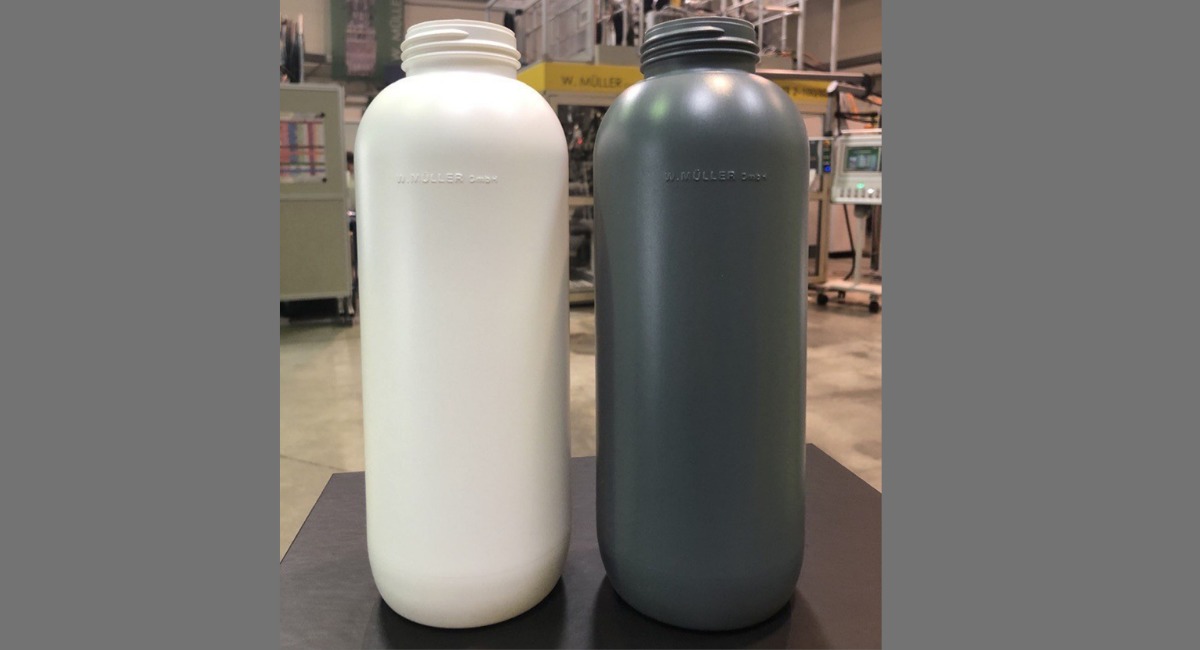
Blow moulding specialist W. Müller has tested two methods for using post-consumer recyclates (PCR) in packaging that can reduce unwanted migration from the PCR.
In the first variant analysed, the PCR layer is surrounded by two layers of virgin material, while in the second variant it is shielded by an internal plasma coating. The results of both variants showed considerable Lower migration values than hollow bodies made of pure PCR.
Miller has many years of experience in the use of PCR for the production of hollow bodies using the blow moulding process. The company's own 3-layer co-extrusion system, called ReCo3, can be used to produce bottles consisting of a PCR layer that is inside and outside with a layer of virgin material is surrounded. In this way, virgin material can be replaced by PCR during processing, and unwanted migration from the PCR be reduced.

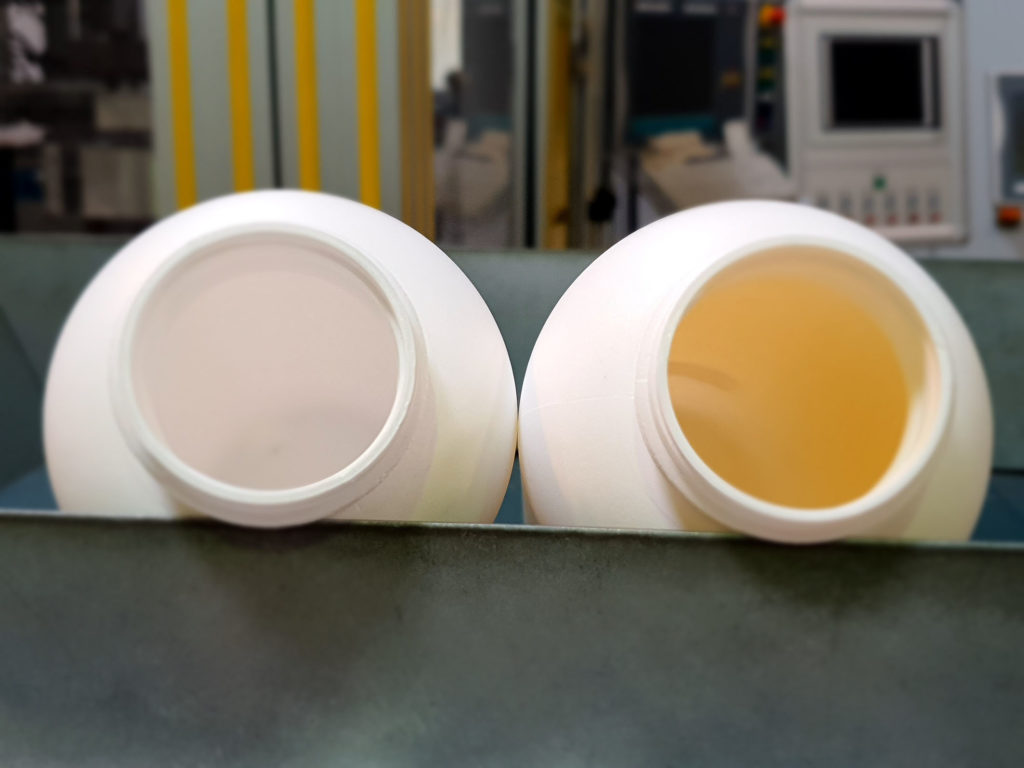
The company has had tests carried out to see how the Migration behaviour of round bottles with a volume of one litre made from 100% recycled material differs from those produced using the ReCo3 process. Two certified PCR types were selected and one bottle was produced from the pure material and one with a virgin coating.
PCR surrounded inside and outside by a layer of virgin material
Various migration tests for potentially migratable impurities, reaction and degradation products (non-intentionally added substances (NIAS)) were carried out at the SGS Institut Fresenius in Taunusstein. The ReCo3 bottles showed lower global migration. This was also shown in a significant reduction the number and concentration of NIAS capable of migration compared to bottles made of pure recyclate.
In order to increase the proportion of recycled material in such three-layer systems, the surrounding layers must be as thin as possible and yet stable. In addition to layers made of plastic, other Plasma coatings for the purpose of shielding in question.
In a second series of tests, the effect of a CHF layer (made of carbon, hydrogen and fluorine) applied to the inside by the Belgian company Delta Engineering on the migration behaviour was investigated. This process uses plasma to create a barrier. The bottles used were made from Systalen HDPE from Der Grüne Punkt manufactured.
Coating drastically reduces migration from PCR
The tests showed, that the coating drastically reduces migration. While 76 substances were detected in the uncoated bottle, only five were found in the CHF-coated bottle. As fluorine is used for the CHF coating, additional tests were carried out with the coated bottle to ensure that no residues had formed. As a result, no substances could be detected. The bottles are therefore also compliant for direct contact with rinse-off products such as shower gel.
„We were able to show with the tests that the use of recycled plastics for packaging sensitive products is possible. With the right technology, there is no demonstrable risk of migration from the recyclate into the filling material. The test results confirm that our proven ReCo3 process fully fulfils these requirements. We have tested another shielding option in the form of plasma coating. The results have encouraged us to offer this technology as a supplement in future if there is interest.“ Christian Müller, Managing Director
Source: W. Müller