Reshoring: mastering complex production conditions during filling
Keyword reshoring: The corona pandemic has shown that regional dependencies in drug production are problematic to say the least. But how can local production be boosted?
30 August 2021
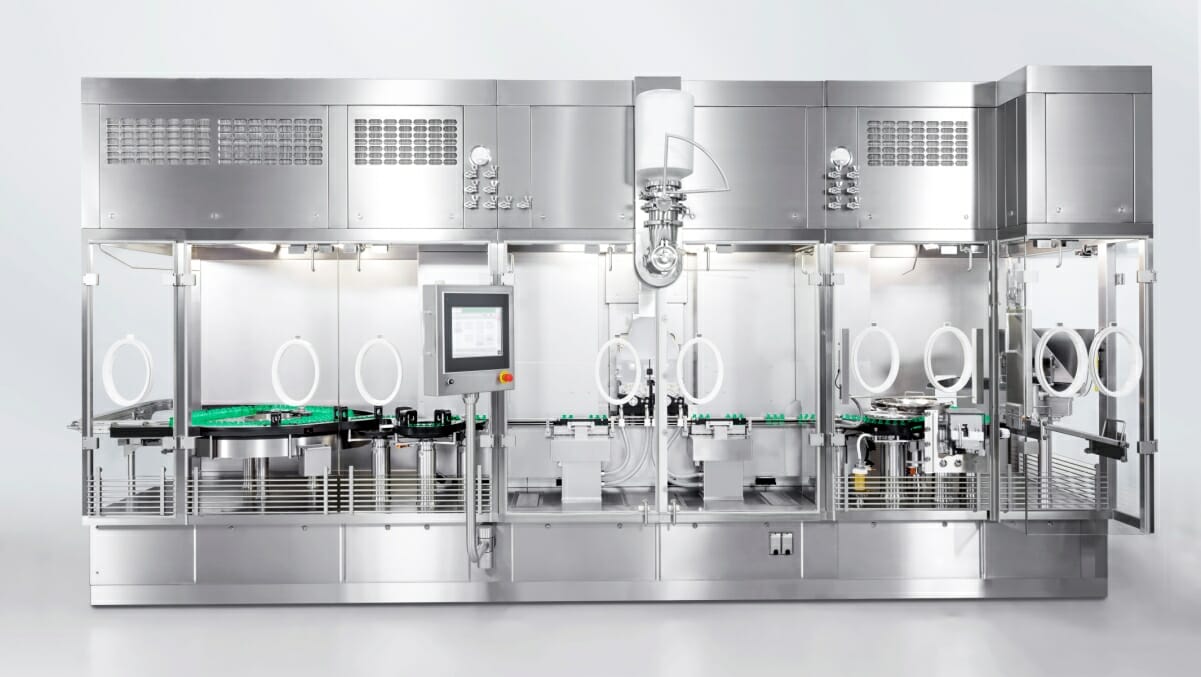
Space as a cost factor: The filling area is particularly compact here. (Image: Syntegon Technology)
Keyword reshoring: Margins in the processing of pharmaceutical powders are low and production conditions are complex. This has led to a shift in production to more cost-effective markets. Against this backdrop, how can supply bottlenecks, such as those that have occurred time and again, be avoided? And how can local production be revitalised?
Pharmaceutical powders form the basis for numerous antibiotics that are essential for comprehensive medical care. Antibiotics such as cephalosporins or penicillin are a proven therapeutic approach for frequently occurring diseases such as pneumonia or tonsillitis. In order to bypass the gastrointestinal tract and increase the effect of the medication, patients often receive infusions based on powdered antibiotics. The infusion fluid is only created shortly before administration by adding the purest water.
It is precisely this powder form that makes the manufacturing process highly complex: during the filling process, the operators handle powders that are slightly dusty. To ensure that it is does not lead to cross-contamination If the process is to be carried out in the same way, strict separation of different active ingredients and batches must be ensured. In addition, the operators of the system must not come into contact with the sometimes toxic substances under any circumstances.
Filling of powdered antibiotics
The regulations are particularly strict when filling penicillin: according to the US FDA, for example, manufacturers are obliged to isolate systems and equipment in which the antibiotic is filled, to ensure separate air supply and filtration and to carry out regular tests for residues of the drug.
Separate factory buildings are often even necessary to ensure compliance with these requirements. In this case, manufacturers have to create separate offices and canteens for the different shifts to ensure the safety of their employees. This requires an enormous financial outlay.
Unbalanced distribution of production
In the past, many antibiotics manufacturers were either unwilling or unable to commit to such investment costs. According to a study on the security of supply of antibiotics by Pro Generika (carried out by Roland Berger in 2018), this meant that decades ago a Migration of global production capacities to Asia one. In the 1980s, China, for example, began to subsidise domestic antibiotic production. Economies of scale soon emerged, enabling manufacturers to produce large quantities of antibiotics at low prices.
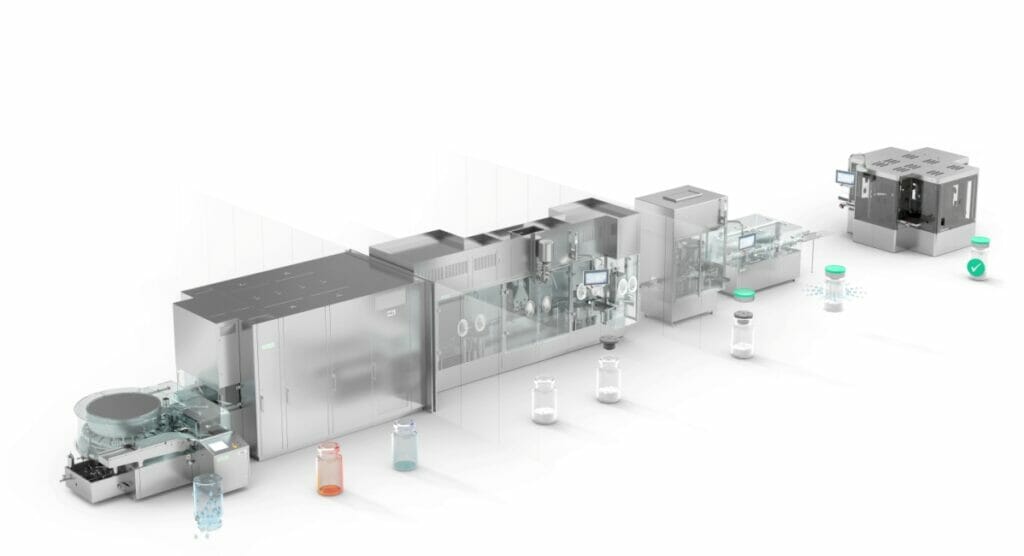
The investments for complete production and filling systems are immensely high. (Image: Syntegon Technology)
At the same time, the production of generics in the western world became more cost-intensive. Increasingly demanding audits, for example, became an ever greater cost factor. Expiring patents from Western manufacturers also increased demand for the Market for economically viable production capacities. Many manufacturers found these in China and India.
Austria shows how it's done
The coronavirus pandemic has clearly demonstrated that such Regional dependencies at least problematic are: In the event of supply bottlenecks, doctors often have to use broad-spectrum antibiotics instead of specific drugs, which increase the likelihood of resistance developing. In order to counteract this development and ensure more stable availability on the market, antibiotic manufacturers, doctors' and pharmacists' associations and, last but not least, politicians are calling for the Distribute production capacities more globally again.
How this can be achieved can be seen in Austria: The government there is supporting the generics division Sandoz of Novartis in Kundl, the only site in Western Europe that both manufactures and fills antibiotics, with far-reaching investments. The latest project involves public funds totalling 50 million euros. The total planned investment volume even amounts to over 150 million euros.
(Image: Syntegon Technology)
„The coronavirus pandemic in particular has increasingly shown how dependent global supply is on individual regions - and could now serve as a kind of ‚Wake-up shaker‘ serve to accelerate corresponding initiatives.“ Markus Heinz, Product Manager Vial Liquid & Powder, Syntegon Technology
It is not yet clear whether other countries will follow Austria's example. But there is hope: some Nationally initiated projects, The development of local production facilities, for example in India, the USA or Italy, to promote the local production of medicines with public funds has already been initiated (including antibiotic powders). If investment is made in the expansion of existing production facilities, a very small proportion of production could be relocalised in less than three years.
The role of machine manufacturers
It remains to be seen whether other regions and manufacturers will follow this example. It would definitely be helpful for regional security of supply if similar programmes were set up here. In addition to the suitable production facilities above all, extensive knowledge of the requirements of powder production and filling as well as high-performance systems that can fulfil all regulatory requirements and are also geared towards high efficiency.
Of course, machine manufacturers can meet these challenges not single-handedly do justice to them. But with their many years of expertise and technological solutions, they can definitely contribute to a promising implementation. As the former packaging division of the Bosch Group, Syntegon Technology, for example, has been developing sophisticated complete solutions for the pharmaceutical industry for over 60 years. Very different factors play an important role here:
Air supply and cleaning in the filling area
Of course, liquid pharmaceuticals also pose numerous challenges when it comes to filling. The consistency of pharmaceutical powders makes things even more difficult: the finely ground active ingredients are easily dusty. To safely protect machine operators Dust-tight barriers and a Closed air supply with efficient and powerful filter systems in the filling area.
An extended UDAF (Uni-Directional Air-Flow) ventilation system, for example, cleans and regulates the temperature of the air circulating in the filling area and regulates the humidity. The Machine cleaning is particularly difficult with powders. The fine dust particles can get stuck anywhere in the machine. An open design, easy accessibility and cleaning and sterilisation (CIP-SIP) of the product feed system provide a remedy.
Size as a cost factor
The larger the filling area of a system, the higher the costs for safety enclosures, filtration, temperature control, operation, maintenance and cleaning. Every centimetre counts, especially in the class B clean room, where the powders are usually filled. Here a Vertical construction The advantages of the filling area with good accessibility and the option of wall installation with maintenance options outside the filling area are enormous. If the filling area is also separated from the inlet and outlet, the space that needs to be dedusted and cooled with sterile dry air is reduced.
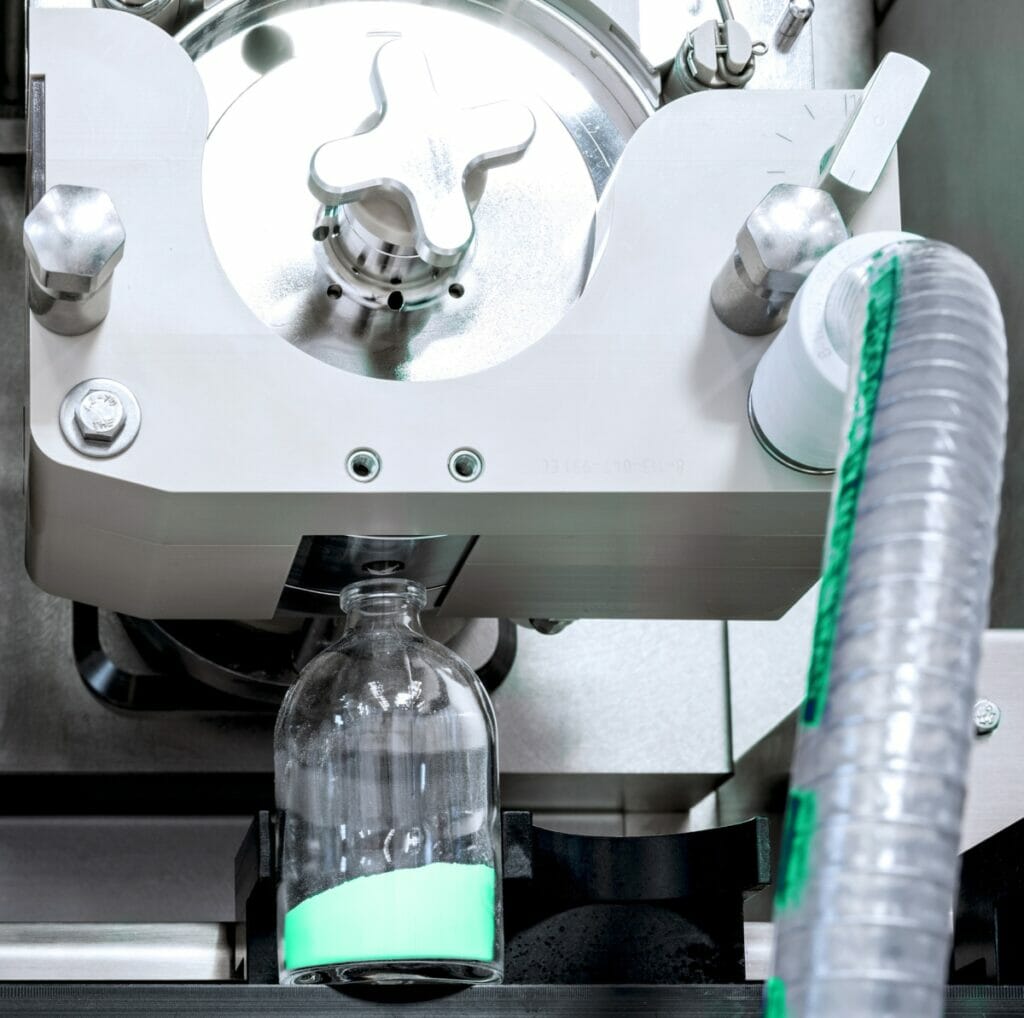
Variable dosing: Can be equipped with up to three dosing stations for different filling volumes. (in detail a pressure-vacuum dosing wheel). (Image: Syntegon Technology)
A Modular structure, which allows pharmaceutical manufacturers to choose flexibly between different filling and weighing modules, saves even more space. In addition to size, time is another decisive factor in reducing costs: the faster format parts can be changed and the fewer product-contacting parts there are to clean, the faster a new batch can be started.
Speed through variable transport
Syntegon Technology supports its customers in the filling of pharmaceutical powders with around 230 machines worldwide alone. Depending on the task at hand, optimised technological solutions are used, including for transport within the filling process.
The AFG 5000 from Syntegon can process up to 480 vials per minute. To achieve this, the company developed a unique transport system that varies safely between continuous and intermittent transport: While the vials are fed in continuously, the transport system precisely adjusts the speed as the vials progress. Rhythm of the individual workstations such as filling, weighing or tamping. This avoids delays in the workflow.
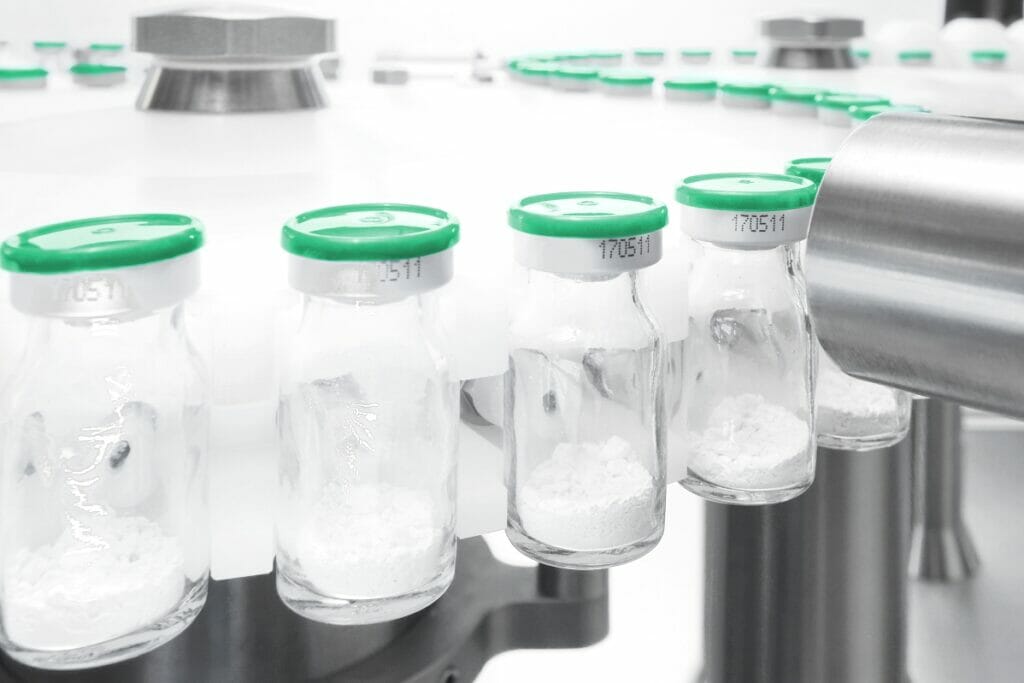
Special feature of the transport system: The vertically circulating system is designed so that there are no idle times or jams. (Image: Syntegon Technology)
The vertically circulating transport system is designed in such a way that there is no idle time or congestion. As soon as the carrier systems have delivered the vials to the outlet after stoppering, the shuttles return to the inlet in fast mode and are ready for the next transport. The One hundred per cent in-process control also ensures that there is no unnecessary product loss - another advantage for the production of cost-sensitive antibiotics.
Combining safety and efficiency
To be on the safe side when deciding on a particular system, early collaboration between the drug and machine manufacturers is recommended. Their extensive experience provides the Specialists from Syntegon to their customers, e.g. in the „Powder laboratory“ in Crailsheim.
Here, the machine experts provide support in selecting the ideal filling system, determine the optimum setting parameters or carry out basic analyses in order to combine maximum safety for the operator, product and patient with the necessary efficiency - and thus create the conditions for a regional production strategy, at least on the system side.