Towards the climate target with the paper bag

The European paper sack industry is seeing great progress on its way to reducing emissions. Today, the Gemeinschaft Papiersackindustrie e.V. (GemPSI) announces that it wants to be even more sustainable and explains why fillers should focus on paper sacks.

The European paper sack industry is seeing great progress on its way to reducing emissions. Today the Gemeinschaft Papiersackindustrie e.V. (GemPSI) has announced that it wants to be even more sustainable and explains why bottlers should opt for paper bags. 

The European paper sack industry claims to have made great progress in reducing its emissions between 2007 and 2018, reducing the fossil carbon footprint of the average paper sack by 28 % (from 118 g CO2e to 85 g CO2e) improve. The reasons cited for this include sustainable energy management in the companies and increased efficiency in energy utilisation. 

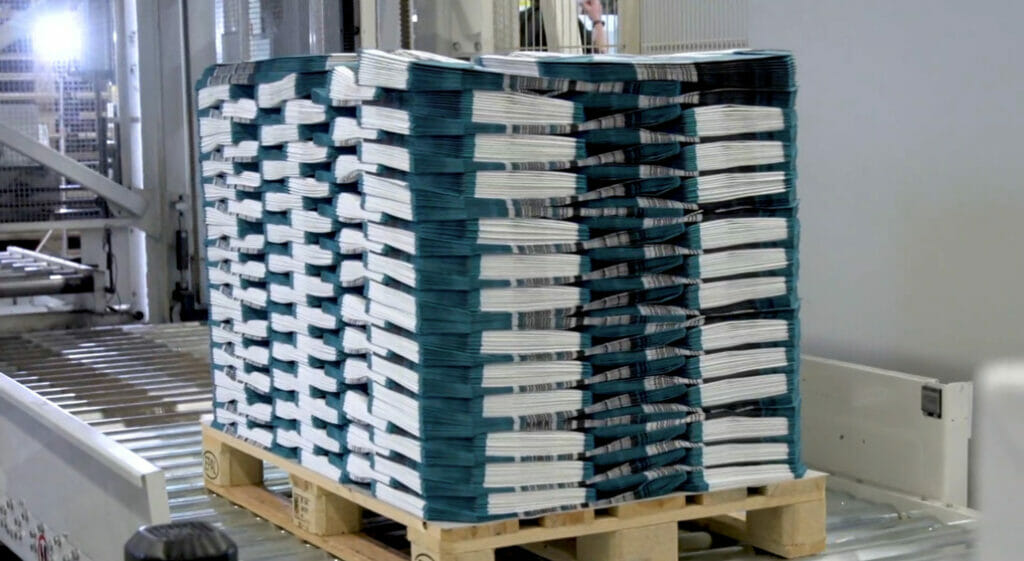
Modern systems increase efficiency in the production of paper sacks (Image: GemPSI)

Paper becomes more tear-resistant

On the road to climate-neutral products, efficiency not only plays an important role in logistics and production, but also in materials. In recent years, German paper sack manufacturers have already achieved considerable reductions in this area thanks to increasingly tear-resistant kraft paper.

„Grammages from 70 g/mare no longer a rarity, where previously 90 g/mwere used. This means we can now produce more paper sacks with the same tonnage of material than a few years ago,“ explains GemPSI member Reinhard Schulze-Edinghausen.

Display

„And by using high-performance barrier layers, we save up to 50 per cent of this material - without our customers having to sacrifice functions such as water vapour protection or a long shelf life.“ Films made partly from recycled material are also increasingly being used.
Recycling has been working for 30 years

German paper sack manufacturers are also working on sacks that do not require any film at all and have properties that could originally only be achieved by using plastic. The German paper sack industry sees further potential in this area with regard to increasing efficiency and conserving resources.

„Responsible handling is particularly important in view of the current shortage of raw materials,“ says Reinhard Schulze-Edinghausen. „Recycling is also an important aspect of this, so that raw materials remain in the material cycle for as long as possible. Paper sacks score points here with another climate benefit: their long, tear-resistant fibres are particularly easy to recycle.  

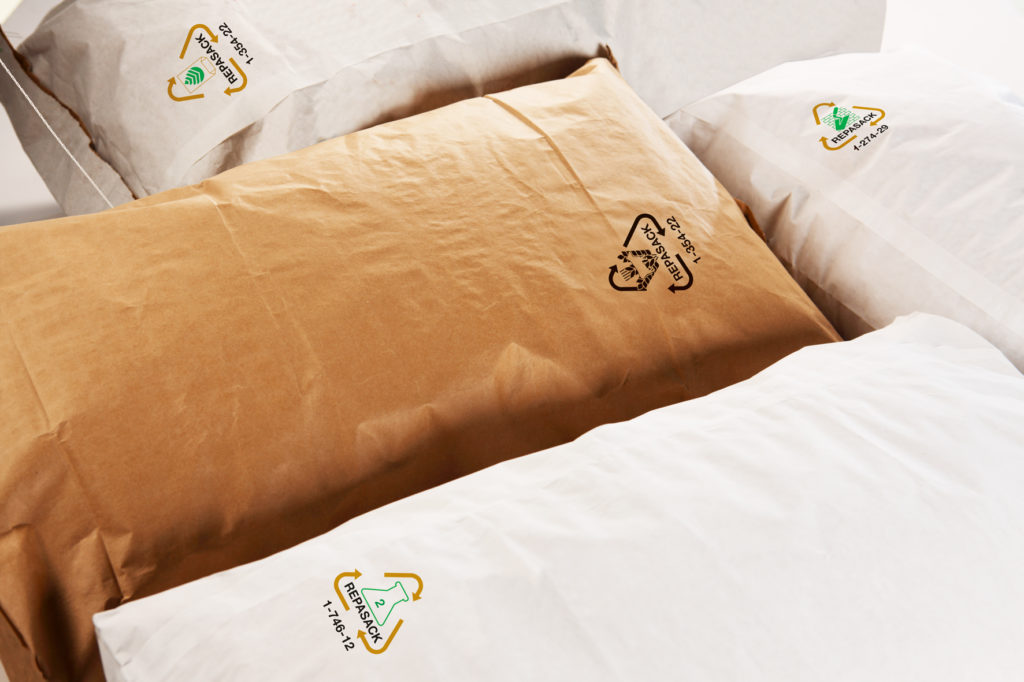
Symbols ensure separate collection (Image: REPASACK)
(Image: REPASACK)

Paper bag without film is the goal

GemPSI introduced the established REPASACK take-back system for recycling kraft paper sacks around 30 years ago. The company recycles more than 20,000 tonnes of kraft paper sacks from trade and industry every year.

The paper sack manufacturers even recycle their production waste according to a „zero waste“ approach. This ensures that the valuable, long kraft paper fibres are recycled by type and processed into a high-quality secondary raw material. This can be used proportionately in other kraft paper products, such as carrier bags, and thus replace the primary raw material.

Further information is available at papiersack.de // Source: GemPSI

More news