To round off the year, we once again present our most-clicked articles of 2021. 9th place: The industry talk on the right choice of packaging
How do I find the right packaging for my product? That was the topic of our fourth packaging journal TV Live in October. In conversation with our guests, it quickly became clear that, in addition to practicality and cost-effectiveness, the sustainability factor has become indispensable when choosing packaging.
The October issue of our industry talk was all about „the right packaging“. In the discussion, the dm packaging expert Dagmar Glatz, the packaging consultant Carolina E. Schweig, the founder of Organic Labs Moritz Mangold and Mr Fred founder Tobias Kobier The two companies quickly agreed that packaging should not only be considered in terms of the product, but also as part of the entire production chain right through to the consumer.

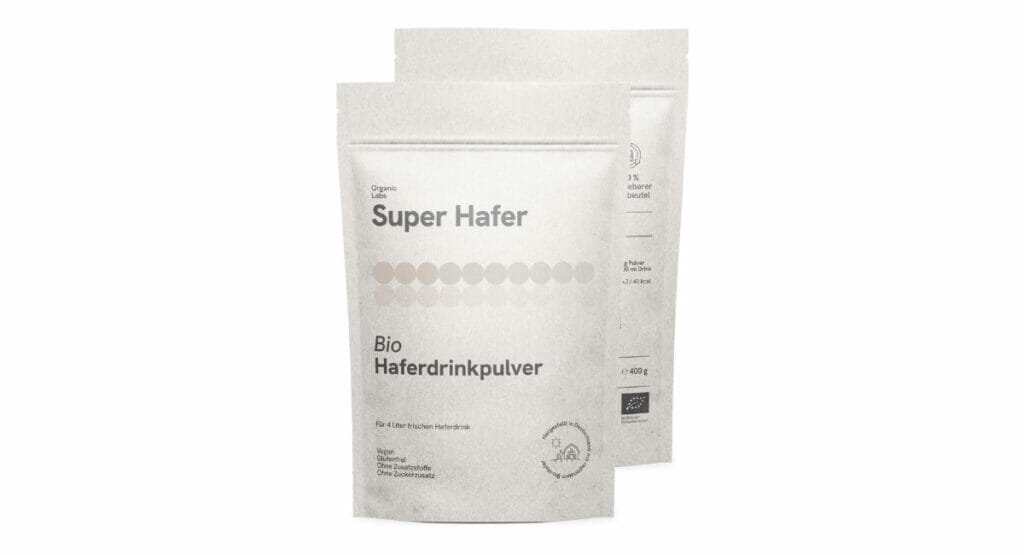
A start-up that wants to assert itself on the market has to overcome a lot of hurdles. As a rule, it is more about the product itself than the packaging. However, the latter can also cause a lot of headaches, as the example of the Munich-based company Organic Labs. The start-up produces a powder made from oats that consumers mix at home by adding water to make an oat drink.
After all, the packaging originally chosen for „Super Hafer“ turned out to be problematic for the environmentally conscious company after a while, as co-founder Moritz Mangold reports: „In the beginning, we were aiming for packaging that was too 100 per cent industrially compostable packaging set. However, this composite material could not be purely composted and is not left to rest long enough in Germany anyway.“ Although the compostability could be communicated to the outside world, Organic Labs ultimately decided to develop new packaging.
After many tests, the new packaging was ready: packaging that is 100 per cent recyclable via waste paper. However, without a zip and, unusually for the consumer, much thinner than standard bags. However, after a survey on the company's social media channels, it quickly became clear: „Most people really did say that they would pour the powder into a different packaging or container anyway.“ The Sustainability first„ principle“ had prevailed.
Usability vs. sustainability
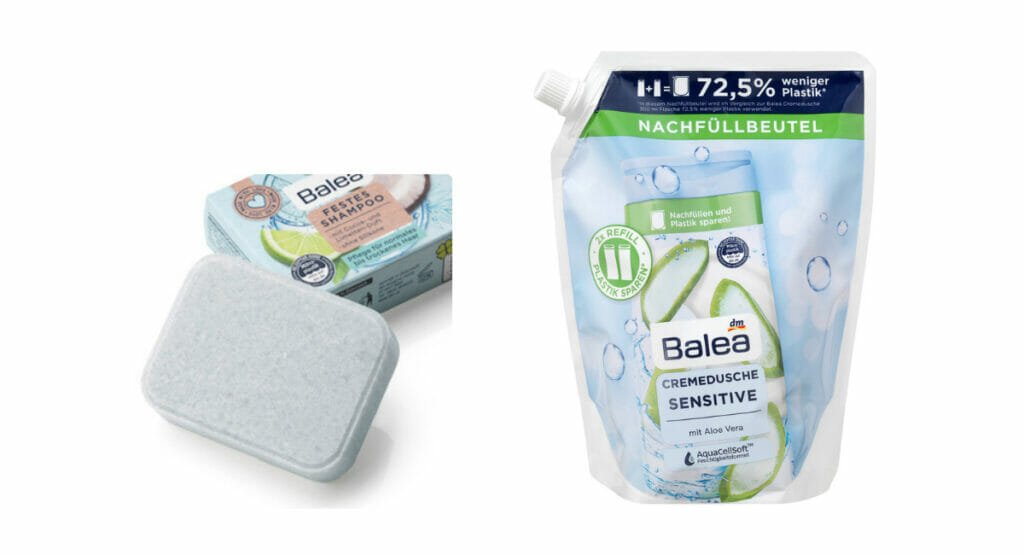
The right balance of usability and sustainability is ultimately decisive for sales. This can also Dagmar Glatz, at the dm drugstore responsible for packaging and sustainability. One example is a shower gel sachet that is attached to a hole in the shower and then serves as a shower gel dispenser. Compared to conventional bottles, the pouch saves around 80 per cent of plastic. However, there were problems with the test subjects: the bag could not be practically installed in some shower cubicles. There were also concerns that children might consume too much of the product. And so, in the case of the shower bath sachet, a certain Discrepancy between user-friendliness and sustainability. But how do you find the right packaging concept that also works for the consumer? „Thank goodness we are allowed to test a lot,“ explains Glatz.
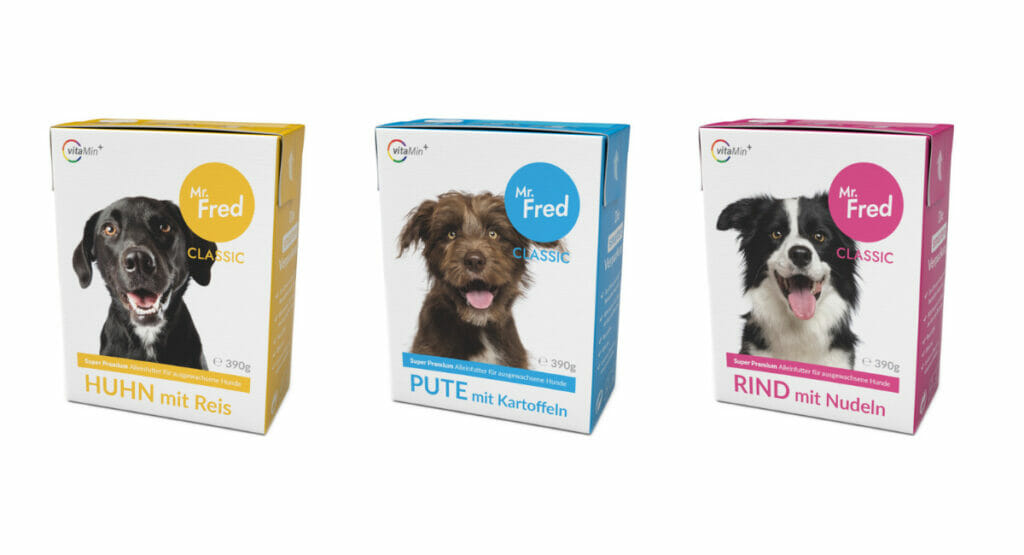
The company also knows how important tests are F&F Pet Food from Bamberg. After an early test phase in terms of packaging, a complete Tetra-Pak system was quickly purchased for the „Mr Fred“ dog food in Franconia. Co-founder Tobias Kobier explains how this came about: „Our claim is ‚Food quality dog food‘ so we wanted to cook the food really fresh right from the start.“ The problem: conventionally, a permanent cold chain would have to be maintained, and yet the product would ultimately only keep for a maximum of seven to ten days in the refrigerator. The search for alternative packaging options began, but these were also Differentiation opportunities on the market should offer.
„We didn't want to use tins, not least because of the unique selling point. Artificial casings were also out of the question for us due to the final appearance. Then, by chance, we came across came across Tetra Pak. The result completely convinced us in terms of both quality and appearance,“ says Kobier. But how do you communicate this rather unusual packaging for the product to the consumer? „It really needs Customer Education. However, most of our customers have already been won over by the environmental and consumer-friendliness of the packaging, even without targeted communication.“
Weighing up various factors
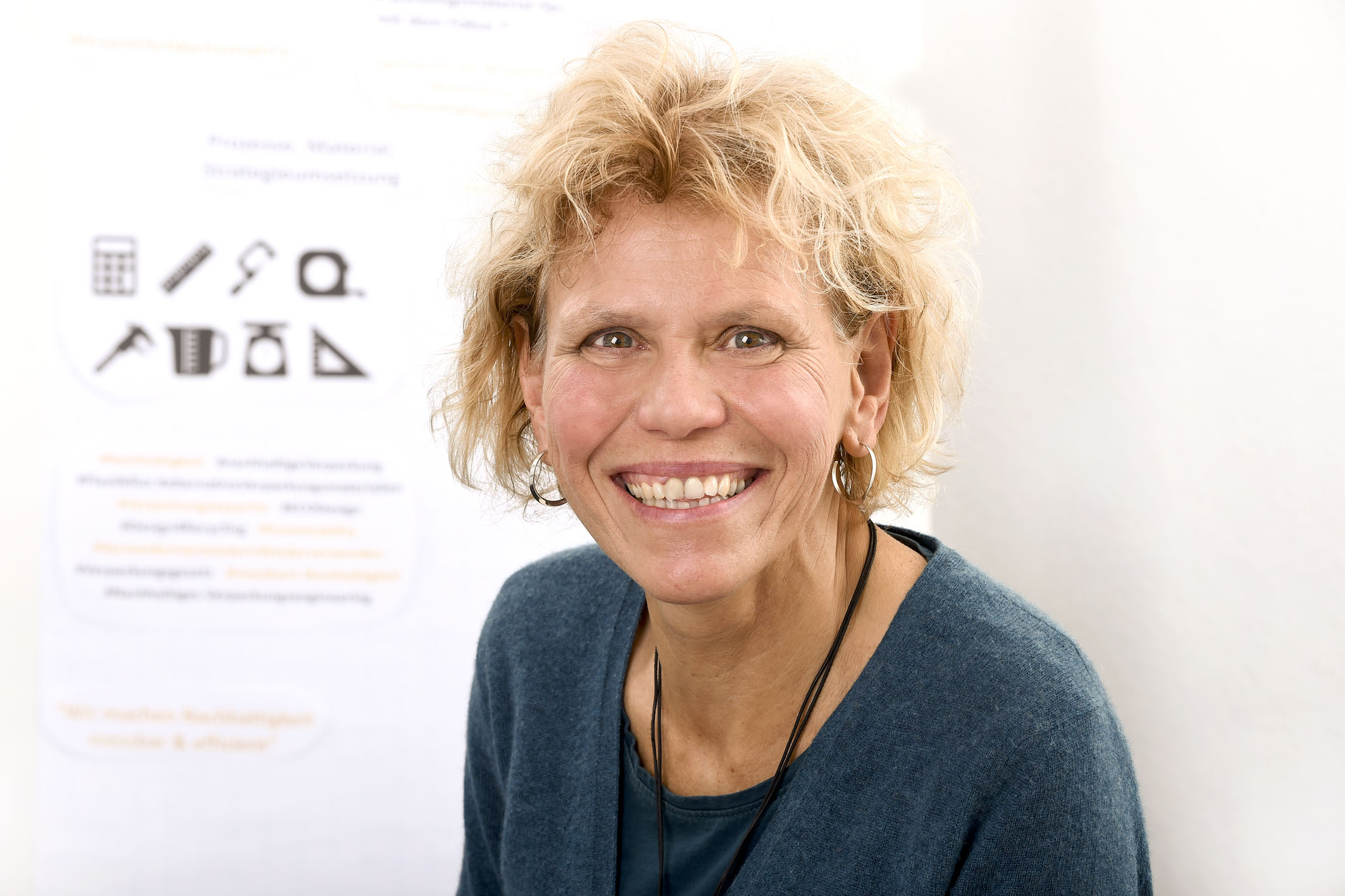
These two examples alone show that finding and selecting the right packaging is by no means a foregone conclusion - quite the opposite. Carolina E. Schweig, packaging and materials consultant, is very familiar with this area. The graduate engineer advises with her office Schweig has been helping small and large companies alike to find the ideal packaging for their product for more than 25 years. In general, Schweig advises companies to weigh up shelf life, use of resources, fuel gas emissions and, last but not least, cost-effectiveness. „Our approach is to choose somewhere between resources, environmental impact and economic efficiency somewhere in the middle,“ says Schweig.
In the case of dm, one of these solutions is called „Refill concept“. In other words, the sale of refill bags with less packaging, for example for cleaning or hygiene products. Refill figures for refill systems in drugstores are not yet as good as she might imagine, but according to Glatz: „What is going well are the refill concepts for the home and also product changes for shampoo, away from liquid shampoo and towards solid shampoo.“ The decisive factor is that the customer can integrate the change well, then sustainable products and sustainable packaging will be successful.
Moritz Mangold can also confirm that practical and sustainable packaging is an issue for consumers: „Our motto is basically ‚Good for you, better for everyone‘. And when it comes to our packaging, the motives are very selfish: less lugging, no food waste, less sugar.“
However, sustainability also plays a role in the packaging, especially for a product such as the oat drink, which is primarily consumed by environmentally conscious consumers. „As a young company, we are intrinsically motivated to launch a product and packaging that is as good for the environment as possible. We also see a willingness on the part of our customers to make a certain Surcharge to be paid, that this sustainable packaging brings with it,“ says Mangold.
The circular economy is not a sure-fire success
Many an entrepreneur would certainly like to pocket this additional price - even if the product is perhaps not as sustainable as it appears. Schweig at least recognises this danger with some manufacturers. „What is currently being communicated in terms of sustainability is not necessarily verifiable on the basis of facts and figures,“ says the engineer. More complicated, less familiar measures, circular economy and waste hierarchy can only be communicated in a comprehensible way with a great deal of effort, so communicating this to customers can also be a hurdle. „You really have to go the extra mile to get the consumer on board. It's easier to say ‚We'll do it on paper and then everything will be fine‘. But paper is not paper,“ explains Schweig.
Mangold shares this view: „Not all packaging that appears to be sustainable is actually sustainable. There are so many stand-up pouches that look like kraft paper but are still made of plastic on the inside. And they are always residual waste and cannot be recycled easily or at all with the current systems.“
One promising approach for packaging consultant Schweig is the Cradle-to-cradle concept, This means that all resources in the product chain, including packaging, are constantly fed back into the recovery process, i.e. completely recycled. Schweig believes that Organic Labs' oat drink is already the right approach, as it is not just about the recyclable packaging material, but the powder form of the actual product has also changed significantly compared to conventional oat drinks.
„The USP here is the powder form, which allows much less water to be transported around. And everything else that is saved, that is better and so on, that is communication as a gift!“ She therefore advocates optimising processes and examining what could be „the biggest lever arm“ in terms of sustainability. „Perhaps the mindset needs to change here. In other words, when it comes to sustainability, especially for start-ups, Think in closed systems and complete loops should. Where does something come from and what stages does it have to go through? And if we take this approach, we will simply have better solutions. Not only for the environment and society, but also in the economic sector,“ says Schweig.
The complete packaging journal TV Talk Live
Taking the consumer with you in communication
In addition to the technical challenges that this approach entails, however, there is another variable: once again, it is the consumer. They can be both a support and a hindrance, as Dagmar Glatz knows from her own experience: „In our markets, there are now grey recyclate bottles. And our customers are actually interested in the product and go along with it. Ultimately, however, it's about the product itself, and if a customer buys it, it's not primarily because of the packaging.“ As can be seen from the oat drink example, targeted and, above all, understandable communication is the be-all and end-all.
This is precisely why Glatz believes that the entire life cycle assessment and a clearly communicated cradle-to-cradle approach are so important. At the moment, customers still often automatically reach for the paper packaging. „We can now wrap toilet paper in very thin films. With a PCR content of 40 per cent, there is still a lot of room for improvement. And to communicate this to the customer, who often thinks that paper is the most sustainable packaging solution. But paper is often not the more sustainable packaging material, as overall life cycle assessment studies have shown. Counteracting these myths is a real challenge,“ says Glatz. And he continues: „And here again to clear up a piece. This is now the work of all of us together.“
In fact, in 2018, together with a number of partners, dm launched the Forum Recyclate which aims to communicate the topics of recycling management and the separation of recyclable materials. „We have also told our industry partners that we are happy to offer packaging with a 70 per cent recycled content in our shops,“ says Glatz. Nevertheless, the circular economy is a task for society as a whole.
Legal foundations are in place
The circular economy and recycling are therefore not the responsibility of individual companies, but of the entire industry. In fact, new and stricter regulations to promote the circular economy have been in place since 1 January 2019. For example, the recycling rate for plastic packaging rose from 36 per cent to 58.5 per cent initially and to 63 per cent by 2022. For metals, glass and paper, the required recycling rate rose to 90 per cent.
Schweig is particularly surprised at some industry representatives on this point: „I find it shocking how many companies don't realise that we already have this law. I am repeatedly asked at workshops about the transition period and when these requirements come into force, and my answer is always: ‚This law came into force on 1 January 2019‘ - even though there is currently no penalty.“
The legal situation also plays a decisive role in the search for the right packaging. With its oat drink, the start-up Organic Lab instinctively had the right instinct and the right motivation. „We didn't have the time to read all the legal texts,“ admits Mangold. „But as a young company, we also wanted to launch packaging on the market that was as good as possible for the environment.“
This shows that user-friendliness, sustainability and cost-effectiveness do not have to be in conflict with each other.
Previous editions of packaging journal TV Talk Live


Industry talk: Packaging in e-commerce

Industry talk: New materials and resource conservation

Industry talk: Rethinking the circular economy for plastics

Industry talk: Plastic is fantastic, right?