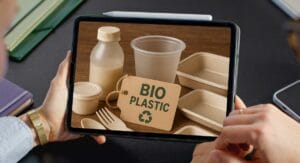
Strong growth expected for bioplastic packaging
Turnover is expected to rise to USD 32.1 billion by 2034.
Read more " 



The results of the study complement the impact assessment carried out by the European Commission, which analysed the PPWRThis was accompanied by a proposal last year that compostable coffee capsules increase the collection rate of organic waste, reduce the contamination of compost with non-compostable plastics and do not lead to increased contamination of other waste streams. European Bioplastics (EUBP) is therefore appealing to legislators to take up these advantages of compostable coffee capsules in the negotiations to finalise the PPWR.
„It is time for the results of numerous studies that have looked at the benefits of compostable coffee capsules to be incorporated into legislation. If legislators cannot follow the Commission's original proposal to make all coffee capsules compostable, they should at least consider this option for all plastic capsules.“
Hasso from Pogrell, Managing Director of EUBP
According to von Pogrell, conventional, non-compostable plastic coffee capsules offer no benefits for the environment. Both the plastic packaging and its contents are lost to recyclers or composters. Instead, most of these capsules end up in landfill sites or incinerators.

„Composters are able to sort out aluminium capsules, but if they accidentally end up in the organic waste bin, they will not be able to distinguish between compostable and non-compostable plastic coffee capsules. However, if we want the operators of organic recycling plants to embrace the idea of allowing compostable coffee capsules to enter the organic waste stream and thus benefit from the nutrients contained in the capsules in the form of coffee residues, they must be able to rely on the fact that all plastic capsules that enter their waste stream are actually certified compostable and do not have to be sorted out before the organic waste is processed.“
Hasso from Pogrell
More than one hundred different types of coffee capsules are already certified as ‚industrially compostable‘ (according to the European standard EN 134324) according to established and independent certification systems. However, with the exception of a few Member States, such as Italy, compostable coffee capsules are not yet accepted by waste collection companies in Europe for the organic waste bin.
„This needs to change and the only way to achieve this is to support composters and their legitimate concerns about the contamination of their waste streams by non-compostable coffee capsules. Legislation that progressively bans the use of non-compostable plastic coffee capsules is essential. Ahead of the vote in the European Parliament on the Packaging and Packaging Waste Regulation (PPWR) on 22 November and the discussions at Member State level on a general approach in the European Council, we therefore call on European legislators to take these arguments into account. Without the full support of local and national governments, it will not be possible to enable the use of this circular solution, which can not only contribute to the production of high-quality compost, but also reduce the use of other materials that are considered less sustainable for this type of application.“
Source: European Bioplastics