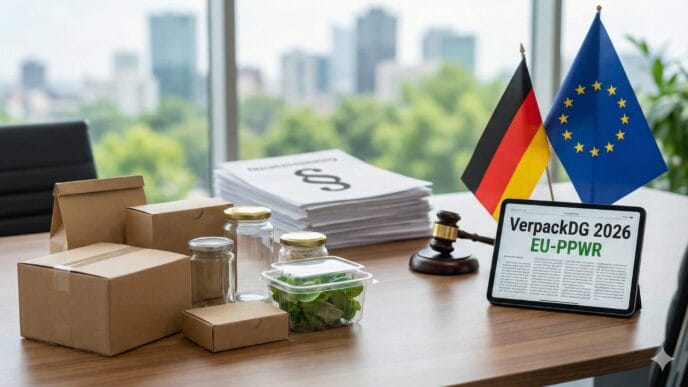
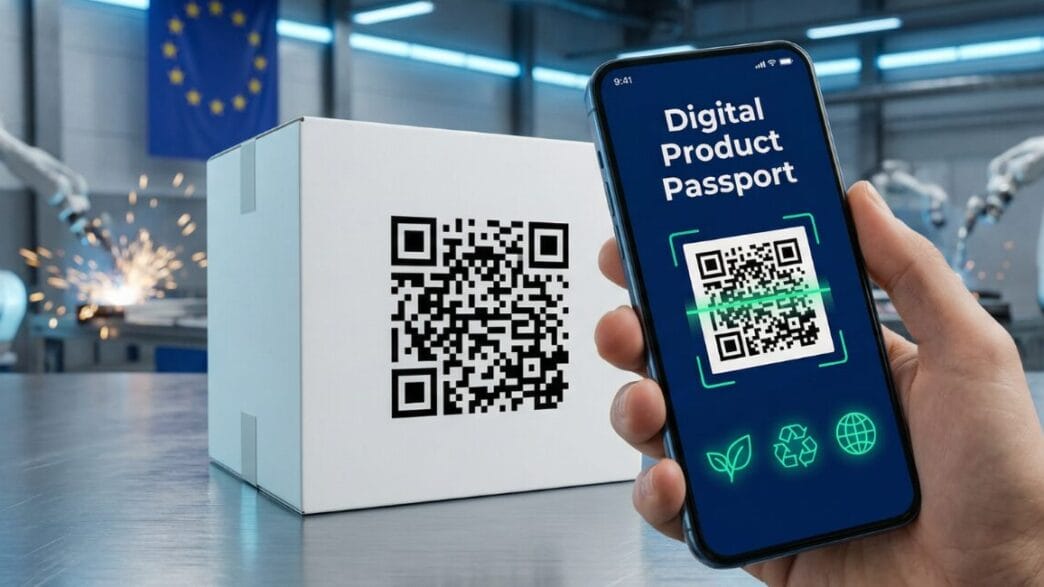
The EU Packaging and Packaging Waste Regulation (PPWR) and the Digital Product Passport (DPP) are placing significant pressure for change on all companies along the value chain: materials need to be checked, packaging concepts revised, and data gathered and documented. Ultimately, the results must be provided on the product or packaging in a compliant, high-quality, and permanently readable format.
„PPWR and DPP are currently on all our clients“ minds," says Frank Debusmann, Sales Director National at REA Elektronik, an expert in industrial marking and code inspection. Many companies are only gradually becoming aware of what the new regulations will entail. The Packaging and Packaging Waste Regulation (PPWR) is intended to kick-start the packaging cycle, promoting the use of recycled materials in production and their subsequent recyclability. When the PPWR comes into force on 12 August 2026, a corresponding mandatory labelling requirement will also begin, which will increase incrementally.
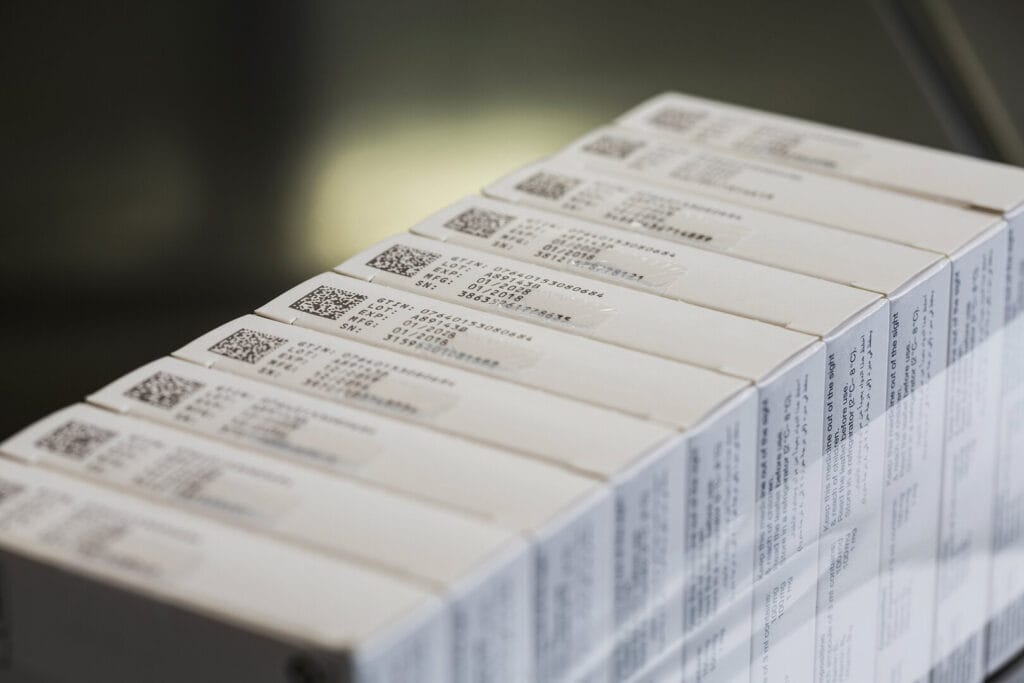
This begins with providing batch or serial numbers and the producer's contact details. This is followed by pan-European harmonised labelling from 12 August 2028. In parallel, the EU has been introducing the Digital Product Passport (DPP) since this year. The DPP requirement is being gradually extended to more and more sectors. A machine-readable 2D code, often a QR code, is intended to provide easy access to product data on the internet, informing about aspects such as composition, sustainability, origin, and recyclability of the product, and much more. Information such as an expiry date, batch, and/or serial number is encoded directly in the code.

Both requirements aim to promote a sustainable and transparent circular economy across Europe. Companies that place goods or packaging on the market must collect all necessary data and ensure its availability.
„The implementation of PPWR and DPP also puts labelling technologies to the test, as manufacturers must be able to generate new codes, apply them to packaging and products – and ensure that they also adhere permanently to altered material compositions or entirely new materials. The innovations themselves don't make us nervous. We have hardware-software expertise and the corresponding ink know-how. With our measurement systems (REA Verifier) for print quality control, we are the leading provider in Europe.“
Frank Debusmann, National Sales Director at REA Elektronik
For many years, REA has been applying individual 2D codes to products and packaging using its marking technologies, serving as a market leader in pharmaceutical serialisation. With this experience, the South Hesse-based company is now also an experienced partner for other industries in implementing PPWR requirements and introducing the Digital Product Passport. REA has been a GS1 Solution Provider for many years, and GS1 sets global standards for data structure and quality. REA's experts also sit on various international standardisation committees, incorporating the knowledge gained there into the product lines that REA develops and produces in Germany.
Code development in accordance with GS1 standards
Every labelling process starts with data preparation. „Companies collect all information, such as certificates and declarations of conformity, and consolidate their database, then we come into play,“ explains Debusmann. „Our job is to physically transfer the data onto the packaging or product. Our systems first convert the data strings into the GS1 QR Code, a QR Code with Digital Link, or other symbologies like GS1 DataMatrix. Specific country requirements, such as the Cryptocode as a special form of GS1 DataMatrix, are not a problem. The GS1 standards help us with this, as they work with a unified data structure.“
The control of later marking via database-supported REA solutions, such as the Customization Suite, ensures that every product and every package receives its unique marking – meaning each code is assigned only once, regardless of how many production lines or sites the company has. Furthermore, the correct preparation of data can be carried out using label management software such as NiceLabel (Loftware) or Codesoft (Teklynx) and processed directly by REA printing systems.
The right labelling technology for every application
The more resource-efficient use of materials required by the PPWR and the „design for recycling“ principle necessitate massive changes for industry. „Every packaging change will also be a project for labelling, because every new material has a different surface with different adhesion properties,“ says Debusmann.
The Business Development Managers at REA keep an eye on the market and its development so that REA can develop products for changing requirements at an early stage. For their practical application, REA also works with major packaging and film manufacturers. One example is the mono-materials emerging due to the PPWR: made from just one type of plastic, they are significantly more recyclable than classic multi-layer composite materials. However, they present a new challenge for labelling: mono-materials and films have a lower surface tension than other plastics, meaning inks adhere less well to them.
Its new developments enable REA Elektronik to help manufacturers reconcile regulatory requirements and recyclability. The new UV laser from REA marks plastic products and packaging, including mono-materials, with razor-sharp and indelible marks through colour change within the plastic itself. UV-curable special inks for the piezo-based REA JET direct printing systems also adhere particularly well to mono-films and other plastics. The low-migration inks enable high-quality, high-resolution direct marking of plastic packaging for food production. Their special adhesion ensures that the ink does not get into the product, either through the film or by smudging.
„Whatever the packaging and whatever the product, if it needs to be reliably and compliantly labelled – “we don't just want to create solutions, we can deliver them too„,“ says Debusmann. This is supported by the wide range of technologies offered by REA Elektronik – from the REA LASER product line and REA JET's non-contact direct printing systems to REA LABEL's labelling solutions. Applied directly to the material, indelibly printed on the product, or with plastic labels on plastic packaging, or linerless paper labels on cardboard boxes for primary, secondary, or shipping packaging. Debusmann: "We find the right labelling technology for every application."
Code review – inline or on a sample basis
And finally, companies must also be sure that the PPWR or DPP marking not only adheres to the product but is also GS1-compliant, legible, and meets international standards. REA does not leave it to others to judge its quality promise. „We are not only able to create codes and apply them with high quality – we can also prove it,“ says Debusmann. „Our REA Verifier systems for code inspection enable companies to check the performance of our marking technologies themselves – inline or on a random basis.“ It is important to understand that responsibility for code quality – unlike with the previously static EAN-13 codes – transfers from the packaging printer to the manufacturer. This is because the variable 2D codes must be generated and printed at the end of the line.
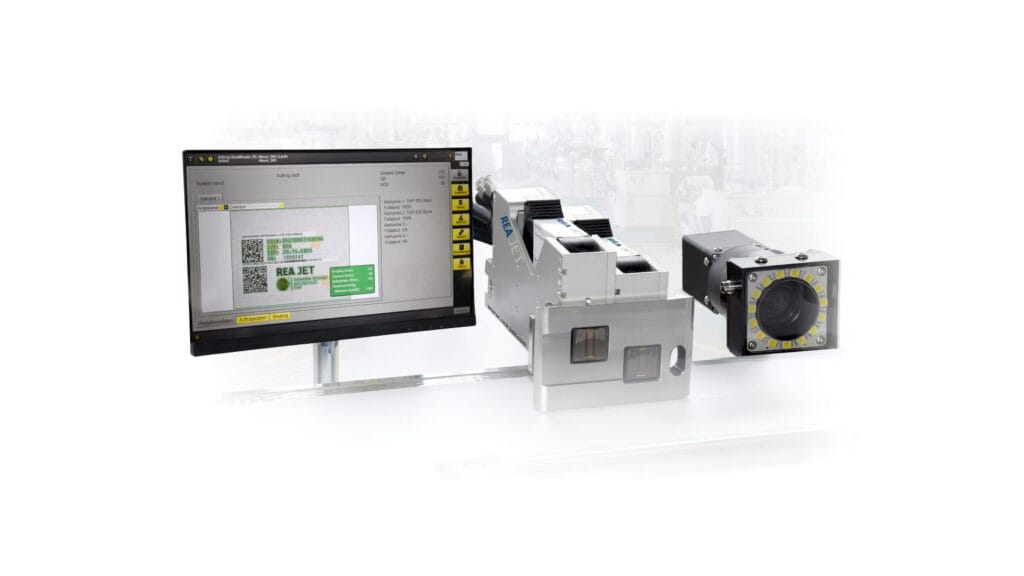
Finally, the latest development, „REA Print-Inspect“, combines code creation, high-resolution printing, and reliable inspection – either as individual components or as a turn-key solution with a conveyor belt and reject mechanism: The code is created via the operating interface of a panel PC using special software, which also controls the printing system, including the high-performance REA JET HR inkjet printer, and the integrated camera for immediate inspection of the high-resolution print images.
Despite all the challenges and hurdles that PPWR and DPP present for the industry, Debusmann states: „Above all, the Digital Product Passport offers more opportunities than risks – for example, for product development, customer loyalty and the traceability of goods flows.“ For instance, end customers can use the DPP to register systems additionally in order to receive service and aftersales in their respective target countries. „And the QR code opens up entirely new possibilities for customer communication.“
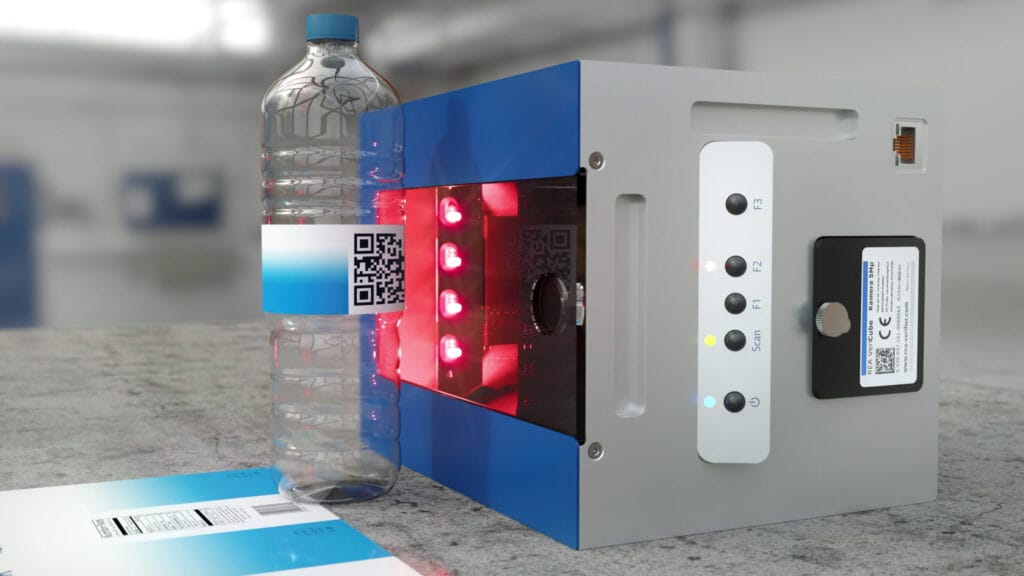
REA Elektronik with new products at interpack 2026
At interpack 2026, REA Elektronik will be showcasing, among other innovations, the following from its versatile range of REA JET, REA LASER, REA LABEL, and REA VERIFIER product lines:
REA UV LASER – This newcomer marks products made of plastics, packaging films, and in particular new mono-materials with razor-sharp and indelible precision through a photochemical reaction in the plastic (colour change) – without any additional additives and without altering the properties of the plastic.
The REA LASER CL 100 - at 100 watts, this system is even more powerful than the standard models for the highest marking speeds in REA's CO2 laser series. Using the ablation method (colour removal), it applies QR codes to up to 60,000 products per hour.
REA JET HR NX – Specifically designed for the requirements of the Digital Product Passport, it expands the series of high-resolution inkjet printers based on HP cartridges. With its 1-inch cartridge, it can print codes of sufficient height.
UV-curable inks for high-resolution marking with REA JET systems (REA JET HR and REA JET UP) – The low migration inks enable high-quality, high-resolution printing on plastics, especially mono-films. They are therefore suitable for marking packaging in food production and all other industries that need to ensure that the coding is permanent and does not migrate into the product.
REA Verifier – The first prototype of a new development will be on display at interpack 2026, likely to be launched at the end of the year. REA promises that it will set new standards in metrological code inspection.
REA at interpack 2026: Hall 8B, Stand C17