packaging journal TV Talk: Trends in packaging design

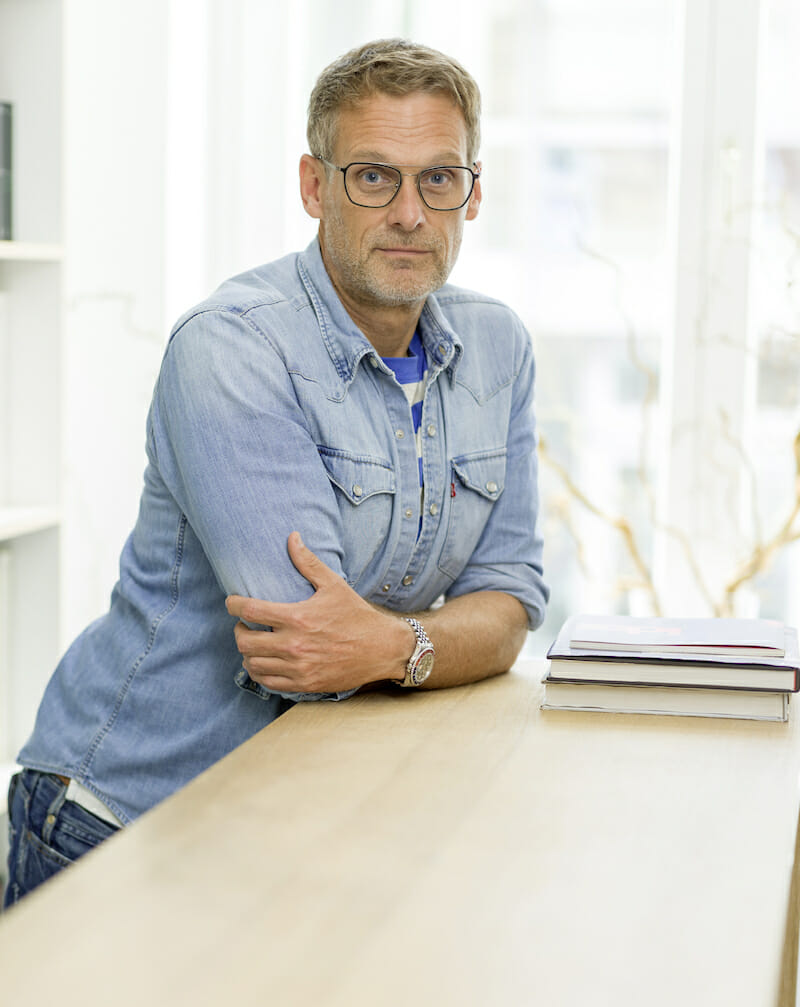
Ruediger Goetz is Managing Director at Germany's top-selling brand and design agency, the Peter Schmidt Group in Hamburg. He calls packaging „multi-sensory brand communication“. If it didn't exist, it would have to be invented. A conversation about perfection that is revealed in imperfection.

Ruediger Goetz - Peter Schmidt Group

Unboxing, imperfect, absolutely sustainable. If you ask Ruediger Goetz about trends, there's no stopping him. No wonder: finding trends and implementing them is his daily business. Ruediger Goetz is Managing Director at Germany's top-selling brand and design agency, the Peter Schmidt Group (PSG) in Hamburg.

He calls packaging „multisensory brand communication“. If it didn't exist, it would have to be invented. A conversation about perfection that is revealed in imperfection.

Ruediger Goetz is Managing Director at the Peter Schmidt Group

Mr Goetz, you once said that if packaging didn't exist, it would have to be invented. Would you like to have invented it?

This is of course a polemic and naive statement. And perhaps it is also somewhat aimed at rehabilitating the reputation of packaging. Packaging should, to some extent rightly, be viewed from an ecological, critical perspective. But packaging is logistically necessary and also has some advantages that other media do not have in our digital age. I think the provocation in this sentence is intended to point out that the brand is given a lot of opportunities through packaging that it may not be aware of. These possibilities can be emphasised technically through design.
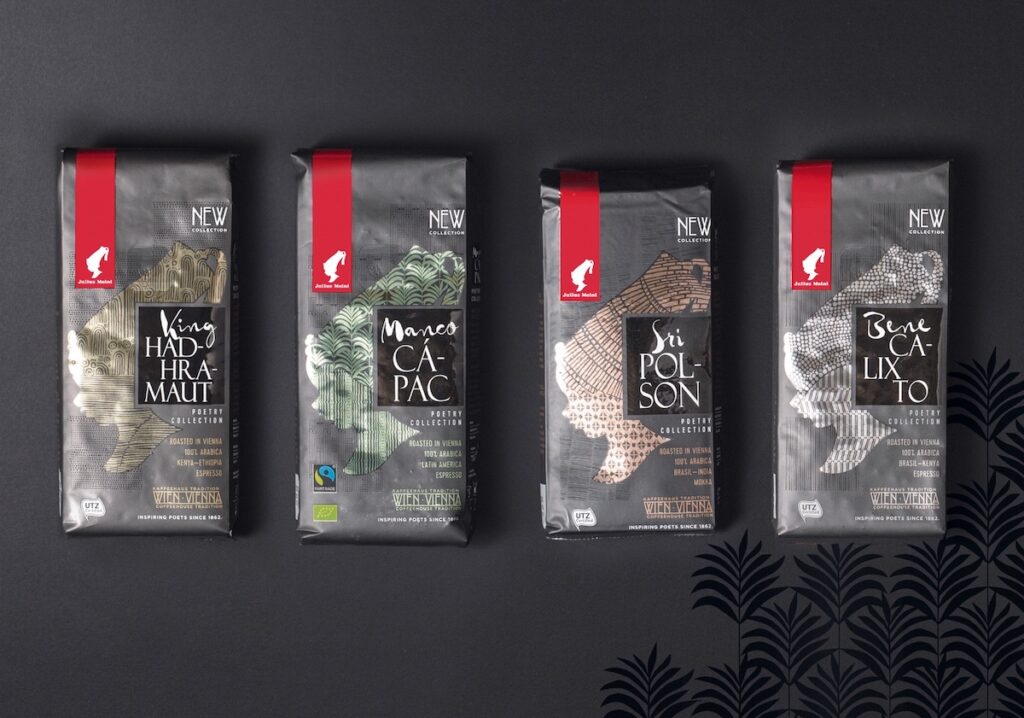
Art Nouveau motifs and references to the „Viennese coffee house“ characterise the product design of the Julius Meinl brand. (Image: Peter Schmidt Group)

How often do you think to yourself that they could have been invented better, or have you done everything right up to this point?

If I didn't think it could be done better, we wouldn't have a business model. I think that packaging is under constant pressure to evolve, both in terms of its design and its material. And that's a good thing. Of course, this also applies to the design and how design deals with packaging. How intelligently design grasps packaging options and assembles and assimilates them into holistic experiences. Packaging is an emotional gateway or a perceived journey into a product. It significantly determines how much value I attach to a product. You could go so far as to say that the packaging is a kind of priming for how responsibly and how openly I treat the product.

You say that packaging is most successful when it expresses empathy. How do you get empathy into packaging or onto packaging?

This is a truism that has been lost a little under the marketing pressure. It means really paying attention to what the consumer wants, how the consumer feels, how the consumer context changes consumer expectations and attention spans. It is healthy, good and also necessary to pause for a moment and really ask ourselves to what extent we are actually able to anticipate consumer sentiment and how quickly it changes again. None of us would deny that our habits are changing faster than we ever thought possible. This can also be applied to consumer behaviour, habits and expectations. In this respect, a certain amount of self-criticism or scepticism towards our own routines is not out of place.

The whole interview in the packaging journal TV Talk

When you say that behaviour has changed, we are talking about trends. And when it comes to changes in behaviour, we are probably talking about the trend par excellence: sustainability. Is it at the top of the list for you too?

This is a truism that has been lost a little under the marketing pressure. It means really paying attention to what the consumer wants, how the consumer feels, how the consumer context changes consumer expectations and attention spans. It is healthy, good and also necessary to pause for a moment and really ask ourselves to what extent we are actually able to anticipate consumer sentiment and how quickly it changes again. None of us would deny that our habits are changing faster than we ever thought possible. This can also be applied to consumer behaviour, habits and expectations. In this respect, a certain amount of self-criticism or scepticism towards our own routines is not out of place.

When you say that behaviour has changed, we are talking about trends. And when it comes to changes in behaviour, we are probably talking about the trend par excellence: sustainability. Is it at the top of the list for you too?

Sustainability is, thank God, the big buzzword and will remain so for a long time. However, it must be clearly stated that sustainability in 2010 is not the same as sustainability in 2021. There is a dynamic here, precisely because it is such an important topic. Much discussed and sometimes very carelessly and irresponsibly misused. This shows a dynamic and evolution in perception that design is partly responsible for and design must respond to so that the right signals are sent to consumers. Sustainability must be brought into the brand context in a meaningful and long-term way.
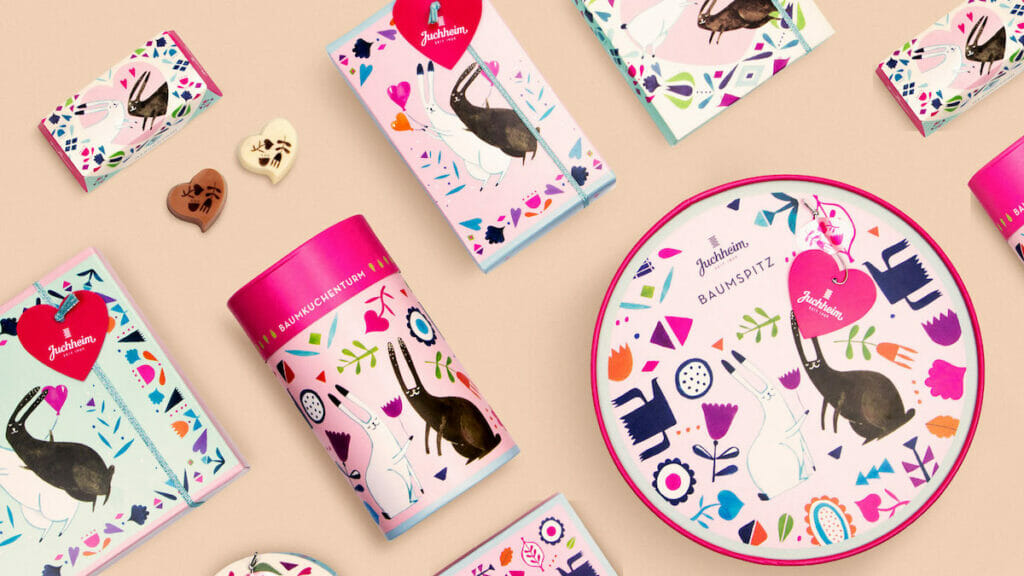
An example of empathetic cultural understanding: the Japanese confectionery brand Juchheim cultivates its German origins. (Image: Peter Schmidt Group)

When we talk about sustainability, it's often about using less packaging. How difficult does that make your work? How do you get design and a lot of attention with less packaging?

That's a nice game, of course, because I can't do more with less. I have to think carefully about what information really matters. I need to have empathy in order to understand the actual needs of customers. I have to compensate for a lack of sales performance with the right messages and, when making editorial decisions, I have to think carefully about what messages the product or packaging really needs. The term empathy is very aptly defined as a guideline here. So: What can I absorb? How much can I take in? What are the logical steps in the purchasing decision and how can I put them on the packaging as strikingly and succinctly as possible? This is where I need knowledge about the purchasing decision process.

Communication with consumers is an important issue. More information should actually be included on the packaging to explain why there is now less packaging and what is good about my packaging. This reduces the space even further.

A lot doesn't always help a lot and there are simply limits to the psychology of perception. From a certain level of information density, I can still score points with an implied density of content. But the direct communication of messages reaches its limits at some point. In this respect, the reaction is a crucial point. I believe that we have a conflict here, namely less surface, but more content and text. I have to respond in a more creative way to how I deal with text and whether I should create a stricter hierarchy of messages. Sensitivity is required here from the designers or, if necessary, a critical dialogue with the manufacturer and product manager.

Let's make it concrete. Sustainability is the big trend. What are the packaging trends at the end of this year, at the end of the pandemic? Where are the trends heading? What can we expect in the coming year?

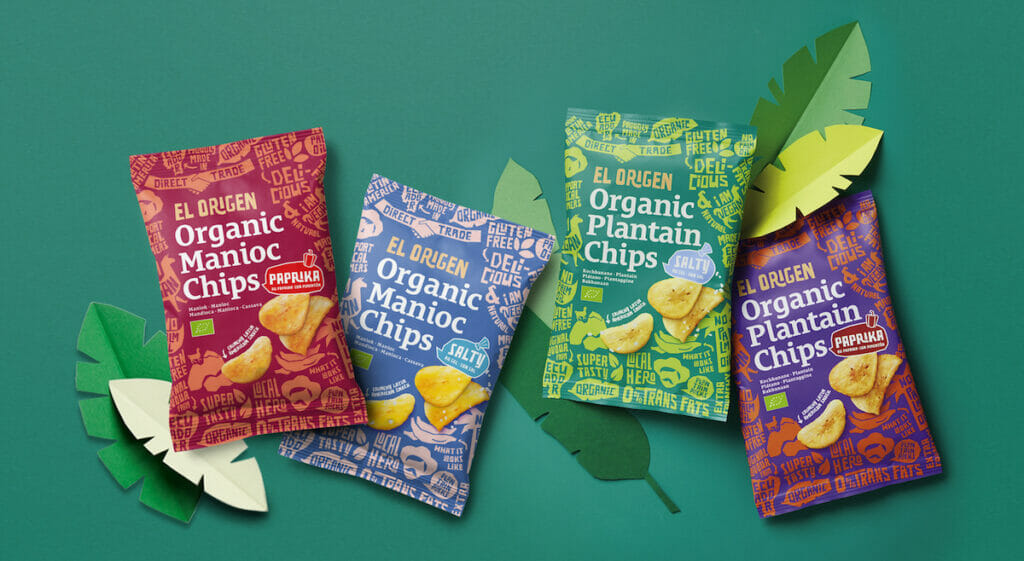
I don't see the trends that seem most important to me as being directly related to the pandemic. I can think of things like individual packaging and hygiene, which are in conflict with sustainability. Anyone who has ever seen how outer packaging suddenly appears ubiquitously in corona test centres will wonder where the big mantra of sustainable packaging has gone. This has been thrown overboard in the justified corona fervour and there must be a regression. But that wouldn't be the decisive trend for me. What I find much more exciting are megatrends that we call the „imperfect premium“. In other words, what used to be premium and was classically expressed through high quality, symbols and coding. This has now changed and premium is tangible, approachable and imperfect. Brands, packaging and packaging design are trying to create proximity and define the theme of „imperfection“ as a cultural asset. This new naivety dissolves distance and defines closeness through design as a genuine premium attribute.

What other trends do you see?

I think there are a few topics that are certainly exciting and also pose a challenge. The topic of unboxing, for example, is one that concerns us. How can I build up the experience and branding, especially when I order something? How can I dramatise the value of the product? How can I achieve real added value through unboxing? I have to send goods with protection and packaging. Can I also use the packaging to send a message and use certain brand signals to compensate for something that no longer happens because I don't go to the shops or don't have to go to the shops? I think that is possible.

This is something that is a great opportunity for design to work with the three-dimensionality of outer packaging in such a way that a moment of surprise is created both inside and out. Using design elements to create dramaturgy and not just seeing it as a necessary evil. As long as we need and have packaging, it can be used creatively until the packaging material is used for a longer period of time or becomes part of the overall experience. Another aspect that concerns us is the topic of new food. We have a whole range of new categories that are emerging, particularly in the area of intolerance, but also in the area of more ideologically driven consumer behaviour, such as eating vegan. New categories and codes are emerging.

At the same time, category codes from existing categories are further developed, modified or in some cases may not be used at all by law because there are restrictions. This is exciting and a great creative playground for us. What new signals can we develop that enable category identification while still expressing basic themes such as appetite and quality? But which also represent differentiated potential for the brand. I would say that there are many possibilities and creative playgrounds at the moment and I am excited to see what new food categories will emerge. There's a lot to do and that's especially good for us.

Then I wish you many more creative playgrounds. Thank you very much for the interview!

Previous issues of packaging journal TV Talk

Perhaps also interesting?