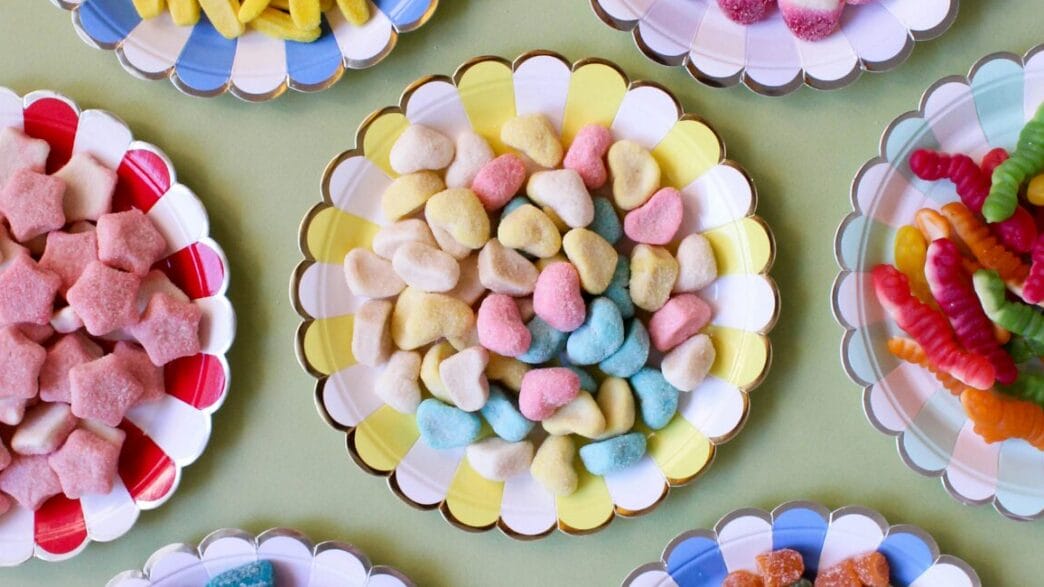
Confectionery remains in demand worldwide - but consumer habits are changing. In addition to flavour, health aspects, sustainable packaging and new materials are becoming increasingly important. The industry is therefore constantly developing innovative packaging materials and machine concepts for chocolate, sweets and fruit gums.
Confectionery continues to be one of the fastest-growing segments of the food industry. At the same time, the market is changing noticeably. Consumers today not only expect sweet indulgence, but increasingly also functional added value. Plant-based recipes, sugar-free variants, organic ingredients and protein-rich snacks are gaining in importance. New ingredients that make taste, colour and texture a multi-sensory experience are also bringing innovation to the product range.
At the same time, the demands on production and packaging are increasing. From a technical point of view, confectionery is considered a demanding product: Fat content, sticky surfaces or temperature-sensitive recipes pose challenges for machines and packaging materials. In addition, factors such as product protection, shelf life and high-quality presentation play a key role.

Growing market with high dynamics
Despite the changes, demand remains high. Market researchers recently estimated the global market for chocolate confectionery at around 173 billion US dollars. Forecasts predict that it could grow to more than USD 300 billion by 2034 - an average growth rate of just under seven per cent per year. Europe continues to be an important sales market. According to Fortune Business Insights, the market share in 2025 was around 52 per cent.
Sustainable packaging materials on the rise
Plastic has long played a key role in confectionery in particular due to its barrier properties. Products react sensitively to oxygen, moisture or fat migration. However, alternatives are now increasingly being developed that offer similar protective functions and are also recyclable.
Paper-based barrier packaging, monomaterial solutions and other recyclable concepts are becoming increasingly important. Companies such as Koehler Paper are driving this development with functional packaging papers. Product lines such as NexPlus Advanced or NexPlus Seal Coat are designed to provide oxygen, mineral oil and grease barriers and can also be recycled in the waste paper stream.
According to the company, these materials can also be processed on existing packaging machines at a comparable speed to plastic. The latest generation should also enable a uniform high-gloss appearance. This would enable brands to achieve a high-quality presentation without having to resort to plastic composites.
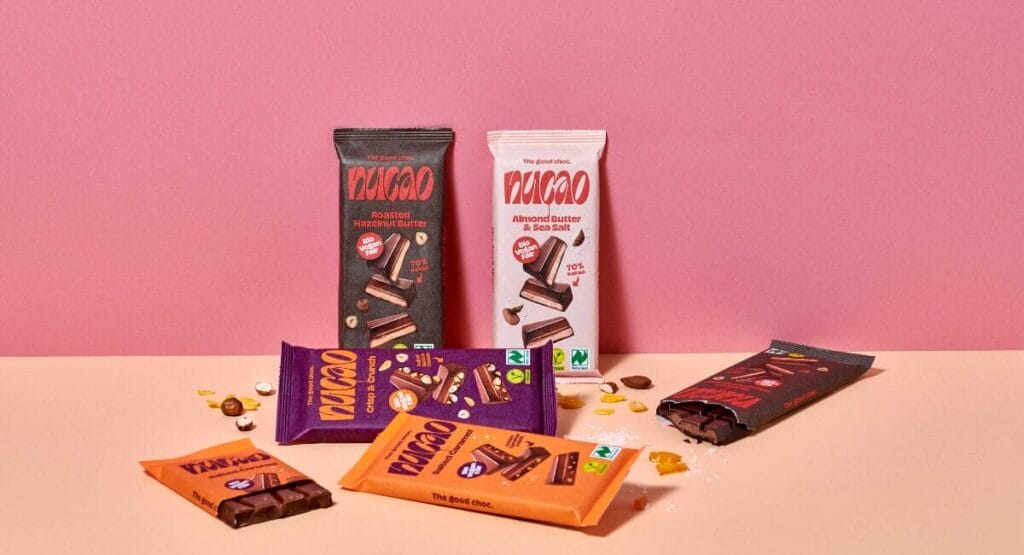
The first projects already show that such solutions are also being used on the market. The start-up Nucao, for example, uses paper packaging based on NexPlus Advanced for its chocolate products. Chocolate manufacturer Vivani is taking a different approach and is using a home-compostable film made from renewable raw materials. Supplemented by FSC-certified paper wrapping and mineral oil-free printing inks, the packaging also becomes part of the brand communication.
Machines for new materials
Machine concepts are also evolving in line with the changing requirements for packaging materials. Flexibility, modularity and fast changeover are at the centre of attention.
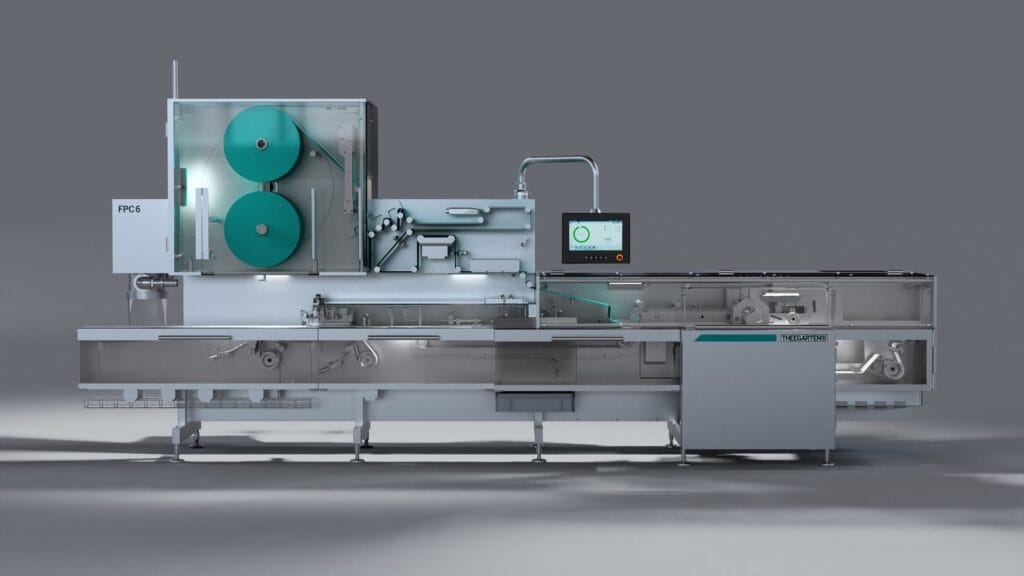
Theegarten-Pactec is presenting the high-performance FPC6 machine for the first time at interpack. According to the manufacturer, it is designed for chocolate bars, chocolate tablets and pralines and processes various product formats as well as several types of seal - including cold sealing, heat sealing and seam sealing for water-soluble films.
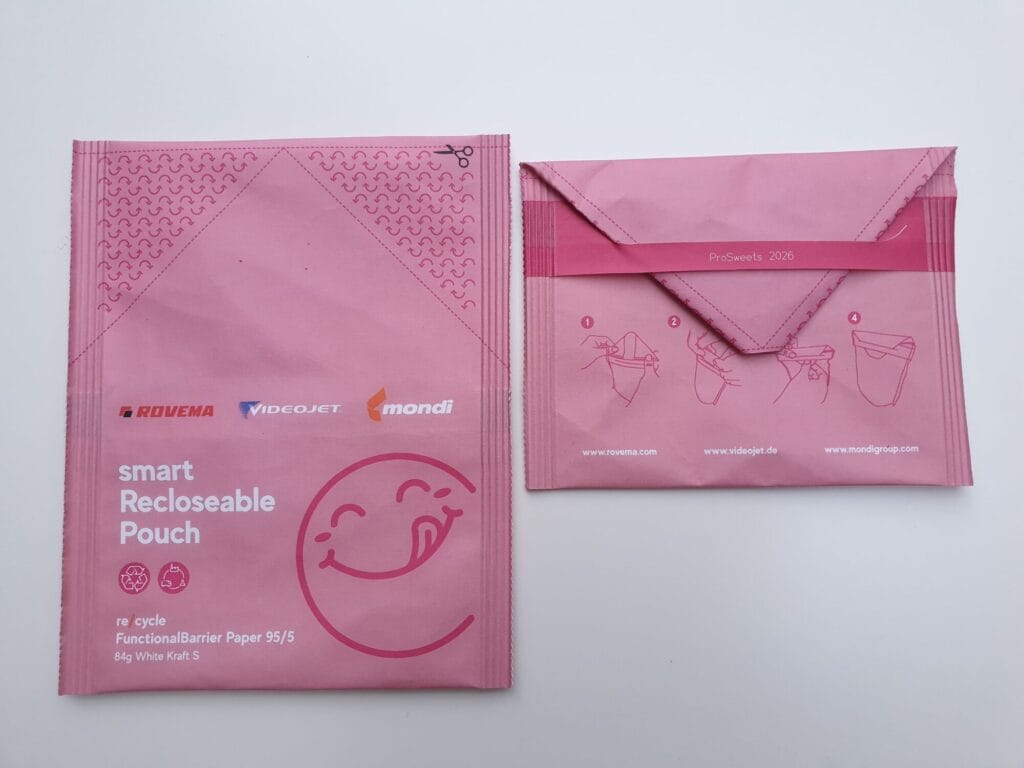
Rovema is also working on solutions for alternative materials. According to the company, the BVC 250 Candy flow-wrapping machine can process mono and composite materials as well as paper and paper composites. At the same time, it achieves outputs of up to 300 bags per minute. In co-operation with packaging manufacturers, Rovema is testing new materials with regard to machine runability, sealing properties and performance parameters.
More functionality for packaging
In addition to materials and machines, the functionality of packaging is also playing an increasingly important role. Reclosability, intuitive handling and an improved user experience are becoming increasingly important.
One example is the Easylock closure system from Aplix. The hook-to-hook system made from recyclable polyethylene is designed to provide acoustic and tactile feedback when opening and closing. At the same time, the closure is relatively tolerant of product particles - an advantage for sticky confectionery, for example.
Digitalisation creates transparency
Digital technologies are also gaining in importance. Packaging is increasingly becoming an information and communication platform. One current example is a chocolate manufacturer's traceability system, which was honoured with the German Sustainability Award 2026. Consumers can trace the origin of the cocoa back to the producer community using QR codes on the packaging. This is made possible by a digital tracking system that collates data along the entire supply chain. Digitalisation should not only make processes more efficient, but also create trust.
Note: This article was written on the basis of a technical article produced by packaging journal for free use by interested media on behalf of interpack 2026. You can find the original article here. You can find out more about packaging solutions for confectionery live at interpack 2026 from 7 to 13 May in Düsseldorf.