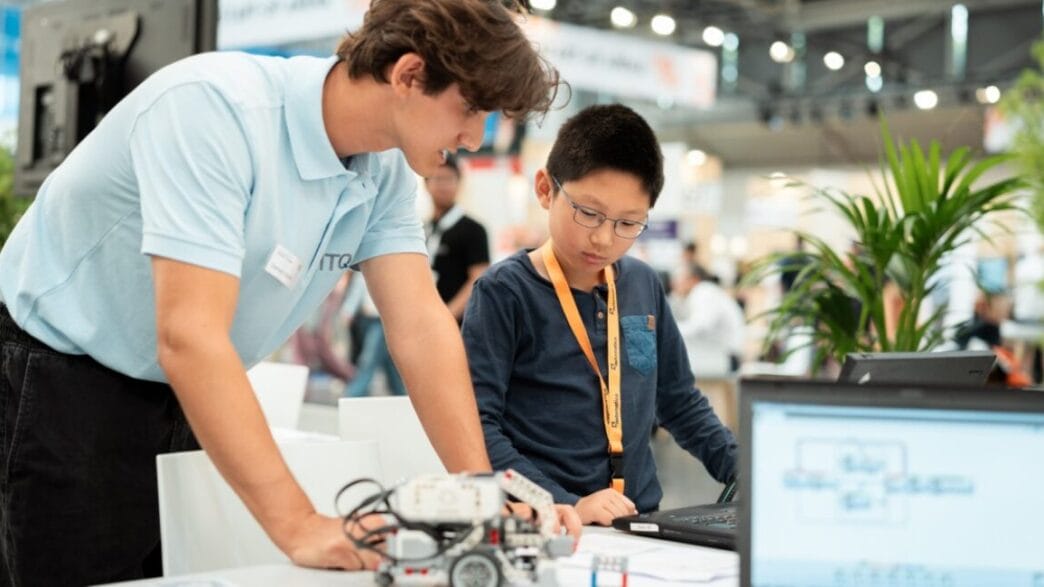
ITQ GmbH and the Gerda Stetter Foundation are using AI demonstrators, recycling machines, and tech workshops to show how the circular economy can become an engaging experience for the next generation.
Sustainable circular economy requires technological expertise and qualified junior staff. ITQ GmbH and the Gerda Stetter Foundation „Technik macht Spaß!“ (Technology is Fun!) will show how both can be systematically combined at interpack in the VDMA Technology Lounge. The focus will be on the „CirQmind – Circular Economy through Circular Society“ project, which inspires young people about sustainability through a living circular economy and future technologies such as artificial intelligence.
Circular economy you can touch
CirQmind goes beyond traditional recycling, integrating the four pillars of Recycle, Rebuild, Reuse, and Reskill into a comprehensive educational approach. Trade fair visitors have the opportunity to experience the entire cycle live, from waste sorting to the creation of new products. New products such as carabiners and torches are made on-site from collected plastic lids.

A highlight is the AI Candy Machine Demonstrator, where AI is not only explained but can also be experienced. Using a chatbot, users select a desired snack, which is recognised by AI and served by a robotic arm. This technology shows how AI expertise can already be integrated into training and can be transferred to industrial applications such as intelligent quality control and sustainable recycling processes.
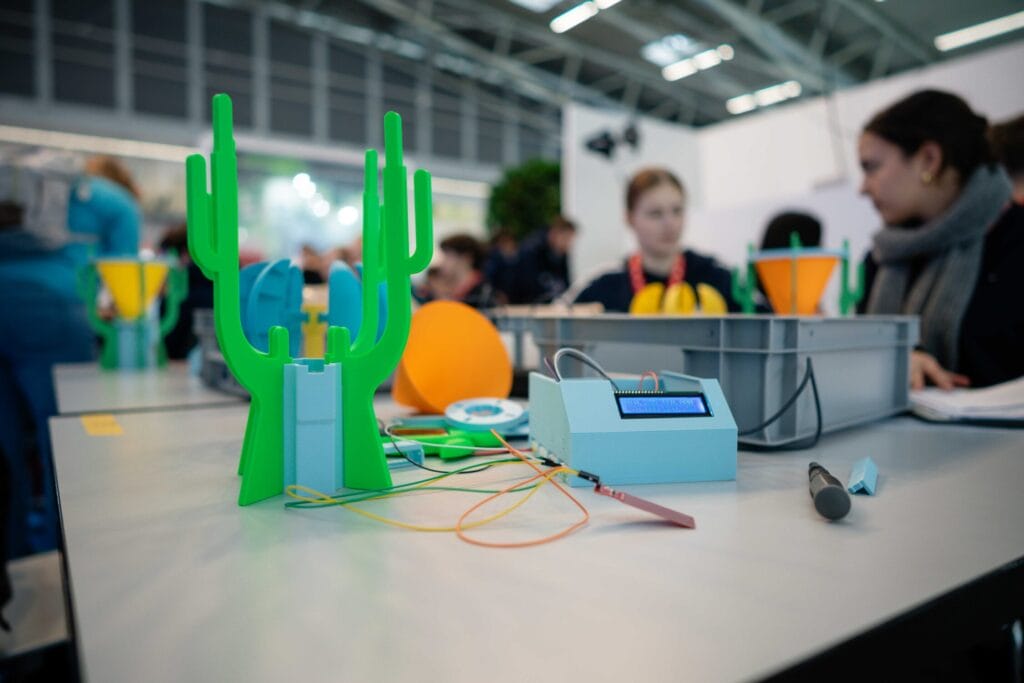
Diverse STEM programme at the exhibition stand
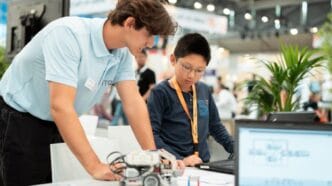
Alongside this, ITQ GmbH offers an extensive programme of workshops and activities running throughout the entire trade fair week. Visitors gain practical insights into automation, electronics, and sustainable production. In Lego Mindstorms workshops, participants learn to build and program autonomous robots. Within the scope of the EU-funded EduDemoS project, demonstrators for solar and wind energy are being created from recycled materials. In Minecraft Education workshops, children and young people develop digital future cities, learning programming concepts along the way. Arduino and microcontroller workshops offer an introduction to electronics and embedded systems.
From PlastiX to CirQmind
The CirQmind project builds on the successes of the student project PlastiX and expands the approach to include a societal dimension. A functioning circular economy requires a committed circular society. Through workshops and educational projects, schoolchildren, students, and junior engineers are encouraged to develop their own solutions for waste collection and material recycling. The EduDemoS project integrates the circular economy concept into school lessons by producing learning objects using 3D printing with recycled plastic filaments.
Source: ITQ GmbH
VDMA Technology Lounge: Hall 4A, Stand C54