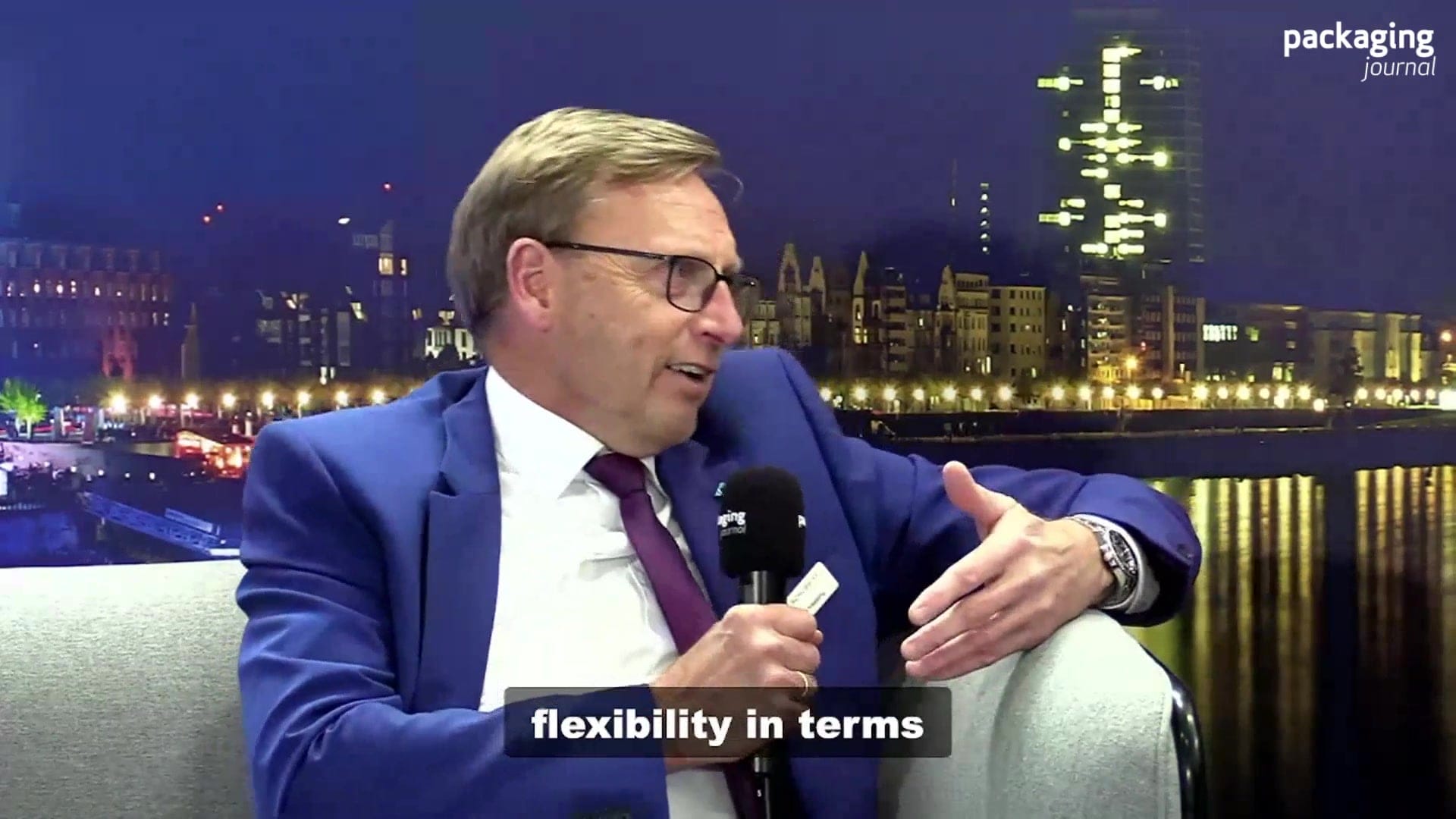
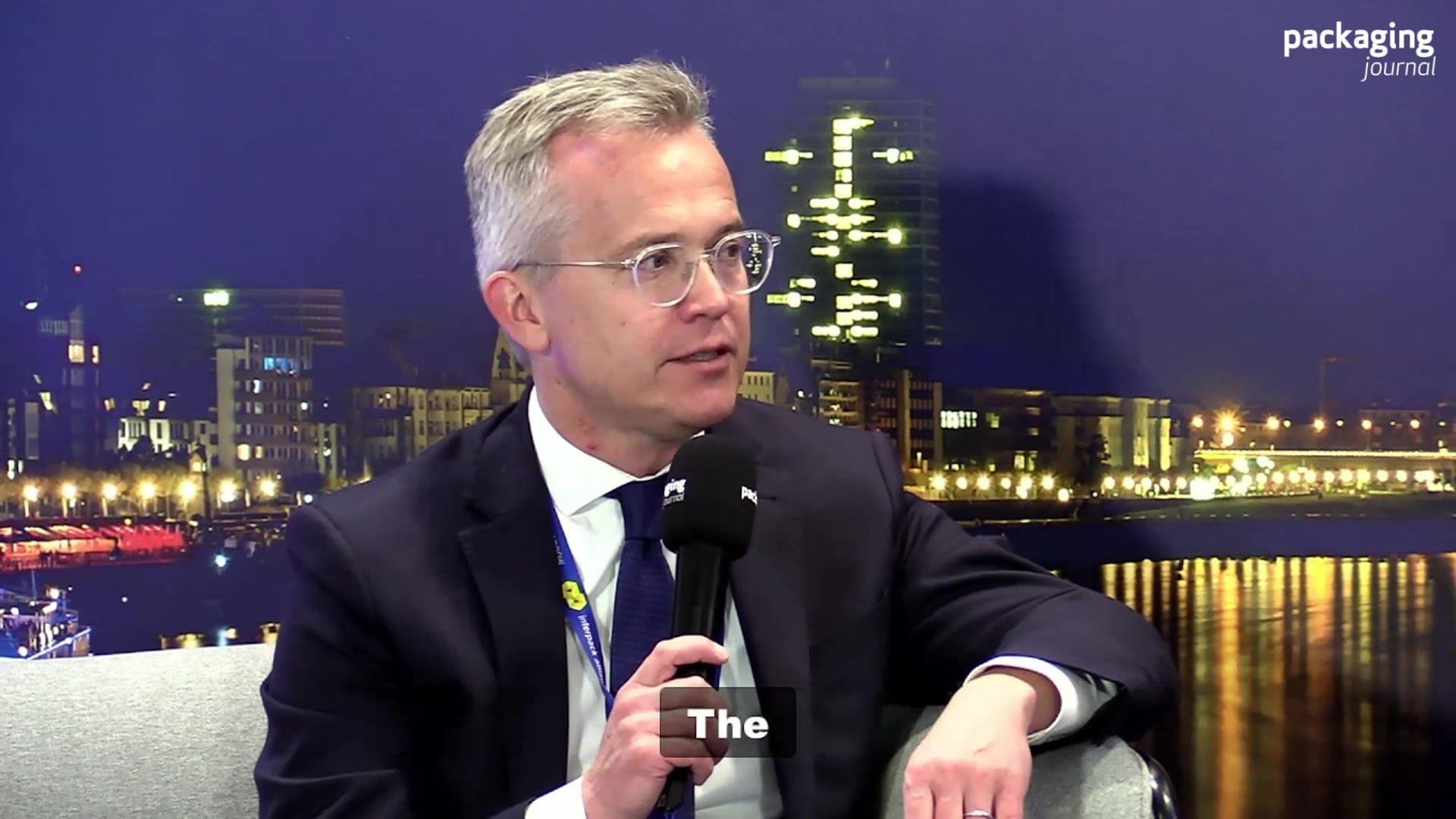
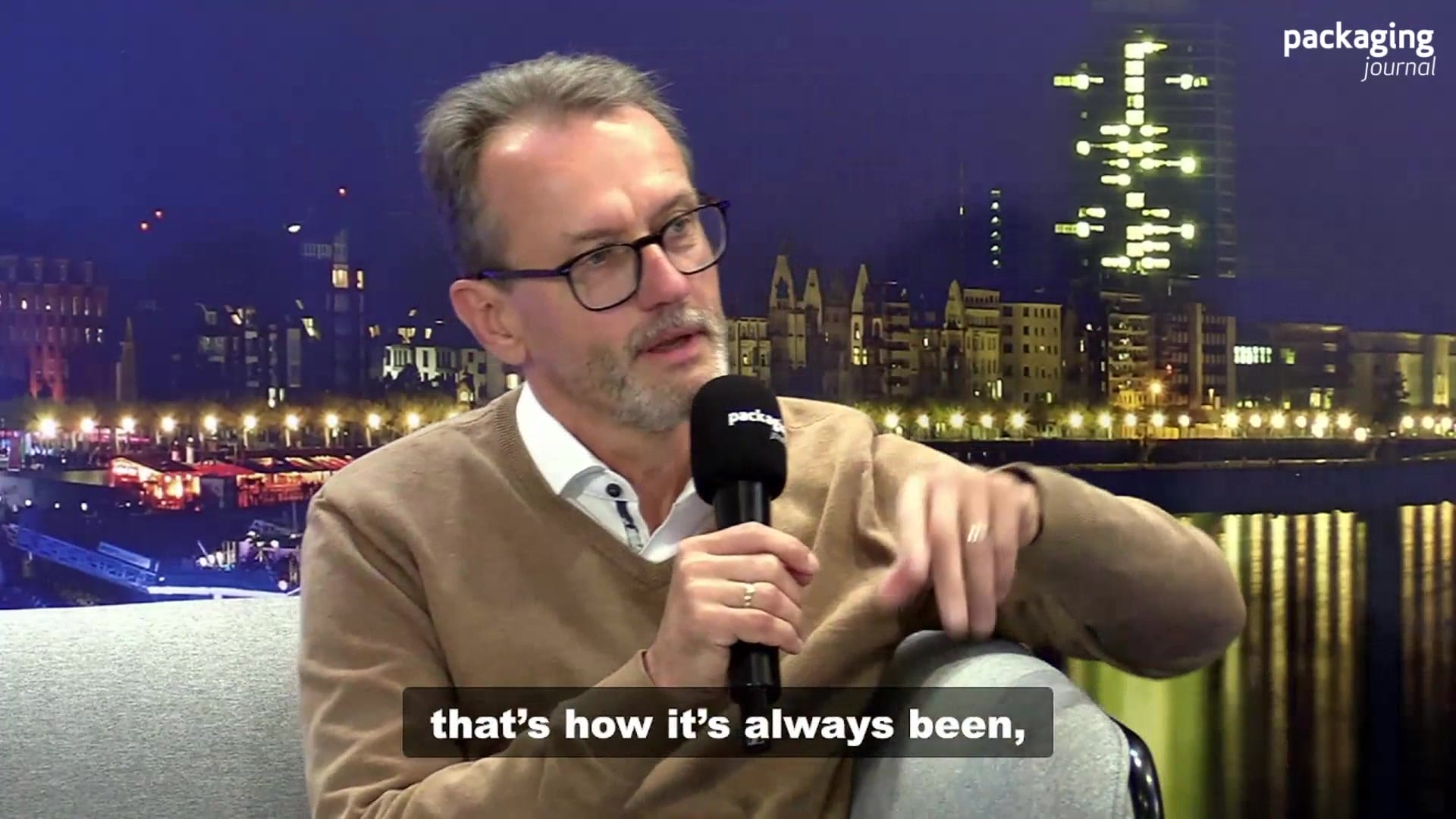
Thomas Reiner, CEO of Berndt + Partner and Chairman of the German Packaging Institute, draws a sobering conclusion on the current market situation at interpack 2026. While the industry normally looks to the future, discussions are currently dominated by looking back at the supply chain.
Plastic prices and availability as acute challenges
„Plastic prices have exploded in no time at all, we’ve never experienced anything like it. Due to the war situation, prices have doubled in 4 weeks for many plastics,“ reports Reiner. This drastic cost development is forcing companies to rethink their traditional procurement strategies. At the same time, initial availability problems for specialities are arising.
Noticeably parallel to this is the decline in sustainability themes at the trade fair compared to 2023. Reiner explains this with the current short-sightedness: „The volatility we have outside – everyone is on a short-term horizon, and that is the opposite of sustainability per se.“ Quantity problems in the consumer goods industry and dwindling money for consumers are exacerbating this tendency.

Too late for recycling
The expert views the situation with plastic recycling as particularly critical: „If we need 10 to 12 million tonnes of recycled plastic, PCR, we only had capacity for roughly half, and in the last 2 years we have lost 1 million tonnes of capacity.“ His clear assessment: „We are collectively too late.“
Despite these challenges, Reiner rejects a postponement of the PPWR regulation. „We have to endure the pressure and get back on track now,“ he demands. He sees trade as a beacon of hope, which, through its market power, can exert consolidated pressure points – and thus drive change in the value chain, where regulatory pressure alone reaches its limits.
AI as a driver of efficiency and transparency
Reiner is more optimistic when it comes to artificial intelligence. He believes that AI can both increase efficiency in manufacturing and reduce complexity and create transparency. „We need more data-driven, factual decisions for everything we do,“ is his conviction.
The outlook for interpack 2032 shows realistic optimism: significant progress in sustainability issues is expected, even if not all goals are met. The industry will step on the gas „if it has to“ – driven by growing regulatory pressure and the realisation that short-term crisis management and long-term circular logic can no longer be mutually exclusive.