Coperion has received confirmation from the U.S. Food and Drug Administration (FDA) that its recycling technology for the production of rHDPE and rPP meets the requirements for direct food contact. The recyclates can therefore be used in food packaging.
Coperion received the so-called Letter of No Objection (LNO) from the FDA, certifying that the combination of twin-screw extruders and the EcoFresh silo degassing system is suitable for the production of food-grade rHDPE and rPP. This makes the company the first full-service provider of decontamination systems with twin-screw extruders and the EcoFresh silo degassing system to offer the market an efficient solution for the production of food-grade recycled materials – for both small throughputs and up to 6,000 kg/h.
Coperion achieves the necessary decontamination of rHDPE and rPP for LNO through the interplay of both well-proven technologies. It was put to the test in a challenge test and confirmed by the FDA.

New opportunities are now opening up for the circularity of food packaging: for instance, food-grade regranulate can be produced from HDPE milk cartons or beverage bottles for fruit juices and subsequently reused to produce similar bottles or related products. Food containers, cups, and trays made from PP can be recycled back into packaging with direct food contact.
Production of food-grade rHDPE and rPP
The production of food-grade recyclates is considered one of the greatest challenges in plastic recycling. Such regranulates are certified as suitable for direct contact with foodstuffs and meet the highest requirements for purity and safety.
„The FDA approval means that rHDPE and rPP produced using our technologies can be used in proportions of up to 100 percent for new food packaging of all kinds. This gives recyclers the assurance that our energy-efficient mechanical recycling process produces high-quality recyclate for FDA Use Cases A-H. These include, for example, packaging for products that have been sterilised at high temperatures, pasteurised or deep-frozen.“
Stefan Lachenmayer, Global Commercial Director Recycling at Coperion
Food-grade process steps
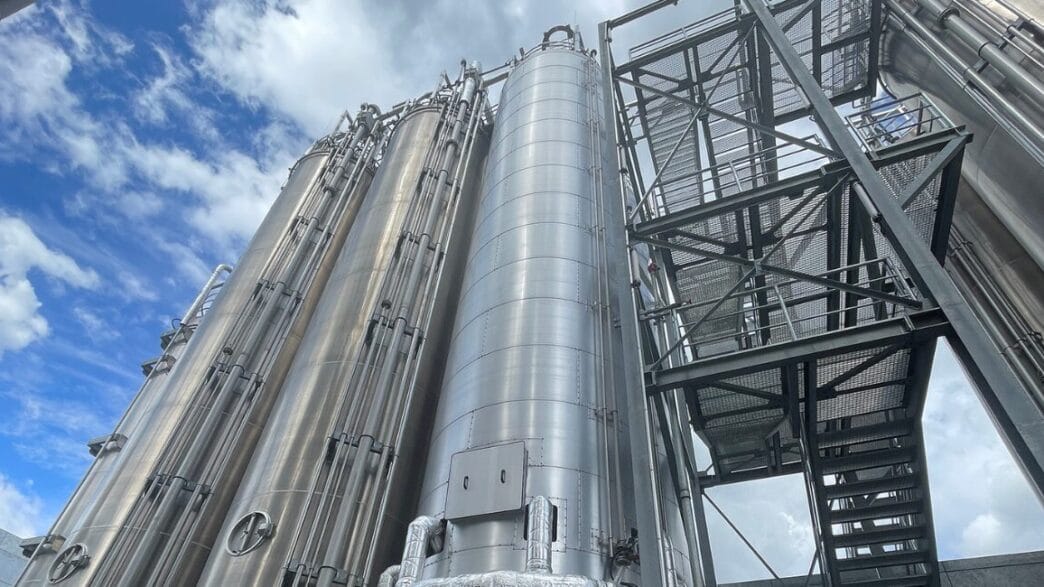
The high decontamination performance of the Coperion solution is significantly attributed to the high degassing performance of the twin-screw extruder and the efficient EcoFresh silo degassing, where even low-volatile migration substances are reliably removed with short residence times.
The starting material for the Coperion process for food-grade rHDPE recyclate is used HDPE beverage bottles or their caps. The material stream for rPP compounds consists of vegetable peels, packaging, yoghurt pots, or similar items.
The material is fed into the extruder via gravimetric Coperion K-Tron feeders. There, it is first melted by twin screws, intensively mixed, homogenised, and degassed in a process-stable manner. Coperion benefits from its many years of experience in degassing melts when designing the process parameters and has optimally adapted the process and screw configuration for the respective recycling application.
The plastic is cleaned of solid contaminants and granulated via a melt filter. For a second decontamination step, the recompounds are fed into the newly developed and standardised EcoFresh silo degassing system.
Food Grade Tests at the Recycling Innovation Centre
Recyclers can test the decontamination performance of extruders and EcoFresh at Coperion's Recycling Innovation Center. Both technologies are available there for extensive testing with the original material streams. Together with the technical centre of Herbold Meckesheim, where the shredding and cleaning of the starting materials takes place, Coperion can map the entire recycling process in its test centres.
Source: Coperion