Recently, a customer approached Indeed founder and Managing Director Karel J. Golta with the request to research excellent best cases for truly innovative smart packaging. He wanted to show the management what is possible in the packaging world today in the age of big data and the Internet of Things.
It wasn't about any „augmented reality gimmicks“ or „Attention, the cold chain has been interrupted“ stickers, but about solutions at the level of iWatch, drone, Kickstarter or WhatsUp: packaging examples with a game-changer character. „Well, a lot is certainly possible,“ summarised expert Golta, summing up: „From a tech perspective, my team and I were dismayed to discover that innovations that are profoundly fascinating are not found in the packaging industry. Yes, the topic Smart Packaging or also E-packaging could be a real source of innovation. For consumers, however, only if it provides them with additional added value that is relevant to them.“
packaging journal wanted to know more about this and asked Karel J. Golta, who has been working in the field of innovation consulting and development for many years, for an assessment of the situation and possible solutions.


pj: Mr Golta, where do you think the problem actually lies?
Karel J. Golta: The problem lies in the industry itself. For decades, people have been substituting instead of developing new values for the consumer. But especially today, when the internet is radically changing our relationship to shopping and ownership, the experiential value of a product plays an important role. Added value of packaging a decisive role. Necessity is the mother of invention, and so we at Indeed set about creating our own best case on the subject of Smart packaging innovation to create.
So the setting was: What have bricks-and-mortar retailers been complaining about more and more in recent years? About online retail. The reason? I can find the best price online. And: product ratings, likes and reviews are simply an ingenious way to support purchases - this works for a cool digital camera from Nikon or the new book from Charlotte Link. Clicked on a mobile phone, picked up at Mediamarkt or delivered by DHL. But consumers don't seem to be dissatisfied with using the internet.
pj: So why do you want to revolutionise this approach?
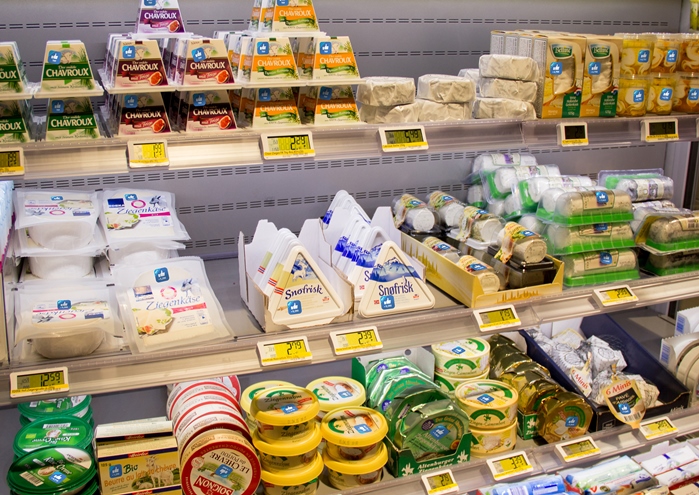
Karel J. Golta: So what about my wine for cooking with friends tonight? What about my new yoghurt dip as a snack beforehand or the chocolates afterwards, all those everyday essentials that I want spontaneously and immediately? Where is the community for advice and support when I'm standing in front of the yoghurt shelf at Edeka and ask myself: apple red cabbage or ginger banana? Do I actually have to use my smartphone for a 49 cent item? Our vision: the BridgeHipper. A small printed electronics label that closes the gap between stationary retail, i.e. the world in the here and now, and the online community with all its reviews and likes, or finally brings the two worlds together.
pj: What could the BridgeHipper do?
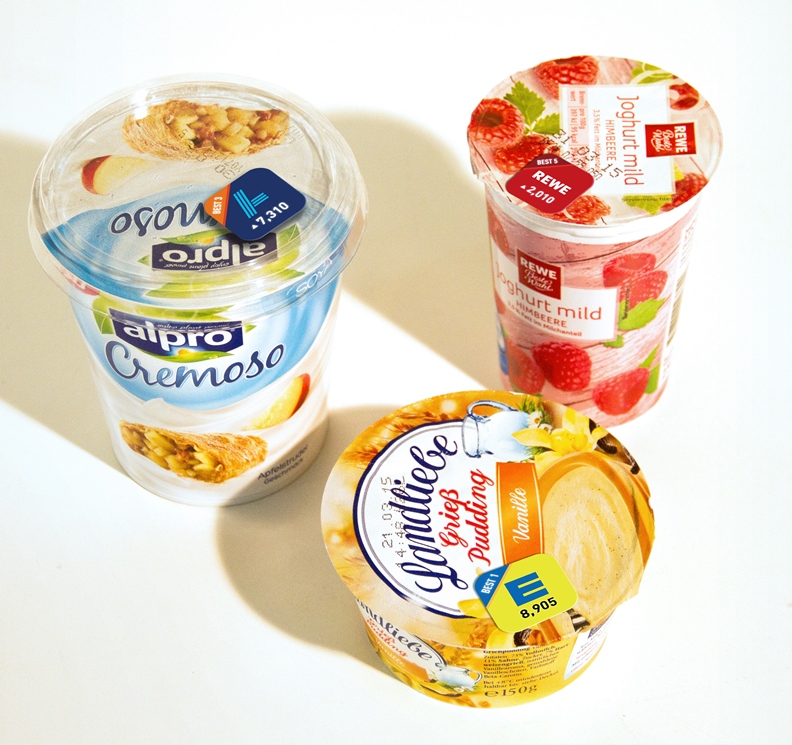
Karel J. Golta: Attached to product packaging, for example, it shows the current number of likes on Facebook for that specific product in real time. This means I can see at a glance, without having to use my mobile phone, which yoghurt, which rice or even which fruit has the most likes on the shelf at the local retailer and therefore make my decision. Real-time shopping with real-time data. Brick-and-mortar retail finally has all the trump cards in its hand again. Utilising big data and IoT for the benefit of the consumer. The whole thing can of course be adapted to retailers‘ own rating systems or rating programmes and even combined. Imagine Amazon cooperating with Rewe and the star rating being displayed live on the Kellogg's box! Of course, the individual rating still takes place online at Payback, Amazon, Facebook etc.. So each system remains independent and combines the respective strengths.
pj: And how would the BridgeHipper work?
Karel J. Golta: The BridgeHipper is a small self-adhesive paper label on which WLAN-enabled receiver electronics including e-ink control and display are printed. Via the BridgeHipper server, the retailer receives the respective current valuation data. These are streamed in the local shop using a special WLAN router. The BridgeHipper labels receive the signal and, if relevant for the respective product, the numerical display changes using EInk technology.
pj: Why does this approach offer more relevant added value for consumers than most smart packaging solutions?
Karel J. Golta: The biggest beneficiary of this idea is the consumer - not Amazon, not Rewe. Without any detours, they can now utilise the advantages that they value so much online offline. In addition, his behaviour will make competition on the shelf exciting again. Because the products at the bottom of the shelf could also have the best rating. And that would make bending down worthwhile again. The smart packaging of tomorrow must be real needs of consumers and demonstrate real added value that is immediately recognised by the user without any ifs and buts. The packaging industry should orientate itself on the best cases from the „Internet of Things“ and „Big Data“ trends. Here, too, only the solution that offers the user increased and tangible value and ultimately influences or even changes their behaviour will be successful.
pj: But this requires a change of mindset.
Karel J. Golta: This is precisely the difficulty in getting away from: How can I obtain more data about my consumers for my company? How can my product be presented as effectively as possible? And in favour of that: How can I offer my customers something via the packaging that they can immediately use for themselves and their situation and needs? in the most positive way can?
pj: Mr Golta, what does this mean for the packaging industry and how did your customer react to the results of the research?
Karel J. Golta: Within the development process, the packaging industry needs to focus much more strongly on its Indirect customers, The focus must be on the users of the final product and place them at the centre of development efforts. It must first think conceptually in terms of added value for this target group and then look at which technology can be used to create this added value. My client has realised that he can't count on much support from the industry here, but has to be a courageous pioneer himself. A great opportunity!
[infotext icon] About Indeed: Indeed specialises in design, innovation and engineering. The globally active company based in Hamburg has already received several awards such as the iF Award, Red Dot and German Design Award. In the field of packaging design, the focus is on structural packaging and innovative packaging solutions. Working methods such as co-creation, roadmapping and the observation of user needs lead developments for customers such as Henkel, Beiersdorf, Goldwell, Coca-Cola and Nestlé to real success and economic feasibility.This was also the case recently for Rügenwalder: Indeed advised the family-owned company holistically on its first microwave products (Mühlen currywurst and meatballs) and delivered an overall composition of shell and content and thus a comprehensive experience design.
Decisive for success is also the Technical realisationThanks to in-house engineering, Indeed ensures that the product is ready for series production and supports the process through to market launch. For example, the company took on the concept design for the Can2close resealable beverage can and guaranteed smooth implementation, including in mass production.