The Karlsberg brewery in Homburg produces around two million hectolitres of beer every year. To ensure that no mislabelling or bottles with the wrong caps leave the brewery despite the wide range of varieties, the brewery had a camera-based inspection system installed by the Neuwied-based specialist Indspect.
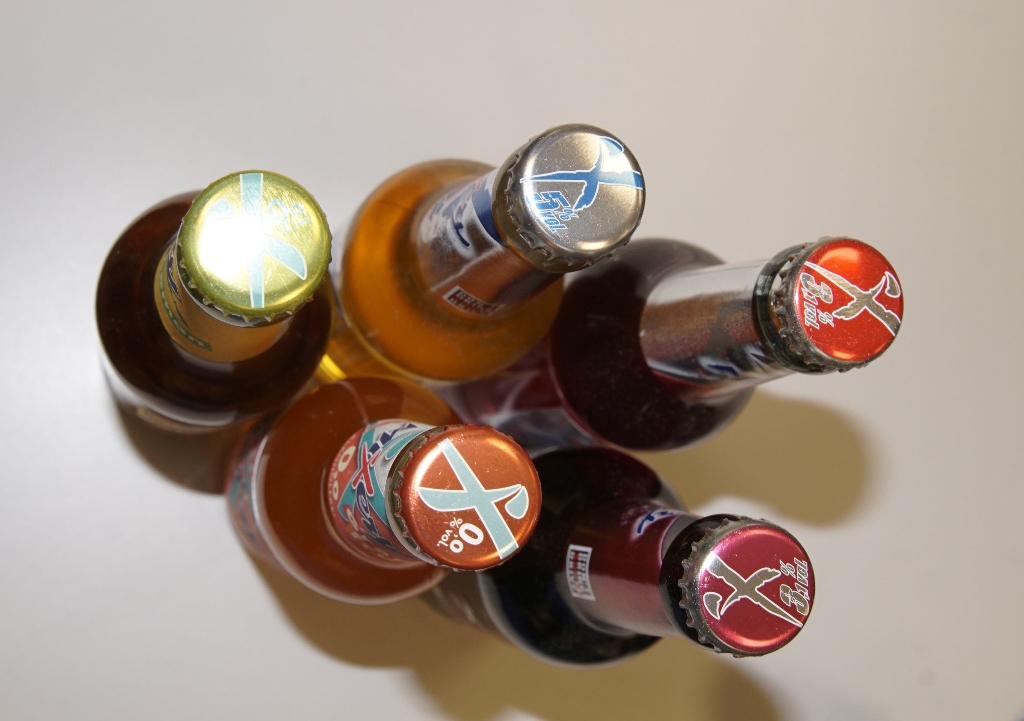
Karlsberg's non-alcoholic brand has a rapidly growing share of sales. „Gründel's“, which is available in four flavours, as well as the trendy and trendy drink MiXery. Both brands offer a wide range of varieties, with the labels and crown caps being similar in shape and differing only in terms of brand appearance.
With tradition ...
In 1878, Christian Weber bought breweries, fountains and real estate in Homburg in the Saarland. He referred to the noble tradition of the brewery at Karlsberg Castle when he bought the „Bavarian brewery at the Karlsberg“ founded. Homburg's soft spring water is ideal for brewing beer. The brewery grew rapidly, and as early as 1884 it was necessary to move to its current location on the outskirts of Homburg. A new brewery and further new buildings and conversions modernised and expanded beer production and ensured a high level of quality, and investments are still being made today.

... and innovation
The brewery has always been characterised by its special location in the Saarland, which belonged to France until 1954, as a very innovative out: From 1953, it was the only brewery in the Franco-German sales region to fill beer in beverage cans (0.35 l), followed by the „litre bombers“ in 1956 and the giant cans (3.8 l and 5 l) from 1968. Successful brands such as „Sinalco-Cola“ and „Rilchinger“ mineral water were added, and the company also expanded its own Karlsberg range: Edelmalz, Alt, the strong beer „Prinz von Homburg“ and Ur-Pils. In 1974, the 1 million hectolitre mark was exceeded for the first time. Co-operations with Coca-Cola opened up the soft drinks market, as did the takeover of Merziger Fruchtgetränke GmbH - „Germany's finest juice shop“. In the non-alcoholic beer market, „Gründel's“ was one of the leading breweries. The company subsequently acquired the Königsbacher brewery and launched „Ballermann 6,9“, the LongdrinX „Jopalume“, „Pecada“ and „Maromba“ as well as the trendy drinks „Desperados Tequila flavoured beer“. Karlsberg Brauerei co-founded the booming market for flavoured beer with the cola/beer mix drink „MiXery“, which was launched in 1996 and distributed nationwide. Mixed beer drinks. Today, the brewery is one of the market leaders in beer mixes and is the largest single variety in the overall beer mix market. MiXery is constantly being developed further and is now also available in two non-alcoholic variants in addition to other alcoholic beers. The non-alcoholic „Gründel's fresh“ is an exclamation mark in the non-alcoholic beer segment, and Gründel's is also available as „Classic“, „Radler“ and „Fitmalz“.
Prevent confusion ...
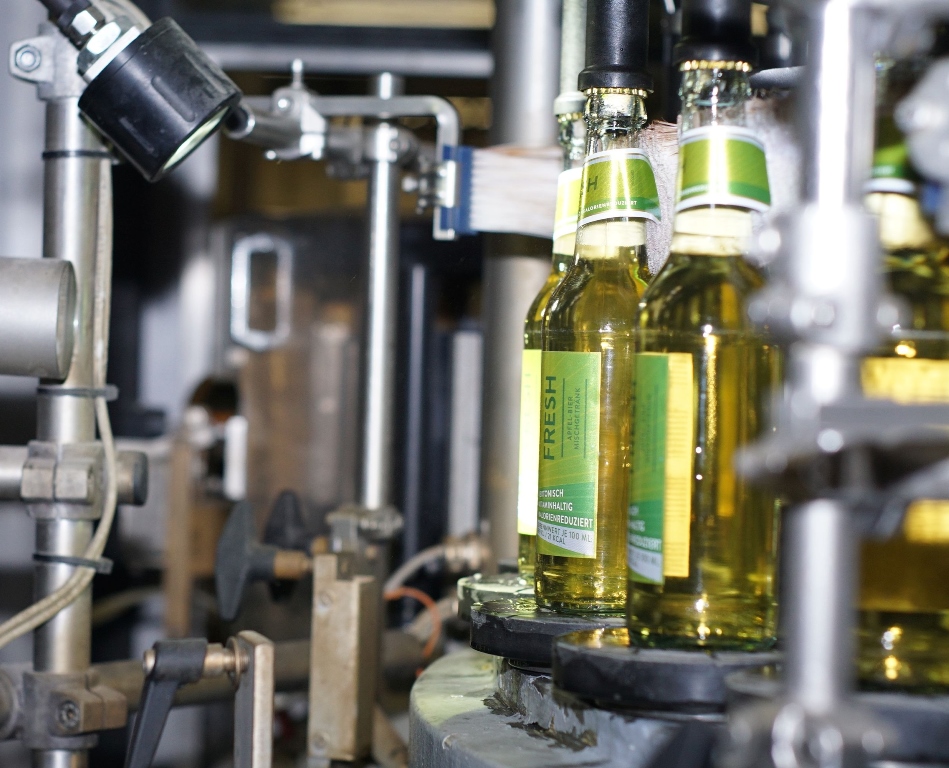
These Diversity is not only a Logistical challenge, but requires special attention, especially for brands with very similar labels. As bottling takes place around the clock, it can happen that a Wrong label was inserted, the right one was upside down or the crown caps did not match the contents. THE solution was Indspect. The team of specialists from Neuwied near Koblenz was founded 15 years ago when several experienced engineers and technicians came together. They had all known each other for many years from the development and sale of control devices for the beverage industry. „We supply our systems to the beverage industry, but of course also to other branches of industry where 100 per cent inspection of industrially manufactured products is required,“ explains Indspect Sales Manager Michael Köppen.
... around the clock
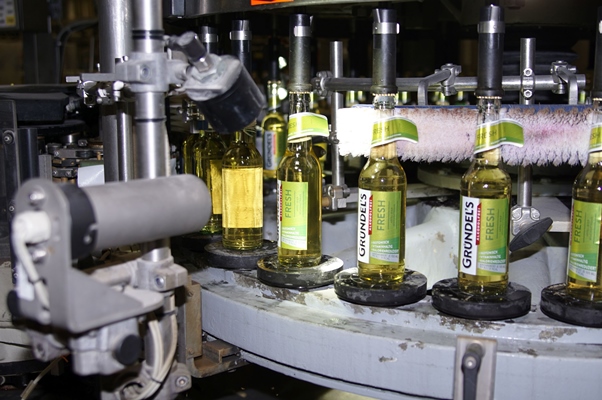
Bottling takes place in Homburg on two bottling lines and two canning lines around the clock from Saturday evening to Friday morning. One of the two bottling lines from 1990 is primarily used for 0.33-litre bottles (long neck white and brown) and special „Standard IV“ bottles. Up to 60,000 bottles an hour are filled and capped here before being transported to the bottling plant. Two identical labelling machines are distributed. Each is labelled with a belly, diagonal neck and back label (standard IV with belly and back only). „On this line, approximately 40 different articles processed. Due to our large variety of brands, it used to happen that labels were inserted 180 degrees upside down, i.e. with the lettering facing downwards. Or labels were not recognised at all (adjustment work on several light barriers with background suppression) or were sealed with the wrong crown cap. With the high machine speed, this is of course not immediately recognisable when the machine runs out manually. We had to find a solution,“ reports Jürgen Sohns, maintenance foreman.

Modern camera technology ...
After Homburg, Indspect delivered to every labelling machine Three special, high-resolution colour cameras plus more sophisticated Software and a clearly arranged Control panel. Supported by a bright LED spot, the first camera checks whether the correct neck and belly labels (i.e. those that match the contents) have been applied and whether they are absolutely straight. The second camera system checks at the outlet of the labeller whether the correct back label is sitting straight on the bottle and whether the laser-applied data (best-before date, batch number, etc.) is present. A third camera then checks shortly after the labeller whether the crown cap applied is the one whose contents it seals, whether there is a cap on the bottle at all and also whether it is sitting straight or at an angle. „Conspicuous“ bottles, i.e. without a cap or with a crooked or defective crown cap, are ejected (as are, of course, bottles with an incorrect or no label) and if this is repeated regularly, the machine is stopped with a corresponding message for the staff.
... for tricky tasks
„What was not so easy for Indspect was that we had some metallised labels that are highly reflective. Nevertheless, the systems recognise the labels very well and reliably. The same applies to the Crown cap, which sometimes only differ in a small colour tone,“ reports Jürgen Sohns. Even completely new items are no problem for the system. „We simply run the new bottle with labels and crown caps slowly through the machine and The control system remembers that and learns. It can be done very quickly and without a fitter with programming, which was important for us.“
Display, evaluation ...
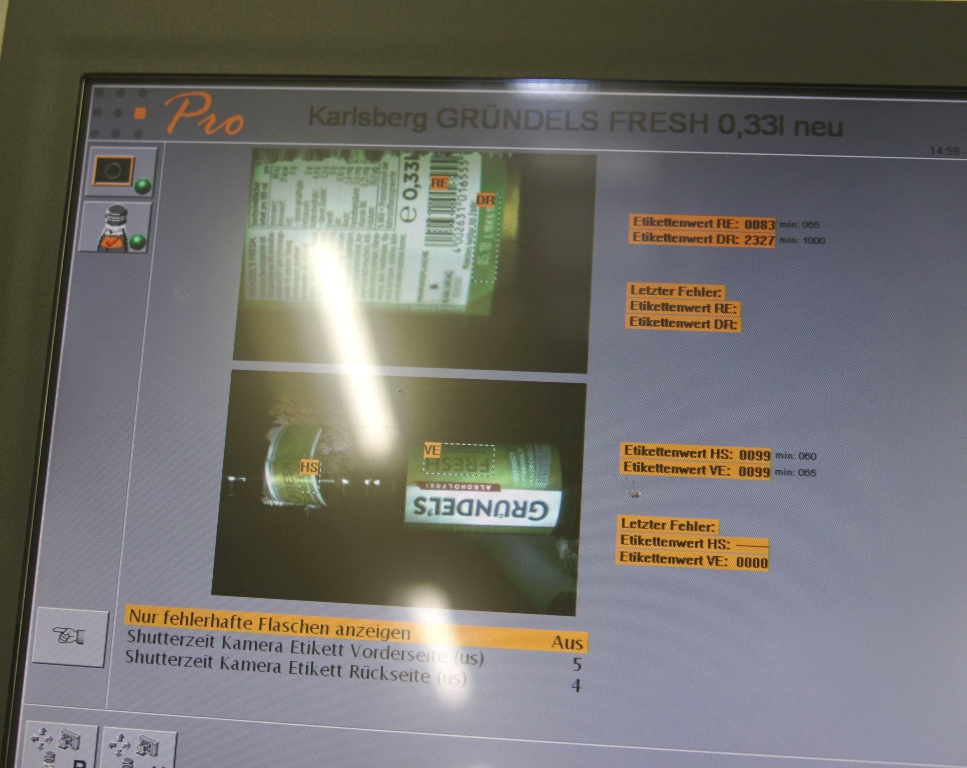
All Indspect systems send their information to PRO control units. In an Intel Core I7 computer, this information is processed, saved and stored on a touch-sensitive monitor and the entire system is operated from there. Only as many elements as the operator needs for the current control are displayed clearly on the screen. However, all statistical data can also be checked at the touch of a button. This type of operation and display makes it possible to understand the device without special training. With the help of the Remote maintenance Indspect can help the user with problems with the appliance without the need for a specialised technician to travel to the site. It doesn't matter whether the appliance suddenly stops working or whether it has been operated incorrectly. Remote maintenance could also be used to teach in new cylinders.
... and a great service concept
„We are not only impressed with the technology, but also very satisfied with the Service. At the beginning, a few things still had to be readjusted, but Indspect was always ready for us. It was also great how they responded directly to our wishes, for example when we suggested only switching on the powerful LED spotlights when bottles were actually passing through. Or when we asked for the statistical analysis of the inspected bottles to be made more visible to us. Indspect also implemented this immediately. So we are very satisfied,“ emphasises Jürgen Sohns.