Stroh Getränkemaschinen GmbH bottles the wine from Weingut Sonnenhof in five different bottle types on a complete line.
16 October 2019
The Schäfer family can process up to 2,500 bottles per hour on their straw bottling line.
(Image: broesele)
In the 55 years of its existence, the Sonnenhof winery in Bockenheim an der Weinstraße (Rhineland-Palatinate) has developed enormously. The family-run business produces around 500,000 litres of wine a year. Three quarters of this is bottled in five different types of bottle on a complete line from Stroh Getränkemaschinen GmbH in Waldböckelheim, while the rest remains in barrels.
The Sonnenhof winery is located at the beginning of the German Wine Route, at the foothills of the Haardt Mountains. For each of the 30 different grape varieties, there is a suitable location on the 58 hectares of land with optimal soil conditions. True to the family motto „Wine that is fun“ A lot of time is invested in the care of the grapes, the vines and the soil.
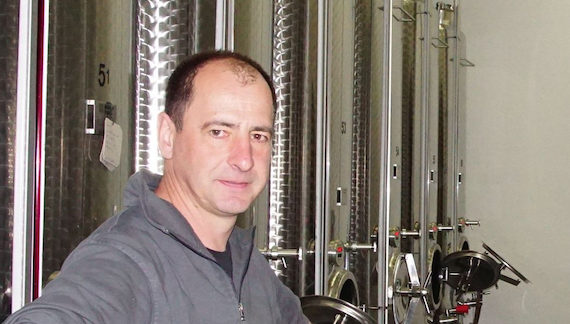
Karl Andreas Schäfer, technical manager of the Sonnenhof winery in Bockenheim (Image: broesele)
„Because we can only make wines that shine with their brilliant fruit and therefore fulfil our own requirements from healthy grapes with optimum ripeness,“ says the technical manager Karl Andreas Schäfer.
In addition to the typical „Pfälzer“ varieties, such as Riesling (the main variety), Rivaner and Dornfelder, they also grow international wines, Chardonnay, Merlot, Viognier, Cabernet Sauvignon and Sauvignon Blanc. And with great success: the winery has been one of the top wineries in the Palatinate for years.
A line from a single source
When it comes to filling technology, the Schäfers have relied for many years on the Stroh beverage machine factory from Waldböckelheim. „Due to the filling volume and in the interest of our own flexibility, we decided to no longer have the local contract filler fill the bottles, but to do it ourselves,“ reports Schäfer.
„Helmut Stroh was able to present a concept quickly, gave us very good advice and delivered reliably on time. We are very glad that we chose a ‚neighbour‘, because everything is easy to use, help is quickly available for small problems and the Filling quality is excellent“, emphasises Schäfer.
Stroh supplied a wide discharge table for the new glass bottles, bottle conveyor belts through the entire line, a bottle steriliser in the tray version, a CO2 injection system, a gravity filler without vacuum, but with a screw cap and natural cork capping combination. The bottles are labelled one floor below on a separate machine and then packed manually into cartons.
Five bottle types, only with screw cap
„Because the sorting and logistics effort for washing at an external company became too time-consuming with the increasing volume, we have been using only new glass“, explains Karl Andreas Schäfer. There are five different types of bottle: One-litre Schlegel, 0.75-litre Bordeaux, 0.75-litre Schlegel, 0.75-litre Burgundy and 0.5-litre Schlegel.
We also switched completely to screw caps for the closures. „For quality reasons, we have opted for Screw caps was decided on. We first used these for our top wines and the customers were delighted: no more cork taste or crumbs in the wine, easy to open and, above all, perfect to close if you don't drink the bottle empty,“ emphasises the technical manager of the Sonnenhof winery.
Sterilising bottles with the right technique
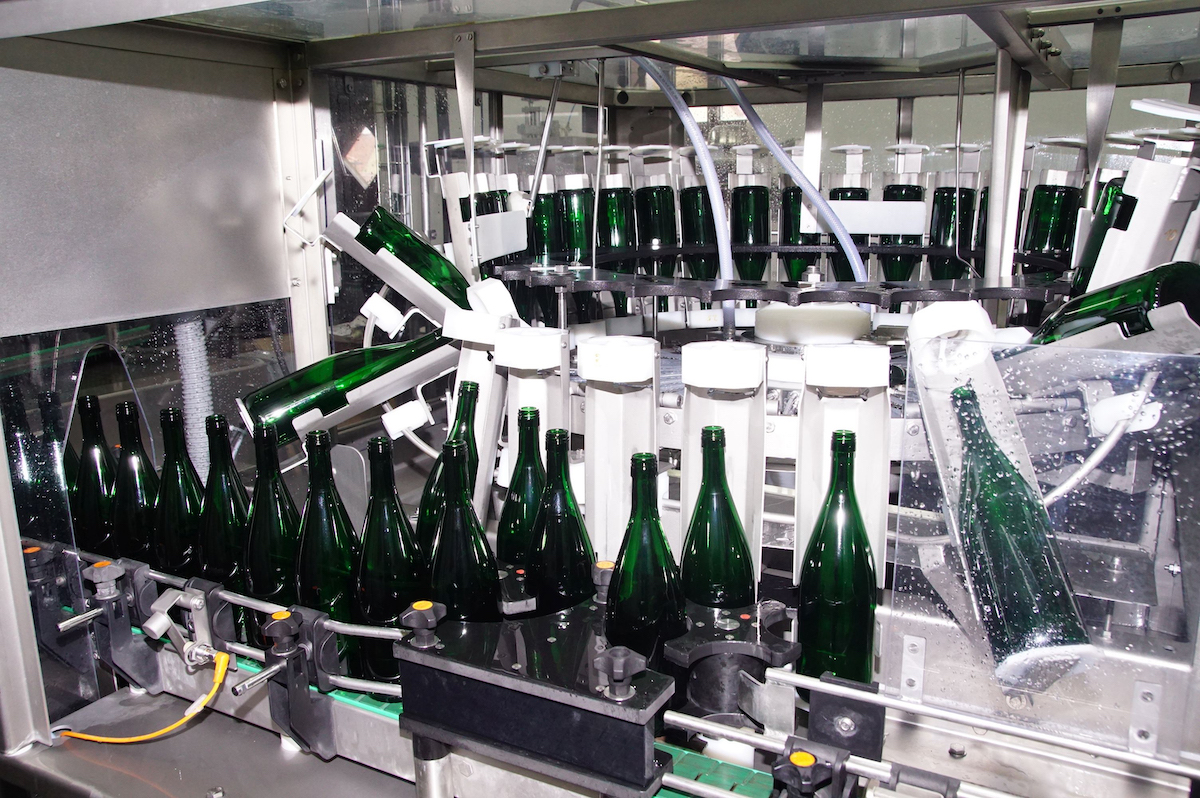
In the sterilising machine, the bottles are gently transferred to semi-circular bottle holding trays, where they are rinsed overhead with peracetic acid and then sprayed with sterile fresh water. (Image: broesele)
The bottles are lifted from the pallet layer by layer and placed on the run-off table. Gently separated, the bottles travel towards the „Sterima“, a straw machine that has been tried and tested in hundreds of wineries for decades. Cold sterile filling The bottles remain dry on the outside, which is a great advantage when it comes to the subsequent very good finish. The bottles remain dry on the outside, which is a great advantage for the subsequent very good finish.
The machine is made entirely of Rust and acid-resistant stainless steel built. Sterilisation with ozone or sulphuric acid would also be possible. The machine has Two separate distribution systems for sterile agent and re-spray water, thus preventing mixing. The Sonnenhof has a „Sterima“ in the tray version. This machine is available from Stroh, the market leader for sterilisation machines, but also in a version with bottle grippers.
Reliable, hygienic filling
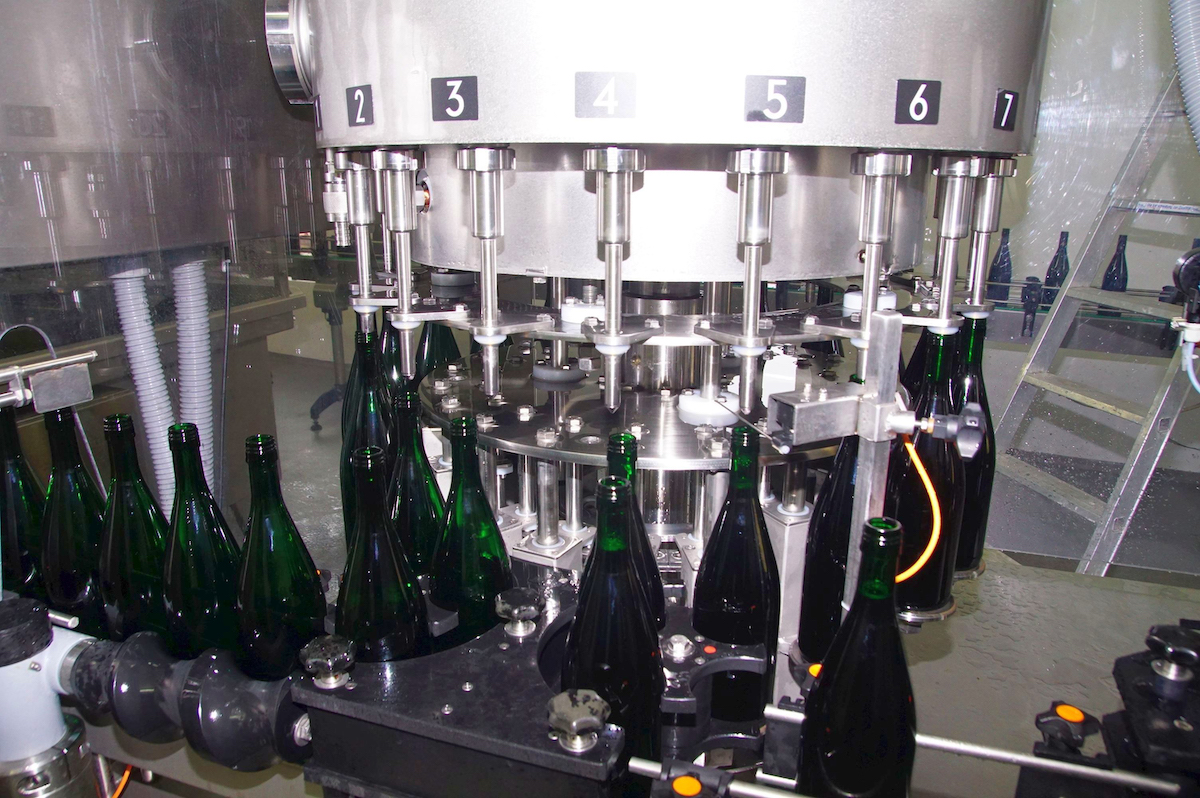
In the gravity filler, the bottles are pressed against the conical filling valves, centred and fixed. The wine flows from the filler vessel through a fine-pored filling tube into the bottle. (Image: broesele)
Turned back, the bottle is filled with CO2 and moves into the 20-position gravity filler. Up to 2,500 bottles per hour are centred and fixed by pressing them against the conical filling valves. No centring tulips necessary. On its way from the filler vessel to the bottle, the filling medium flows through a fine-pored filling tube without.
The central return air pipe is also highly polished. The head of the return air pipe is provided with a large opening, which minimises back pressure and thus gas release with highly carbonated wines as far as possible.
The lifting cylinders and their controls are located completely above the work table. The machine is therefore very easy and effective to clean under the lifting cylinders and between the rotating column and the lifting cylinders. The machine is of course equipped with the Straw-patented filling valves and the setting: „No bottle - no liquid“. This means that the filling valve does not open without a bottle.
The filled bottles are pressurised with a shot of CO2 shortly before the cap is fitted to ensure that there is really no air in the container, and only then are they reliably sealed.
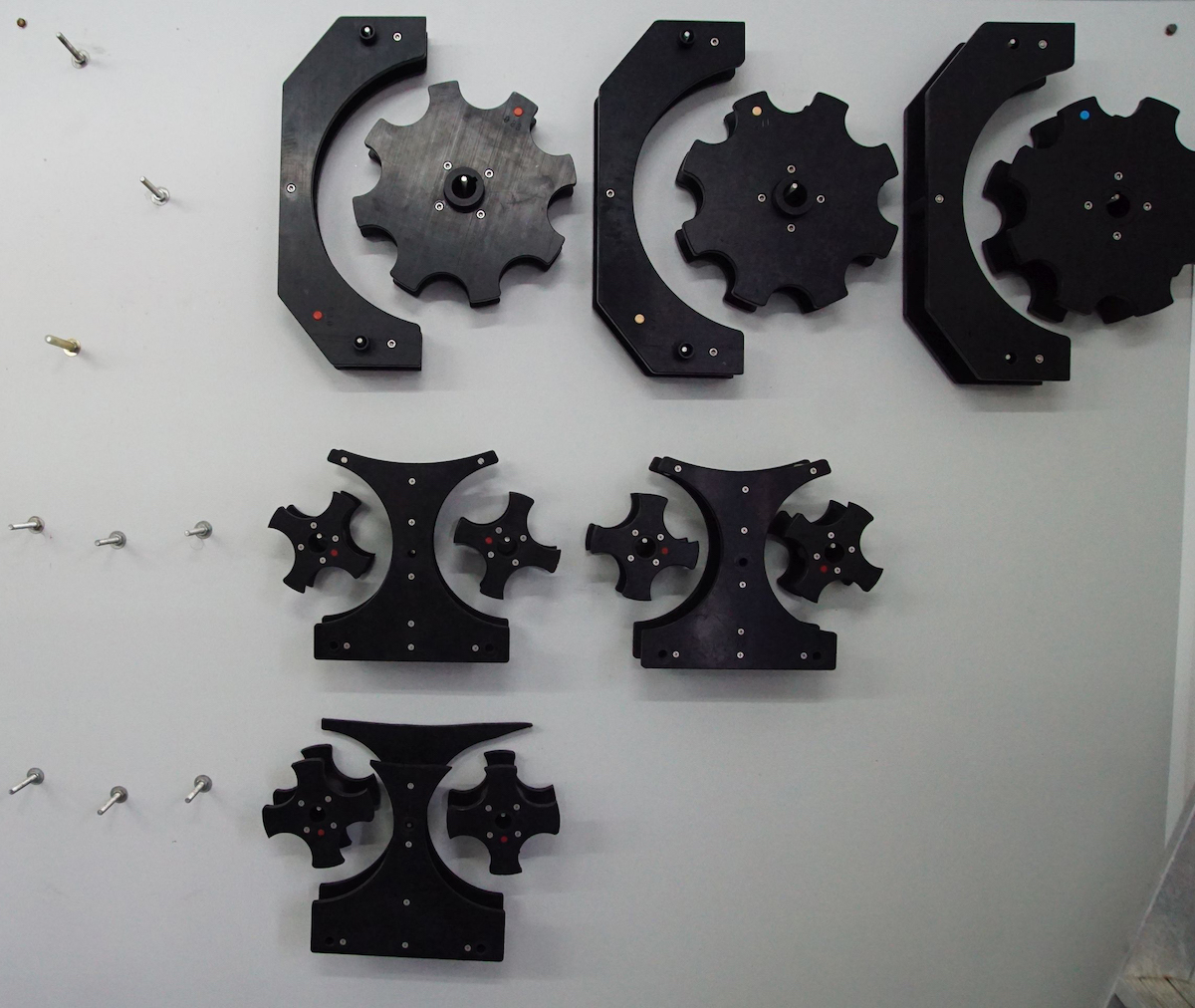
On bottling days, the bottle type is changed several times, and the changeover goes smoothly within ten minutes thanks to the handy format parts. (Image: broesele)
„In winter and early spring, we fill up to three times a week, then between 8,000 and 20,000 litres a day. We change the type of bottle several times during this process - it works completely smoothly within ten minutes,“ reports Schäfer. The filled and sealed bottles are manually placed in mesh boxes and labelled and packaged one floor below.
[infotext icon]Three family generations
In 1964, Karl Georg Schäfer took over the estate from the city of Ludwigshafen. He founded the „Sonnenhof“ tavern and took care of the restaurant, while his son Karl Philipp, a trained „winemaker“, took over the farming. Together they slowly expanded the business, gave up livestock farming and leased out the farmland. Karl Philipp and his Gertrud have three children, Karl Andreas and Christian, who now run the Sonnenhof together, and daughter Petra. From the mid-1980s onwards, the Focus entirely on viticulture, but the restaurant is also developing.
Around 1990, master winemaker Karl Andreas, the founder's grandson, joins the business. He is responsible for the vineyard and the cultivation and vinification of the wine. Together with his wife Petra, he attaches great importance to wine tastings and the design of the Sonnenhof. They also have three children: Franziska and Karl Sebastian are both already happily in the middle of their training as winemakers. Paul is still at school, but already shows the same passion as his older siblings.
Karl Andreas‘ brother Christian also joined the company 15 years ago. He is a state-certified viticulture technician and is now responsible for sales and marketing together with his wife Silke. How could it be otherwise, they also have three children: Jakob, Anna and Johann. Today, three Schäfer families live and work on the large Sonnenhof estate with six great-grandchildren of the founder Karl Georg, who died in 2007.