CreaCycle, EPC Engineering & Technologies and Lömi have developed a position paper on the circular economy for plastics, which is intended to appeal to all those involved in the topic.
The authors of the position paper urge that the current terminology of the relevant waste directives be improved. The latest available technologies for plastics recycling, such as solvent-based processing, should be included. They suggest an EU directive specifically for plastic waste which enables a utilisation hierarchy based on physical and chemical processes.
In addition, the Position paper the need for improved sorting options for mechanical recycling and a regulatory framework that ensures that end-of-life costs are taken into account. Finally, the paper calls for the Recognition and inclusion of solvent-based cleaning/dissolution as material recycling for the calculation of the recycling rate.

Position paper calls for precise definition of recycling
As a basis for future developments, the authors call for a More precise definition of the term „recycling“. This must be in line with the findings of physics and chemistry, follow the concept of the waste hierarchy (reduce - reuse - recycle), be based on the value chain for plastics (chemical element - intermediate product - monomer - polymer - plastic) and define material recycling (polymer to polymer) as preparation for the reuse of the polymer component.
„The EU has so far lacked a recycling hierarchy. Furthermore, the current waste directives for polymer-based waste are not differentiated enough and they do not take into account conditions for repeated reuse of one and the same material, i.e. the mechanical recycling of polymers. Recycling is used as a general generic term, which includes reuse and recycling. Downcycling in the form of depolymerisation as equivalent. Although this allows high recycling rates to be achieved, it creates conflicts for plastics, as reuse and recycling occupy two different positions in the waste hierarchy.“ Gerald Altnau, Managing Director of CreaCycle
In this context, the authors refer to the fact that, in their opinion, the underutilised potential of solvent-based recycling. They are calling for this physical process of mechanical recycling to be included in the directives, as it fits in between the mechanical and chemical recycling processes that have so far been discussed as the only alternatives and can enable the reuse of polymers from plastic waste that currently has to be incinerated.
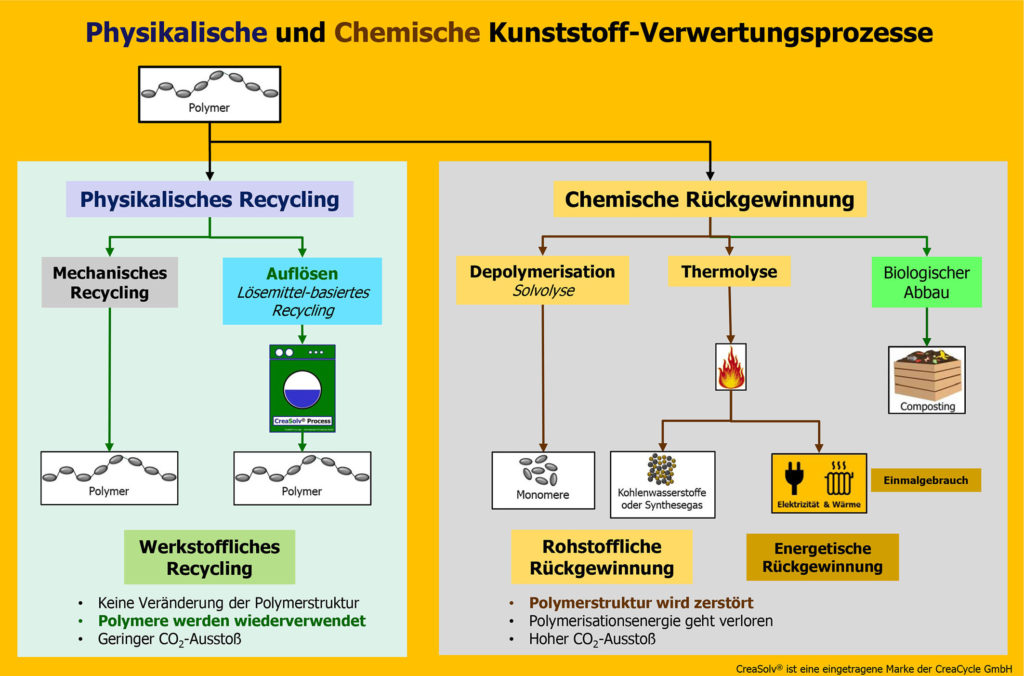
As an example, they explain the CreaSolv process, which offers a new alternative to incineration for processing contaminated expanded polystyrene (EPS), among other things. This separation or sorting technology was developed by CreaCycle GmbH and the Fraunhofer Institute IVV for packaging and process engineering. EPC Engineering & Technologies GmbH and Lömi GmbH were involved in the process development, design and construction of pilot plants.
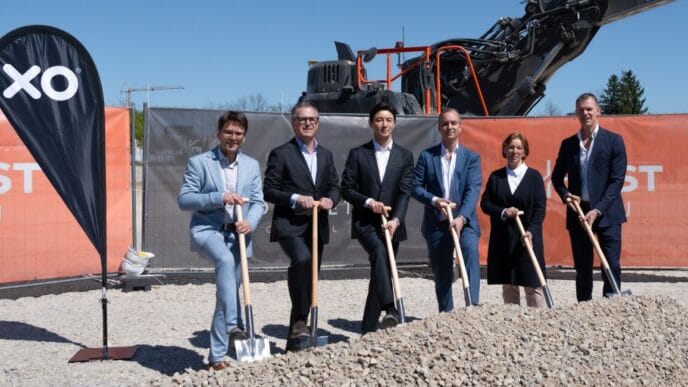
Together with PolyStyrene Loop B.V., they are currently building a CreaSolv process demonstration plant for the recycling of flame-retardant polystyrene insulation foam boards from the construction sector with a capacity of 3,300 tonnes per year. PolyStyreneLoop has more than 70 members from the polystyrene foam value chain and was founded to develop a recycling solution capable of separating polystyrene from the flame retardant HBCD (hexabromocyclododecane), which is now categorised as a persistent organic pollutant (POP).
SourceCreaCycle