Glass packaging is often the packaging material of choice for sensitive foods such as dairy products or baby food. Innovative inline inspection systems from Heuft Systemtechnik GmbH, Burgbrohl, ensure that the containers are free from defects and foreign objects both before and after filling.
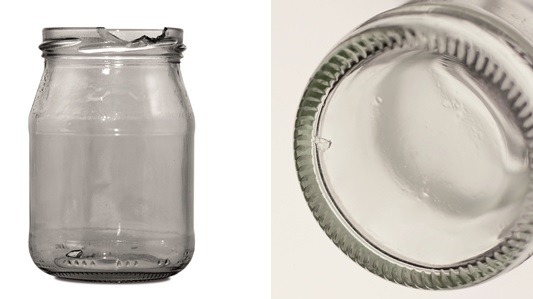
It crunches when you open it. Disturbing. After all, there is baby food in the jar. And the distinctive noise is an indication that the mouth and thread area is damaged. In fact: once the twist-off cap has been removed, a sharp-edged cut-out is visible at the opening of the container. This may have caused Dangerous splinters got into the jar. In addition, the sensitive product could have spoilt because the packaging was not tightly sealed due to the defect.
If such defects are only discovered by the consumer, it is too late. In order not to shake customer confidence, affected containers must be identified and withdrawn from circulation in advance. One Inline quality inspection of food jars is therefore essential, preferably both before and after filling. This is because defects such as thermal cracks, stress cracks, inclusions or level pullers can occur during glass production.

Transport from the glassworks to the bottling plant and from there to the retailer also puts the sensitive containers under stress, so that Glass breakage is imminent. The same applies to back pressure within the line. The temperatures in the rinser, during hot filling and pasteurisation are also sources of danger: When things get hot, the high expansion coefficients of metal inclusions can cause the material to burst.
Complete inspection of wide-necked glasses
The causes of such risks should therefore be detected before the valuable product enters the containers. Empty glass inspectors can scrutinise the full volume without any gaps. Heuft systems realise this with the highest precision. Defects in the mouth area of wide-mouth jars are reliably detected using specially developed optical processes. A smart lighting, camera and image analysis technology makes use of the reflective behaviour of the sealing surface for a complete inspection: Deviations in the reflection and scattering of the light projected onto this area reliably detect the smallest defects.
In order to find cracks and even hairline cracks inside the muzzle, specially positioned cameras look at this area from different angles through the opening of the empty glass. The All-round inspection even identifies defects in the thread that would cause the eerie crunching sound when opening and could jeopardise the safety of the end product.
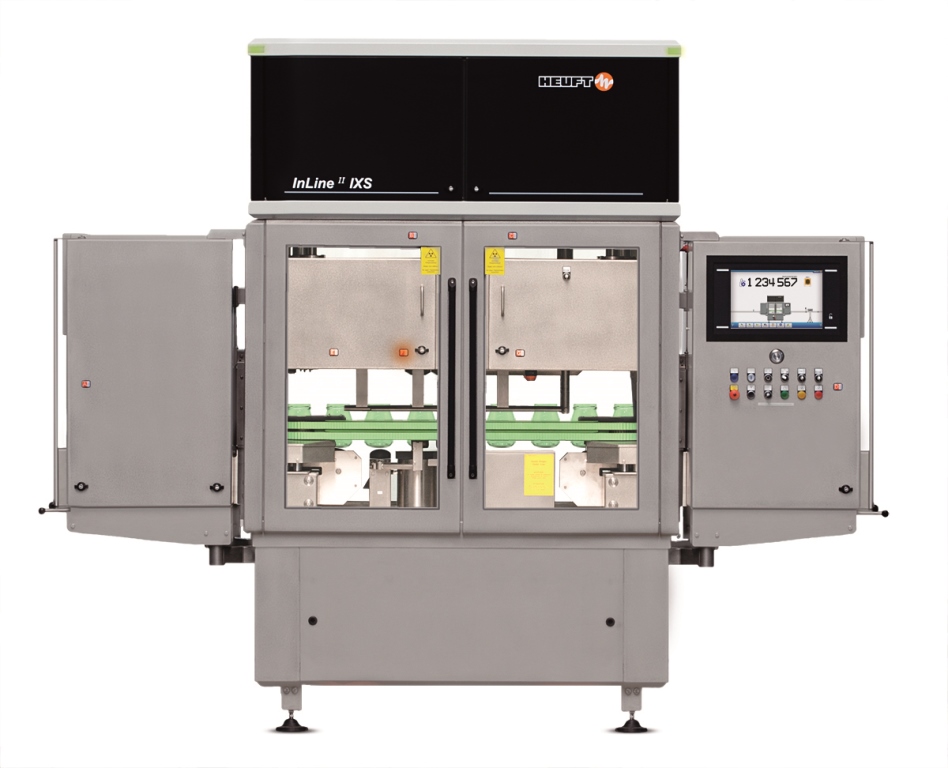
Glass defects and contamination below the wide neck finish also remain a problem for systems such as the Heuft InLine II IXS are not hidden. This is because they carry out a side wall and base inspection that covers more than 360 degrees of the container volume. To do this, the empty jars rotate on their way through the device. A servo-controlled transport belt realises a sort-specific adjustable angle of rotation. This ensures that the containers are precisely positioned and aligned at all optical detection units.
The result: a seamless inspection without blind areas. Chips, cracks, scratches, foreign bodies and impurities are detected wherever they may occur. Thanks to clearly reproducible grade settings, the servo technology also enables quick and easy programme changes: Automatic the height and width of the guide belts as well as the positions of the individual detection modules adapt to the changed format.
Reliable glass-in-glass detection
As the only empty glass inspector in the world, the powerful device of the new Heuft Spectrum II generation not only through this previously unrivalled level of automation and the Self-explanatory audiovisual user guidance Heuft NaVi for uncomplicated and error-free operation. In addition, the pulsed power supply, which is available exclusively from the company X-ray technology integrated into the modular system for even more precise inspection of the floor area.
The Glass-in-glass detection This is even possible if the transparent foreign body, which is barely recognisable to the naked eye, is surrounded by residual liquid from the rinser. Even shell fractures, inclusions, air bubbles and other inconspicuous glass defects without material loss are reliably identified with skilfully arranged X-ray flashes. In contrast to conventional X-ray scanners, they are only active for a thousandth of a second when there is actually a product to be inspected in the inspection area. This minimises radiation emission and produces high-resolution, high-contrast images without motion blur, even at line speeds of up to 1,200 glasses per hour.
Checking filled food containers
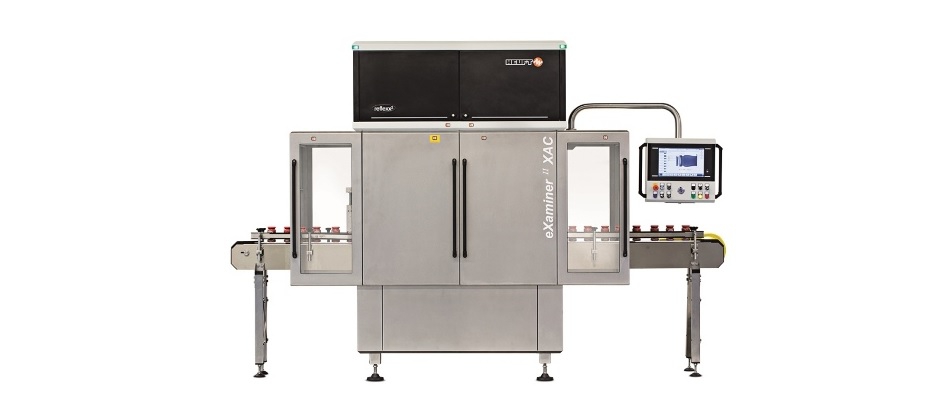
This unique pulsed X-ray technology also delivers excellent results in the comprehensive inspection of filled food containers. In the Heuft eXaminer II XAC, the highly automated, intuitively controllable End-of-line system on Spectrum II basis, it is equipped with new Full-field image converters combined. This further increases the range, speed and precision of the inspection. Even oversized containers can be inspected seamlessly with the hygiene-optimised Heuft CleanDesign device. At the same time, the size of the defects that can be reliably detected is halved. This means that even tiny foreign bodies and defects that only appear during the filling process are visible.
As with empty glass inspection, real-time image processing distinguishes between Heuft reflexx² clearly distinguishes between harmless packaging structures and product inhomogeneities on the one hand and genuine safety risks on the other.
In addition to recognising a wide variety of objects, it also enables customised Teach-In individual quality requirements. This means that only full containers that are truly unsafe are rejected. This also includes jars with thread defects concealed by the closure. To prevent food waste and save costs, it is best to remove these from circulation before the valuable product enters. Together with an end-of-line inspection of the filled finished product, the systems reliably prevent any worrying crunching when opening.