The European Pallet Association e.V. (EPAL) reports a slight increase in the production of EPAL pallets last year despite higher timber prices and the challenges posed by the Covid-19 pandemic.
Specifically, the production of EPAL pallets increased last year by 1.14 per cent to 97.3 million pallets to. In 2019, the figure was 96.2 million pallets. EPAL pallets are made from sustainably grown, CO2-neutral wood. Thanks to their high availability, they reduce transport distances and are recyclable and repairable. However, the number of registrations for the repair of pallets has fallen slightly.
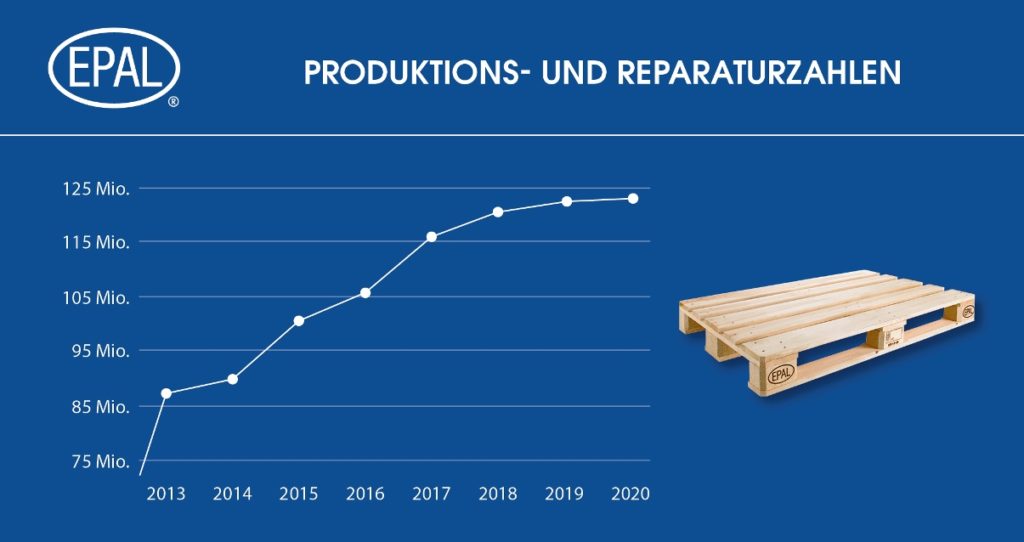
In total, however, an increase in the production and repair of EPAL pallets remains. by 0.5 per cent to 123.5 million pallets (2019: 123 million pallets).

"This positive development is particularly noteworthy in view of the global economic slump caused by the Covid-19 pandemic. The disruption to national and international supply chains was an unprecedented challenge for the manufacturers and users of EPAL Euro pallets, which was successfully overcome together." Robert HolligerPresident of EPAL
EPAL load carriers are systemically relevant
The production and repair of pallets are recognised by many European countries as systemically relevant because pallet logistics and in particular the open EPAL Euro pallet exchange pool are essential for the transport of goods, according to the association's assessment. In order to maintain the supply of food and other consumer goods to consumers and to secure the supply chains of trade and industry, EPAL's licence holders were and are able to deliver at all times, even during the lockdown.
"It is a special moment for us Proof of trustthat large parts of the Transport of Covid-19 vaccines on EPAL Euro pallets. They meet the highest requirements for the safety and reliability of load carriers, especially in extremely cold conditions such as the transport of vaccines," says Robert Holliger.
[infotext icon]The European Pallet Association e.V. (EPAL) secures with over 600 million EPAL Euro pallets and 20 million pallet cages in the world's largest open exchange pool the flow of goods in the logistics world. Founded in 1991 as an umbrella organisation for licensed manufacturers and repairers of EPAL load carriers, it is responsible for their consistent quality worldwide. As a registered association, EPAL does not pursue any commercial interests and makes all decisions in the interests of its industrial, commercial and logistics partners. EPAL is represented in over 30 countries by 14 National Committees, which are committed to the national implementation of EPAL's objectives.Source: European Pallet Association e.V. (EPAL)