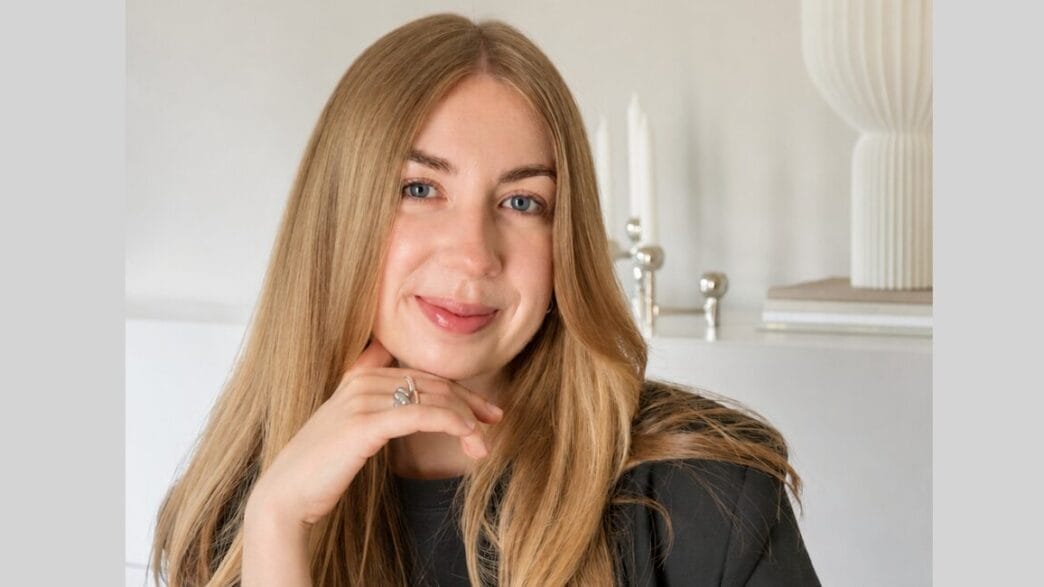
The company Carl Kühne is among the established food manufacturers in Germany. Whether red cabbage, gherkins or mustard – from vinegar to barbecue sauce to dressings: everyone knows Kühne products. And the company is pursuing an ambitious sustainability strategy entitled „Eat tastier for the future“. One of the goals: the recyclability of all packaging. An exciting work environment, as packaging developer Maxi Hoyer also finds.
By 2030, all product packaging is to be recyclable and, ideally, contain at least 30 percent recycled material – the traditional company has set itself ambitious sustainability goals. The growing importance of packaging within the company is also reflected organisationally: a team of five at the Hamburg headquarters is responsible for packaging development. Maxi Hoyer has been with the company for five years and was instrumental in the development of the new Kühne dressing bottle, which was successfully launched on the market last year and aims to appeal to a younger target group, among others.
„Working at Kühne appeals to me because nobody in the team is a specialist in a particular product or packaging material. Instead, all team members take on all tasks – from new development to optimising existing packaging. This makes one's own work exciting and interesting.“
Maxi Hoyer
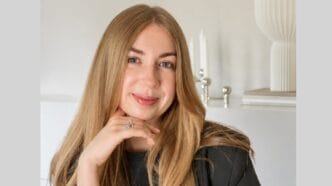
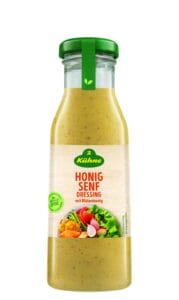 Maxi Hoyer grew up near Leipzig and studied at the Leipzig University of Applied Sciences (HTWK) Leipzig. „I always wanted to study at a smaller university and attended a guest lecture in the Packaging Technology degree programme on the open day – that's where my interest was sparked.“ However, her enthusiasm for technology only developed through her studies. „Before that, I'd had more of a penchant for design. But packaging doesn't just have to look appealing; above all, it has to meet functional requirements and, of course, it has to run on the machines in the end. Packaging technology brings all these components together.“

Packaging food – versatile and demanding
Even during her studies, she worked on industry-related research projects, including packaging solutions for bicycles and baked goods. For her bachelor's thesis, she went to the design agency Brandpack and dealt with a current sustainability issue: the substitution of plastic in cereal packaging with a cardboard-based solution with an integrated barrier function. As part of her Master's thesis at Coppenrath & Wiese, she subsequently developed an Excel-based evaluation system for optimising packaging for frozen cakes.
„Packaging food presents a particular challenge,“ says the young packaging developer. “Food is often in direct contact with the packaging material, which is why quality and safety are particularly important. The requirements are high, but they also make the work particularly versatile.”
At Kühne, the team is working on optimising existing glass packaging, among other things. However, the portfolio also includes aluminium tubes, plastic squeeze bottles, and large containers for B2B customers. In addition, there are specific requirements for packaging for export markets, which account for around half of the business.
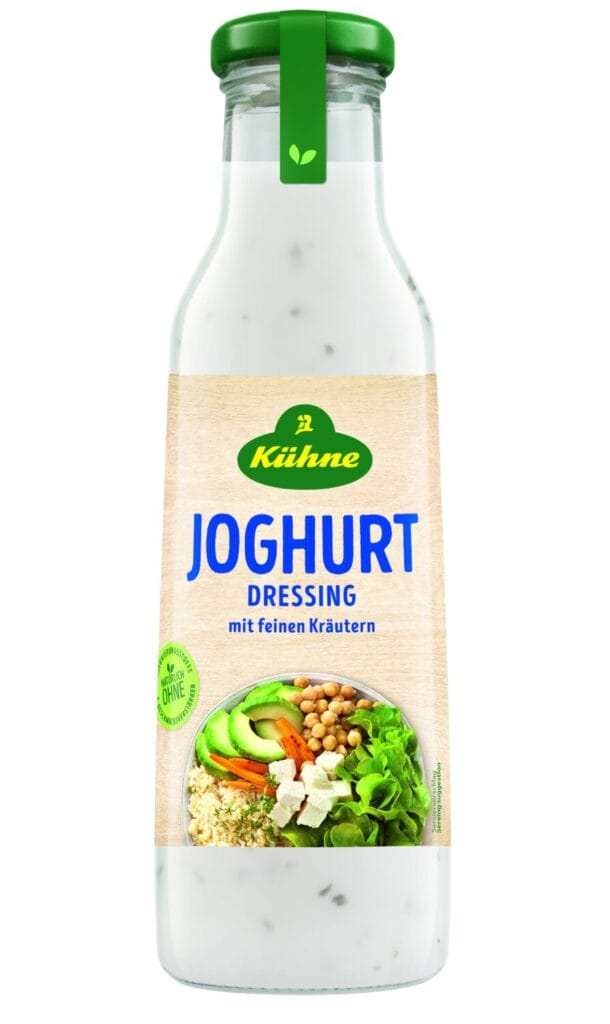
The dressing bottle, reimagined
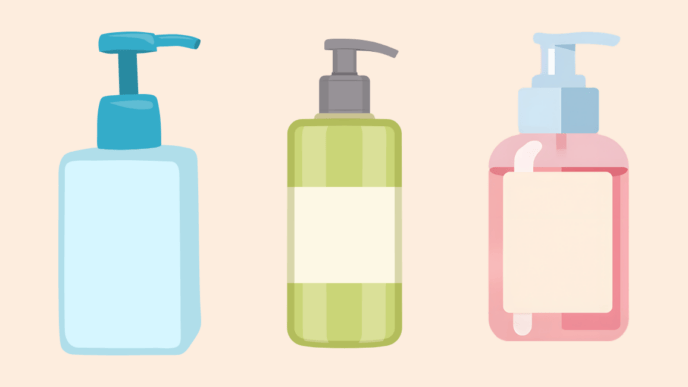
A current example of successful development work is the introduction of a new dressing bottle last year. A new round shape now not only saves material, but also optimises logistics. At the same time, production benefits from a higher throughput on the filling lines. Maxi Hoyer: „We are now not only appealing to a younger target group, but have also reduced the glass weight by around 28 percent. This saves us approximately 984 tonnes of glass per year. Furthermore, significantly more bottles now fit on a pallet.“ The design of the bottle remains unmistakably Kühne despite the change, with modern, clear lines.
This is why the bold step of replacing iconic 1973 packaging with a more sustainable solution was also awarded last year. „Product Innovation in Glass“, which the Glass Packaging Action Forum awards every year.
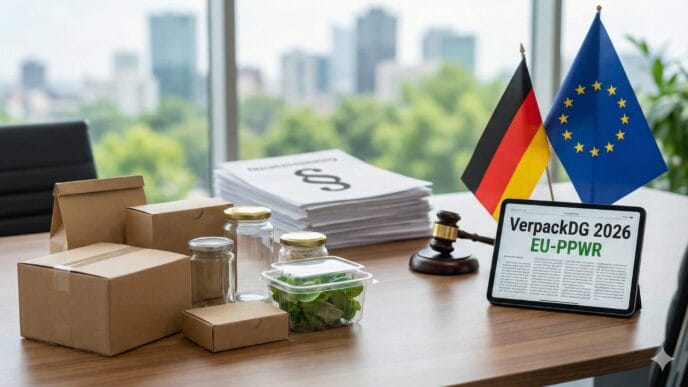
A key focus of Maxi Hoyer's current work is the implementation of regulatory requirements, particularly the European Packaging and Packaging Waste Regulation (PPWR). A cross-functional core team has been established at Kühne for this purpose. The challenge: to implement the regulatory requirements not in isolation, but in conjunction with further optimisations. For example, when adapting glass packaging, not only recyclability is considered, but work is also carried out on weight reductions at the same time. And increasingly, alongside primary packaging, secondary and tertiary packaging, such as stretch film for transport security, are also coming into focus.
Putting projects into practice
A crucial success factor in all projects is internal communication: new packaging solutions must not only be developed but also integrated into production and logistics. This requires close coordination with the Kühne production sites and a high degree of persuasion. „We must implement development projects in a practical way and involve everyone in the company in the process, because the employees in the production plants must also support changes.“
Kühne is an eleventh-generation family-run business and remains family-owned to this day. A defining aspect of the work is the company culture, according to Maxi Hoyer. „I really enjoy working here. We have low levels of hierarchy and the management gives us a lot of decision-making power and plenty of scope to implement our own ideas, but also a lot of responsibility. I particularly value that at Kühne.“