It takes very special people to turn an idea into a globally successful company in just a few years. Time and again, German SMEs write such stories of drive, inventiveness and courage. And yet every story is unique. This is also the case with the KHS packaging experts from Kleve.
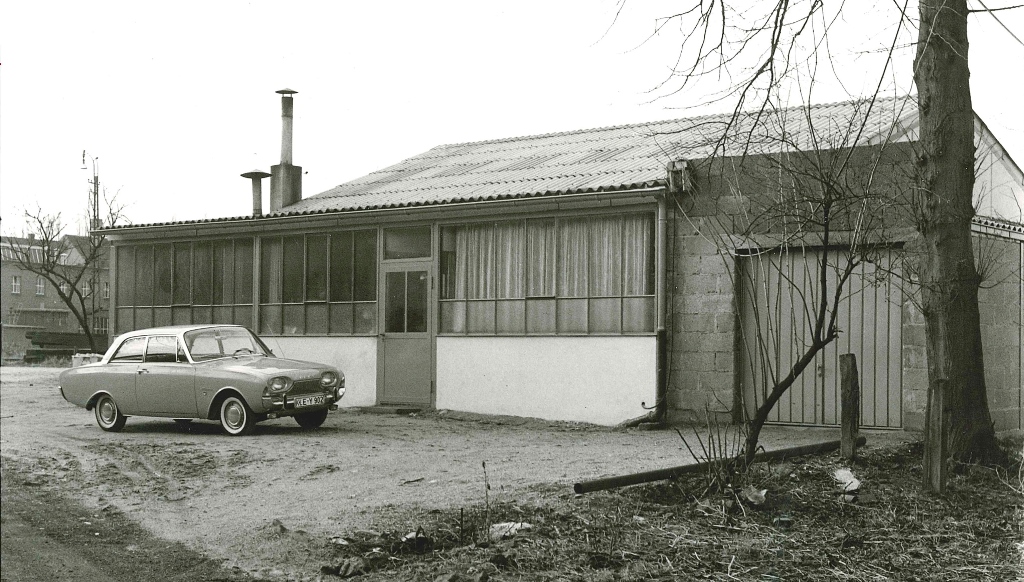
In 1957 Karl Kisters founded the Kisters Maschinen- und Apparatebau GmbH. 60 years later, the name KHS Kisters is synonymous worldwide with packaging expertise in the food and beverage industry. It all started quite differently, with machines for the shoe industry ...
Social and community involvement
Together, the Kisters couple steered the fortunes of the company in Kleve for decades - she as a businesswoman was responsible for the figures, he as a master locksmith for the realisation of the innovations developed in-house. She retired from management in 1990, and her husband followed her just one year later. In their home on Lower Rhine near the German-Dutch border, both remained until the end socially and socially committedt. Karl and Maria Kisters will not live to see this year's 60th anniversary of the company they founded. She passed away in 2016 at the age of 86, eight years after her husband.


That in Cleves 1957 The fact that the rise of one of the most successful packaging machine manufacturers in the world began is largely due to these two special personalities. It was not until 30 years after the company was founded that they sold shares for the first time in order to secure the company's continued existence after they retired. The Klöckner Mercator Maschinenbau GmbH from Duisburg initially acquired half of the shares and shortly afterwards became the majority shareholder.
When the two founders left the operational business, turnover was already over 60 million Deutschmarks (1990), four years later it was over 100 million. At this time, Jean Marti and Dr Winfried Groetschel were managing the company. First 2003 - Karl Kisters was now 79 years old - the company, renamed Kisters Maschinenbau GmbH in 1968, was finally taken over by Klöckner-Werke AG. KHS Group transferred, which today Prof. Dr.-Ing. Matthias Niemeyer as Chairman of the Management Board.
An idea and its realisation
When Karl Kisters founded his company at the age of 33, he had only been married for a year and wanted commercial success. His father-in-law added some start-up capital and from the last 600 marks a welding machine and a set of tools bought, both second-hand. At that time, Kleve and the surrounding area were mainly home to companies in the food and shoe industries. After the Second World War, Kisters himself worked as a trained locksmith in various shoe factories. His small company initially manufactured Simple machines. He quickly made a name for himself as a Problem solver and soon had to expand and hire new employees due to the full order books.
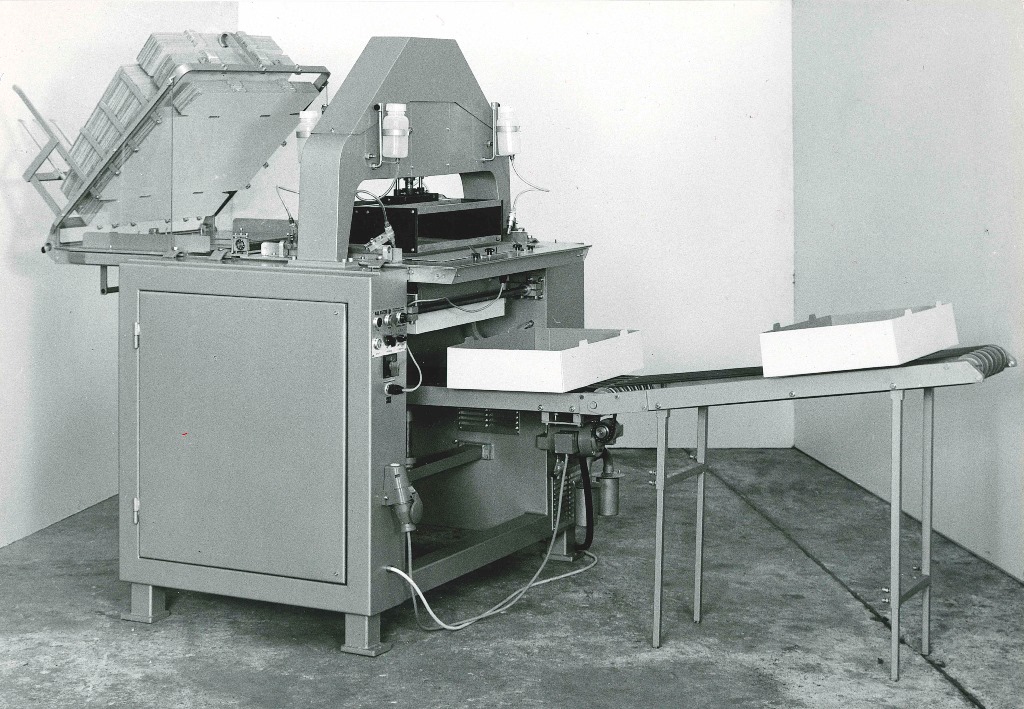
An order from the XOX biscuit factory asked Kisters for a packaging machine that would make production more efficient and reliable. This was achieved with flying colours, so that from then on the Secondary packaging for food and beverages were also in focus. In 1967, the company produced the Case packer 40. This automatically grouped the products in a tray, which was then shrink-wrapped and sealed. The machine, with an output of 25 cycles per minute, was subsequently sold over 400 times to the UK alone.
First own control and interchangeable format sets
This was also the starting signal for the company's rapid and continuous growth. The basis for this success was to be Innovative strength of the Klever who developed what the market did not offer. Even back then, there were the first signs of a modular construction kit. For example, format sets with defined fixing points were designed, which enabled users to run different formats on one packaging machine and change over quickly and reliably at the same time. In the early years, this was a Unique selling point worldwide.

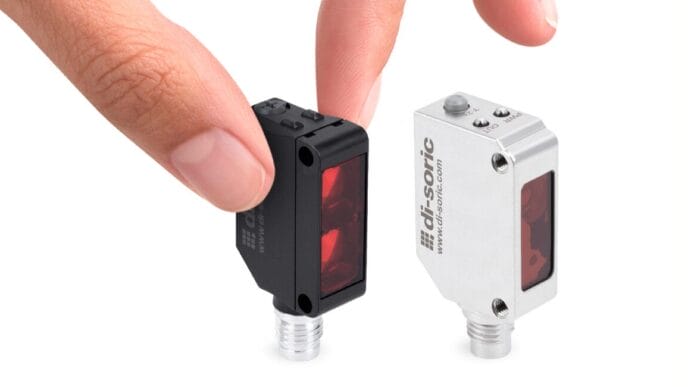
This was followed in 1970 by the own electronics including sensors. As a result of this work, Kleve finally produced the first continuous and, with the in-house programmable logic controller (PLC) packaging machine in the world. An output of 60 cycles per minute as well as the operation of this machine were world class at the time: for the first time, the control system provided information about processes, machine status and error messages in graphical form. This made the so-called Model series 97 This also makes work considerably easier for the operator.
More world firsts from Kleve
In 1980 a Central servo motor in one Multipacker to enable consistently correct positioning of printed film for the first time. The first completed system of this type went to a customer in South Africa. The next development step was nothing less than another world first. After the company had moved into a newly constructed company building in 1985, the following machine was built there just two years later the first mechatronically controlled packaging machine. Several servomotors were installed in a decentralised manner (from today's perspective, of course). At that time, this was only possible with the company's own PLC control system and so the central drives that had been common until thent. The system, which was fed with logical data such as millimetres or seconds, was capable of up to 120 cycles per minute, whereas users with competitor machines still had to convert these into hexadecimal values.
The Global success was also reflected in the distribution of plants around the world. In 1990, almost 30 per cent of all plants were located in France, around 13 per cent in the UK and South Africa. These were followed by the then Federal Republic of Germany, Spain, Australia, the USA, Italy and the Netherlands in the single-digit percentage range. A colourful mix that also underlines the importance of the brand in a global context.

This did not change with the departure of the two company founders. In 2000, the Kleve Consistently modular machine concept and presented to the public for the first time at interpack. One year later, 80 of these machines had already been built. Faster than expected, the new programme completely replaced the previous machines due to the strong demand. A mammoth task that required the designers to work around 60,000 hours in parallel with ongoing operations.
The advantages were obvious: the modular design, which is still used today in a further developed form in the Advanced and Basic series in usesimplified the retrofitting of existing machines and the supply of spare parts. It also increased the configurability of the systems by allowing individual modules to be designed entirely according to customer requirements. The Kisters packer thus became the epitome of the tray packer in packaging machine construction.
In 2016, around 150 systems left the plant, which continues to expand, and the trend is rising. At peak times, it is even one system per day. Around 3,700 packers from Kleve are in use worldwidethe oldest of which were built in the mid-1980s. Each new model surpasses the performance data of its predecessor. Thanks to four-lane processing, modern modular shrink packers can now achieve outputs of up to 32,400 packs per hour.
Fulfil new requirements
Over the past few years, the Number of packaging formsproduced on one machine has increased considerably. Marketing experts are vying for the attention of consumers with ever new and rapidly changing forms of primary packaging and containers. Attention from end customers on the shelves. With the modular concept and quick format changeovers, the KHS systems were already very well prepared for these challenges. Whether wrap-around, shrink, display and tray packers or, with the recently received Cooperation with the Gerhard Schubert companyincluding baskets and cluster packs, there is a solution for all requirements in Kleve.
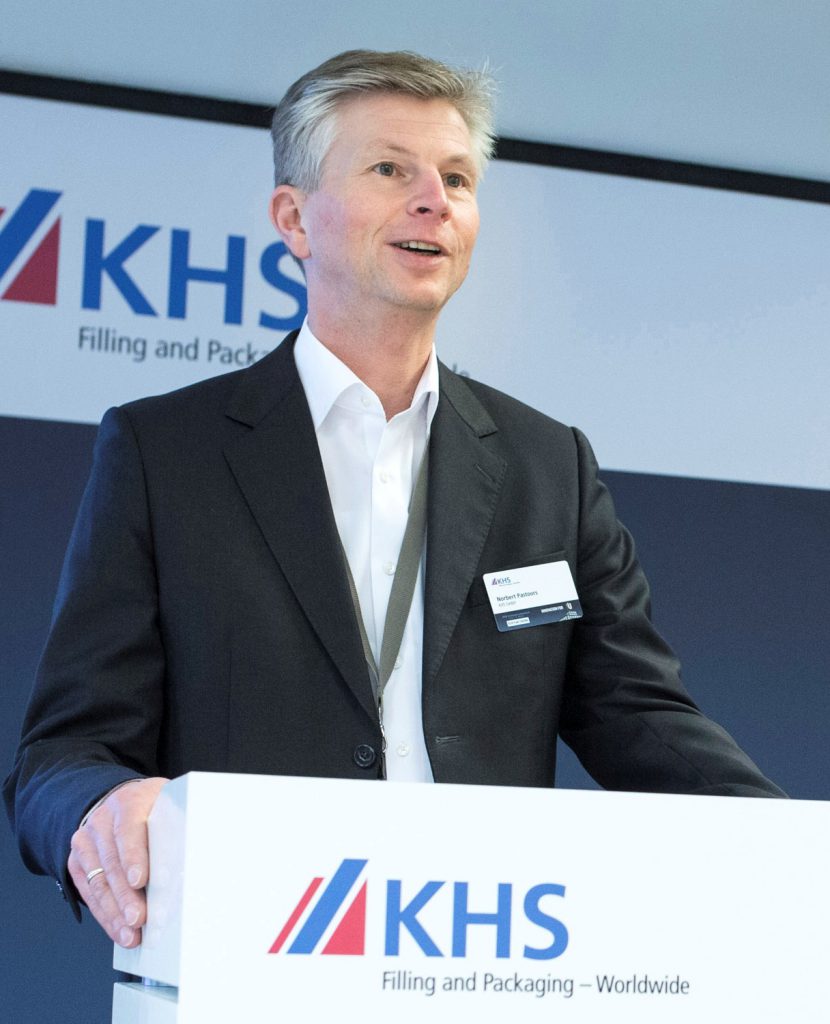
But like Karl Kisters, his successors also think beyond improving what is already there. Today, the experts under the leadership of Norbert PastoorsHead of Packaging Products Division, is still asking the same important questions: Which new packaging concepts can be successful? How can plants work faster, safer and more efficiently? How can the Protect the environment and the Reduce material usage?
The machines from the KHS subsidiary NMP Systems. This is where the innovations Direct Print Powered by KHS™ and Nature MultiPack™ come from. The latter in particular shakes the foundations of beverage container packaging. Small adhesive dots are used to PET bottles attached to each othert. This means that no film disturbs the view of the bottle. This saves material and opens up new possibilities Focus on primary packaging new marketing opportunities. The first user was Danone Waters for its premium brand Evian.
A look into the future
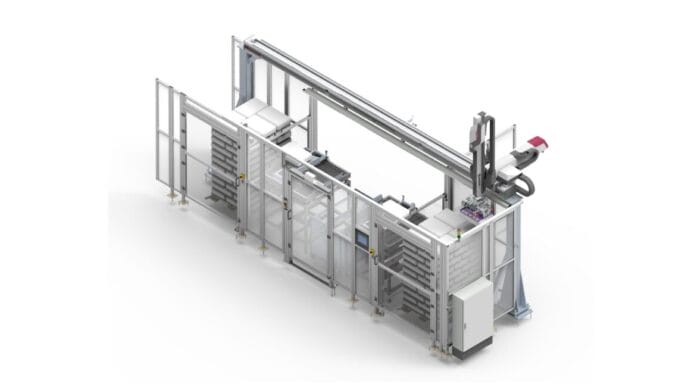
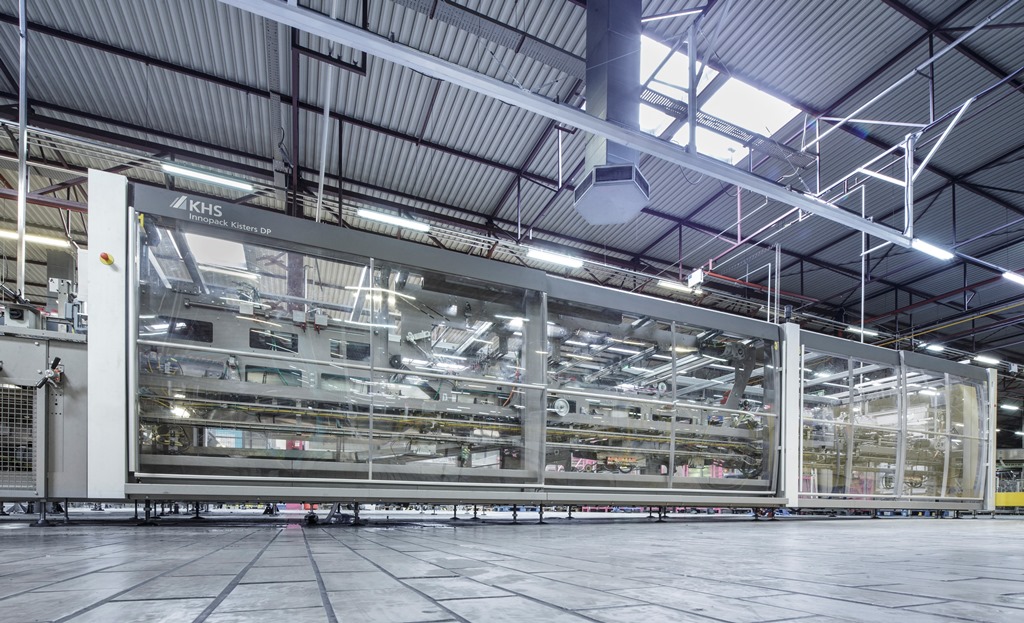
While current developments are currently conquering the market, packaging specialists are already thinking ahead. The next step will be machines that recognise when material is running low and replenish themselves with film or cardboard, for example, even without a human operator. This can be helped by solutions in which Robots will be used. There are already customers who no longer have to refill cartons by hand during an entire eight-hour shift.
Even with the already very fast format changeovers, KHS still sees room for manoeuvre. The Fully automatic format changeoverThis means adapting the machine without new format parts, which would save even more material and time. This is still a dream of the future, but no longer science fiction. So there is a clear parallel to the times of Karl Kisters since 1957: in Kleve, then as now, special people work whose packaging machines are still among the best in the world.