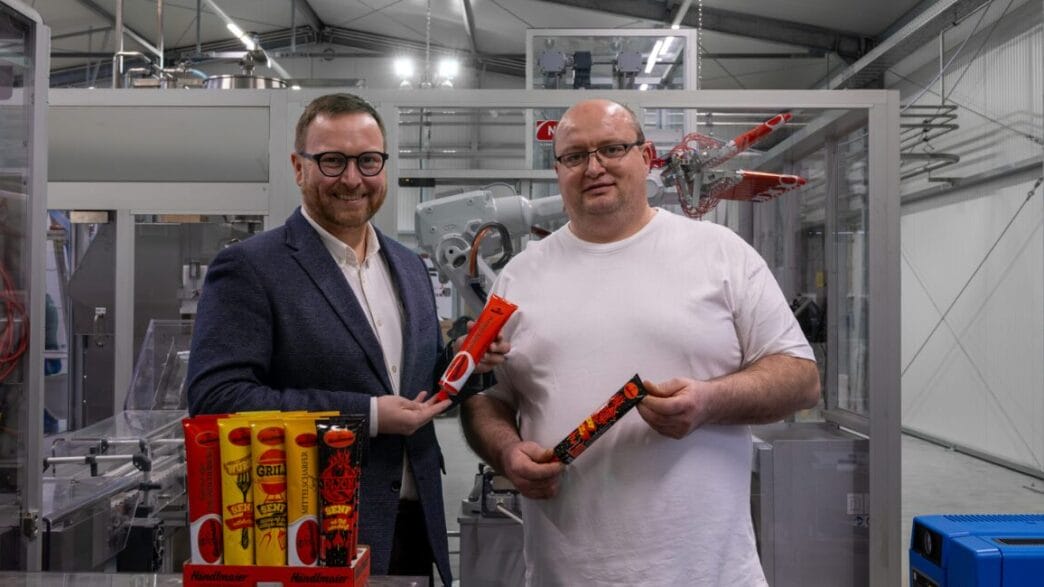
Händlmaier has put a new tube filling line into operation in Regensburg. The production of mustard tubes doubles to 50 million units per year.
Increasing demand for mustard products requires innovative solutions in production. Händlmaier has responded to this challenge by installing a state-of-the-art tube filling line in Regensburg. With an investment volume of around five million euros, the company has significantly expanded its production capacities.
Expansion of production capacities
The new plant will enable Händlmaier to double its annual production of mustard tubes to up to 50 million units. The installation and commissioning of the system, which was supplied by the Swedish manufacturer Norden Machinery took around four weeks. This investment is a clear sign in favour of growth and securing the Regensburg site, as it strengthens the company's competitiveness both nationally and internationally.

Technological innovation and sustainability
The tube filling line is fully automated and meets the highest technological standards, according to the statement. It not only offers a higher filling speed, but also more precise process control, which improves product quality and production reliability. Another advantage is the increased flexibility in order fulfilment.
Sustainability plays a central role at Händlmaier. The new system requires around 30 per cent less energy than older models and is powered entirely by green electricity. Among other things, this comes from the company's own photovoltaic system, which was built at the site in 2025. In addition, environmentally friendly materials are used in the production of the tubes: Instead of polystyrene bases, Händlmaier relies on paper-based, fibre-reinforced monomaterials. These are not only easier to recycle, but also reduce the use of plastics that are difficult to recycle, the company concludes.
Source: Händlmaier