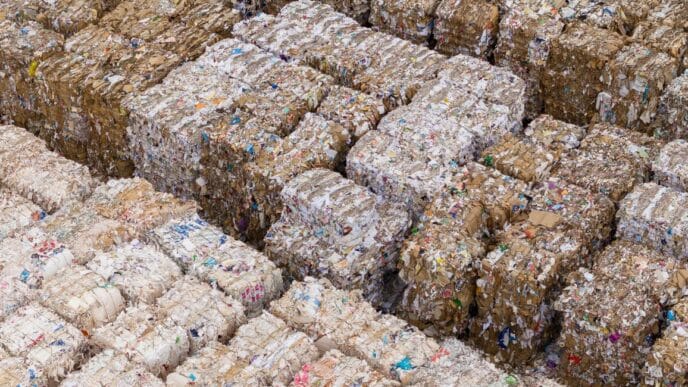
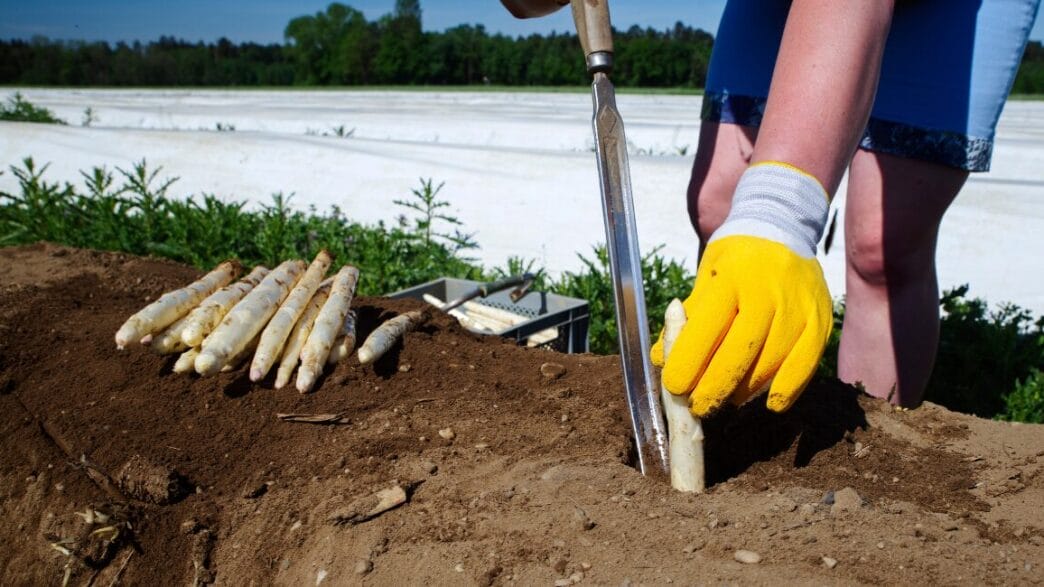
Even after harvesting, the work in the asparagus fields is far from over. The films used there are removed, bundled, and transported to collection points. What appears to be waste at first glance is actually part of a cycle that is already working in agriculture. The ERDE initiative (Erntekunststoffe Recycling Deutschland) shows how a circular economy can be implemented under real-world conditions.
In 2025, 37,342 tonnes of agricultural plastics were collected and recycled through the EARTH system. This achieved a measurable climate effect: 37,042 tonnes of CO₂ equivalents were saved, which is equivalent to the amount that approximately 2.7 million trees can absorb. These figures demonstrate that a circular economy can be successful even outside of conventional urban collection systems, particularly in areas with complex logistical requirements.
The fundamental difference to the general debate about plastics is that in agriculture they are not considered waste, but rather a temporary factor of production that is specifically returned to the cycle.

Asparagus film case study
Asparagus films illustrate how the circular economy works in practice. They promote plant growth, reduce the use of pesticides, and lower water consumption. At the same time, they place high demands on circular management, as they are often heavily contaminated and require elaborate collection and reprocessing.
Through coordinated take-back and recycling concepts in collaboration with the ERDE initiative, the films are collected, cleaned, and sent for recycling. The processed materials serve as a high-quality raw material for recyclates and form a central basis for closed-loop systems.
Scaling through cooperation
The success of the ERDE initiative shows how such circular systems can be scaled up in practice. The initiative now has more than 700 collection points and works with over 160 partners. Manufacturers, agriculture, trade, and the recycling industry cooperate along the entire value chain. Furthermore, new materials such as greenhouse films or drip hoses are continuously being integrated into the collection and recycling system.
Part of a larger transformation
Developments in agriculture are part of a broader trend where plastic cycles are considered holistically. Already, 71 percent of plastic packaging from the Yellow Sack is recycled, and 82 percent is recyclable or reusable. The parallels to established collection systems like the Yellow Sack are obvious: what works there can also be transferred to other application areas if the corresponding structures are in place.
Plastics play an important role in addressing current challenges in agriculture. They help to make yields more predictable, reduce losses and lower production costs. Furthermore, they stabilise production conditions under volatile climatic influences. The ERDE initiative shows that circular systems can work without classic household logistics, as decentralised, sector-specific solutions. Agriculture thus becomes a model for other areas of application, demonstrating that it is not the material that determines sustainability, but the system in which it is used.
SourceIndustry Association for Plastic Packaging