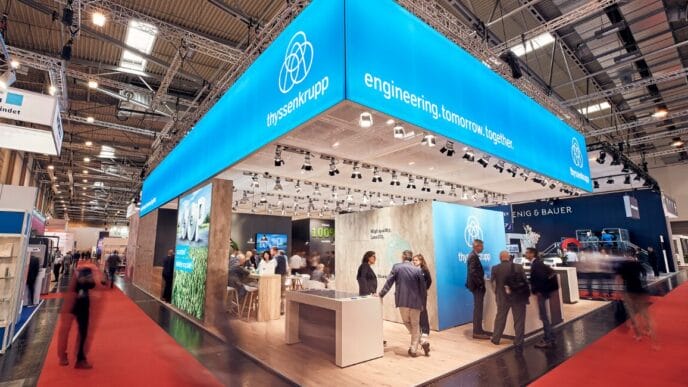
The Munich-based design agency for sustainable packaging concepts Pacoon also presented theories and concepts for the future at ProSweets in Cologne. Among them: a reusable concept for crisps.
We spoke to Managing Director Peter Désilets about the innovative packaging idea, which is designed to reduce transport costs but poses new challenges for logistics and returns.
Mr Désilets, why reusable food concepts?

Peter Désilets: We believe the time is ripe. Unlike three or four years ago Reusable packaging Today's products enjoy greater acceptance among consumers. Of course, they must also fulfil certain requirements: The basic protection, transport and communication functions must be achieved, handling and cleaning must be as easy as possible, and long-term use is mandatory.
By the way, reusable packaging is not so far removed from Unpackaged solutions. For example, retailers could soon offer loan packs in which you can transport your shopping home and then return it - cleaned or not.
Your reusable concept is not just for crisps. What does it take to package a wide range of foods?
Peter Désilets: The aim of our concept is to minimise the packaging standardise, but also to design them for different occasions. For example, crisps, jelly babies, nachos, pasta, rice or pulses could be packed in the reusable boxes. For example, there must be different sizes that are ideally suited to the packaged goods.
What could such a reusable box look like in practice?
Peter Désilets: It should be made of a plastic monomaterial or metal. Separable materials, for example if the lid and box are made of different materials, are also conceivable. Depending on the requirements, it can be transparent or coloured, but always a reusable box. The branding is provided by a sleeve or other outer cover.

What about the costs?
Peter Désilets: Using the example of crisps in reusable boxes, we were able to show that, in addition to the environmental aspects Financial advantages afrom the concept. You always transport a lot of air with crisps. With the sturdy reusable packaging, we can significantly reduce the amount of transport, storage and shelf space required. We have calculated that, depending on the filling weight and format, 50 to 125 per cent more packaging can be accommodated in the same space.
A standardised modular system also makes it possible to react quickly and cost-effectively to smaller quantities or promotional packs and design changes. Cost savings are also achieved through cheaper materials (banderoles instead of whole film bags), more favourable printing processes and pre-printing costs (offset or flexo instead of gravure printing) and smaller print runs. And as the packs are stable and strong, the outer carton can also be thinner and reduced in size or even completely replaced by a reusable outer carton.
However, there are currently no take-back systems for such a reusable concept.
Peter Désilets: Of course, we have to rethink the entire logistics and return process. Transport over long distances could be significantly reduced. Yellow bag waste sometimes has to be transported several hundred kilometres to the sorting plant.
The corresponding take-back systems still need to be set up, but it does not necessarily have to be just the retail trade. Petrol stations, own take-back points or 24-hour vending machines are also possible options. Collection points possible. The Deposit payment can be flexible: Direct return of the deposit or the issue of vouchers or the deposit can be refunded directly by mobile phone.
What is the next step for Pacoon?
Peter Désilets: We presented the box at ProSweets in Cologne and immediately received very positive feedback from the brand owners. It's a great approach and an exciting topic. Brand manufacturers not only from Germany but also from abroad have expressed interest. Our next goal is to further develop the concept with partners as part of a funding project.
Some companies from the supply chain have already expressed their interest. We would like to extend the partnerships to other product segments and thus put them on a broader footing. International partners are also showing interest, especially as the system is conceivable across national borders, depending on consumer acceptance.