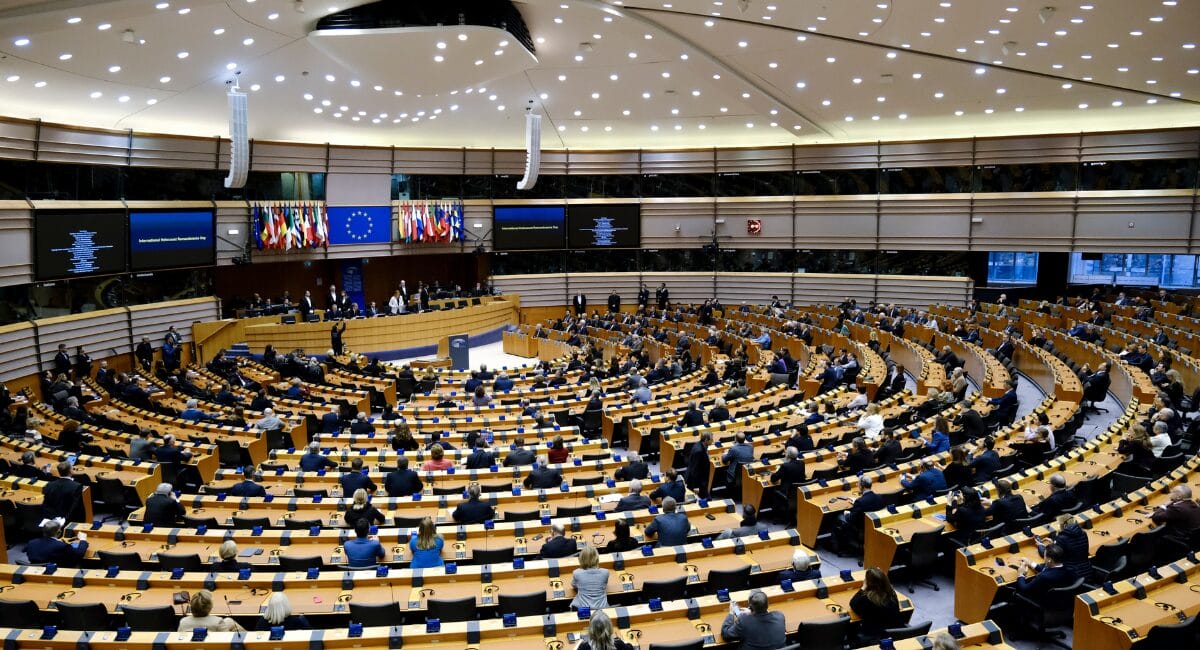
Few issues are currently occupying the industry as much as the planned Packaging and Packaging Waste Regulation (PPWR). Today, Wednesday (24 April), the Parliament met in Brussels and adopted the PPWR by 476 votes to 129 with 24 abstentions.
Even before the final vote on the trialogue result on the reform of the EU Packaging and Packaging Waste Regulation Delara Burkhardt, shadow rapporteur for the S&D Group on packaging rules and environmental policy spokesperson for the European Social Democrats, spoke out:
„The reformed packaging rules are good news for a more sustainable Europe. The new rules will ensure less waste, more environmental protection and stronger consumer rights. The reform of the packaging rules will bring tangible improvements to consumers“ everyday lives. The new rules on reducing packaging material will mean that rubbish bins at home will no longer overflow so quickly. Clearer labelling on packaging will make it easier to separate waste correctly. New limits for harmful PFAS chemicals in food packaging will increase health protection."
The provisional agreement with the Council not only includes Targets for packaging reduction (5 per cent by 2030, 10 per cent by 2035 and 15 per cent by 2040), it also obliges EU member states to reduce plastic packaging waste. In order to reduce unnecessary packaging, the proportion of empty space for outer packaging, transport packaging and packaging for e-commerce must not exceed 50 per cent in future. Manufacturers and importers must also lighter packaging with less volume provide.

„The PPWR represents a great opportunity to minimise the waste and resource consumption of packaging and at the same time increase its recyclability, both through actual recycling and through the increased use of recycled plastics.“
Jakob Mosser, Chairman of Flexible Packaging Europe
Changes to single-use plastic packaging
From 1 January 2030 Certain single-use plastic packaging banned, e.g. packaging for unprocessed fresh fruit and vegetables, packaging for food and drinks that are offered for consumption or served in cafés and restaurants, single portions (e.g. spices, sauces, cream, sugar), small disposable plastic packaging for toiletries in hotels and very lightweight plastic carrier bags (with a wall thickness of less than 15 microns). In the interests of health protection, the use of so-called perpetual chemicals (perfluoroalkyl substances and polyfluoroalkyl substances, PFAS for short) in packaging that comes into contact with food will be prohibited in future.
With Packaging for alcoholic and non-alcoholic beverages (with the exception of milk, wine, flavoured wine, spirits, etc.), transport and sales packaging as well as outer packaging are subject to special Targets for reuse by 2030 provided for. Under certain conditions, Member States may authorise a five-year derogation from these requirements. Final distributors of beverages and takeaway food must allow consumers to use their own containers. They must also endeavour to offer 10 percent of their products in reusable packaging by 2030.
Focus on recyclability
According to the new regulations, all packaging (except packaging made of light wood, cork, textiles, rubber, ceramics, porcelain and wax) must fulfil strict Requirements for recyclability are met. Minimum targets are also set for the recycled content of plastic packaging and minimum targets for the recycling of packaging waste by weight. By 2029, 90 percent of all single-use plastic and metal beverage containers (up to three litres) must be collected separately (through deposit systems or other methods that ensure this target is met).
„For the first time, the EU is introducing targets for reducing packaging in an environmental law, regardless of the material used. The new regulations support innovation and also provide for exemptions for micro-enterprises. The fact that chemicals are now completely banned from food packaging is a huge success for the health of European consumers. We are now calling on all industry sectors, EU countries and consumers to join the fight against unnecessary packaging.“
Frédérique Ries, rapporteur (Renew, Belgium)
Before the agreement can enter into force, the Council they formally approve. Jakob Mosser comments on the way forward:
„The flexible packaging industry is now looking forward to the next steps in the approval process. Following the publication of the PPWR, the important phase of secondary legislation, and the industry is pushing for the timely adoption of detailed regulations on all sustainability requirements. The FPE and its members look forward to continuing to share our expertise with policy makers and support them in achieving ambitious and enforceable packaging legislation that supports a resource efficient society.“
The negotiation agreement, which has now been approved by the European Parliament, brought Significant changes compared to the European Commission's original proposal for a regulation, The HORECA sector is also characterised by a high level of transparency, particularly with regard to the restriction of packaging formats in the HORECA sector and the targets for takeaway reuse.
„We welcome the European Parliament's vote to move forward with this important environmental legislation. The regulation sets ambitious and binding targets for recyclability and recycling in the industry. We are committed to providing our customers with innovative and fully recyclable packaging solutions. We are pleased that the regulation adopted today by the European Parliament respects the principle of best environmental performance by allowing the use of renewable and recyclable paper-based single-use packaging in the HORECA sector.“
Charles Héaulmé, President and CEO of Huhtamaki
interseroh+ also deals with the contents of the regulation. In the Webinar with packaging journal Managing Director Frank Kurrat, Head of Legal & Regulatory Affairs Dr Jan Hendrik Kempkes, Head of „Made for Recycling“ Julian Thielen and Head of Sales EPR Solutions Felix Mynarek spoke about the current state of affairs, The new requirements for the recyclability of packaging and the use of recyclates in particular.
Source: European Parliament S&D Group, Flexible Packaging Europe, European Parmalent