Rising costs and a shortage of labour are putting pressure on Europe's supply chains, forcing companies to fundamentally rethink their packaging strategies. Reusable packaging is increasingly coming into focus, no longer seen simply as consumables but as essential infrastructure components. Tosca sees this development as a strategic turning point for the industry.
The challenges facing European supply chains are diverse. In addition to rising raw material prices and a shortage of skilled workers, increasingly stringent packaging regulations are also being added. These factors are forcing companies to evaluate their packaging solutions not only from a cost perspective, but also in terms of their efficiency and sustainability. Reusable packaging offers a clear advantage here, as it is more cost-effective in the long term and can simultaneously reduce the ecological footprint.
Reusable packaging offers numerous benefits that go beyond mere cost-effectiveness. They are more robust and can be used multiple times, reducing the need for constant replacements. Furthermore, they contribute to waste reduction and resource conservation. These characteristics make them particularly attractive for companies facing the challenges of modern supply chains.

Regulatory requirements
Regulatory requirements further increase the pressure to act. Extended producer responsibility (EPR) systems and the European Packaging and Packaging Waste Regulation (PPWR) place a stronger focus on waste prevention, reuse, durability, and performance throughout the entire life cycle. As these regulations evolve, companies that use single-use packaging face increasing cost risks and complexity of requirements.
„Packaging has long been viewed as a cost of consumption, but this model is becoming increasingly difficult to sustain. As regulatory requirements intensify, and cost and labour pressures grow, reusable packaging is developing into a central infrastructure. It helps companies to reduce waste at source while simultaneously making costs more predictable and strengthening operational resilience.“
Laurent Le Mercier, President of EMEA at Tosca
Moving away from the throwaway model
Disposable packaging relies on a continuous supply of materials, manual handling, and repeated disposal. In an environment characterised by cost volatility, these dependencies are increasingly evolving into structural risks. Reusable plastic packaging is based on a different operating model. Durable load carriers circulate over multiple usage cycles, shifting companies from cost per unit to calculable costs per use, while simultaneously reducing reliance on fluctuating raw material prices and ongoing disposal costs.
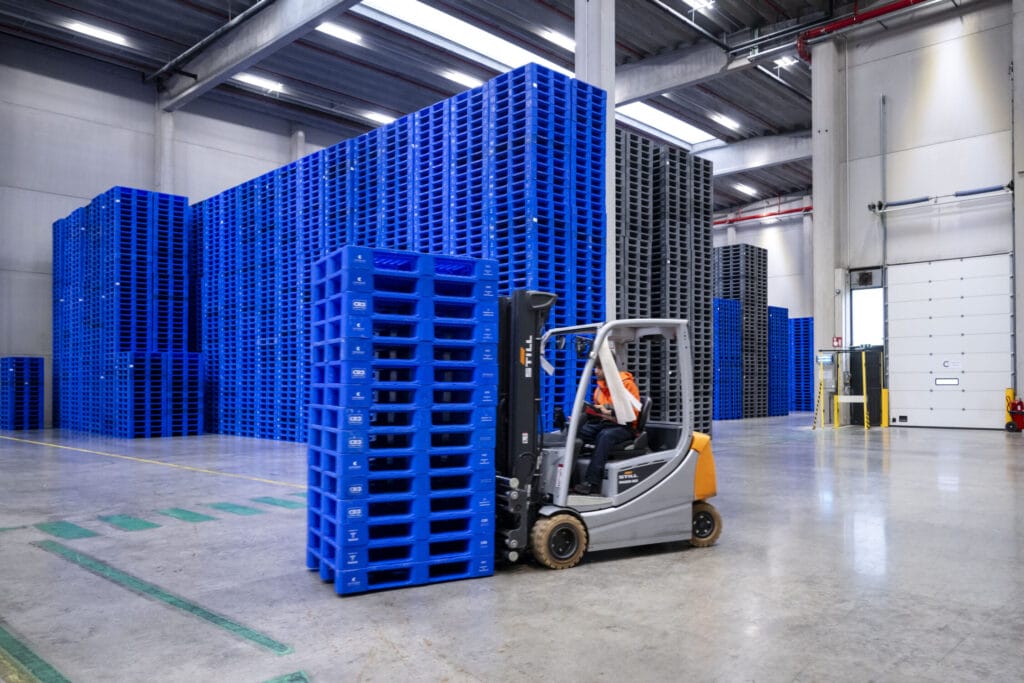
Pooling makes this possible on a large scale. Loads are collected, checked, cleaned, repaired, and put back into circulation via managed networks. Packaging is thus integrated into daily operations as a service, rather than acting as a one-off purchase.
Structural change in packaging strategy
With ongoing cost pressure and increasing regulatory scrutiny, packaging is increasingly shifting from a tactical to a strategic decision. Reusable packaging offers an approach to stabilise costs, reduce risks, and meet evolving regulatory requirements within a unified system – thereby positioning itself as a central component of resilient, future-proof supply chains.
To illustrate how these structural challenges are altering European supply chains, Tosca has... White paper „The Business Case for Reusable Transport Packaging“ published, which analyses these developments in detail.
Source: Tosca